
Understanding the traditional Binchotan manufacturing process reveals why this premium charcoal is highly favored by professional chefs around the world. From carefully selecting dense hardwoods to mastering extreme heat control, every stage requires deep artisanal expertise. In this comprehensive guide, we will break down each phase of production to show you how authentic white charcoal achieves its legendary quality.
How Binchotan Is Made: An Overview
The Binchotan manufacturing process is a centuries-old artisanal craft originating in Japan that transforms dense hardwood into the world’s highest grade of white charcoal. Unlike standard black charcoal made through fast, low-temperature carbonization, producing authentic Binchotan requires an intricate, multi-week journey involving slow heating, extreme thermal refinement, and specialized quenching methods. This rigorous method burns off volatile compounds and leaves behind nearly pure carbon sticks that ring with a metallic chime when struck together. For commercial kitchens and high-end restaurants, understanding this detailed crafting cycle highlights why this specialized fuel delivers unmatched heat retention, zero smoke, and complete flavor neutrality during grilling.
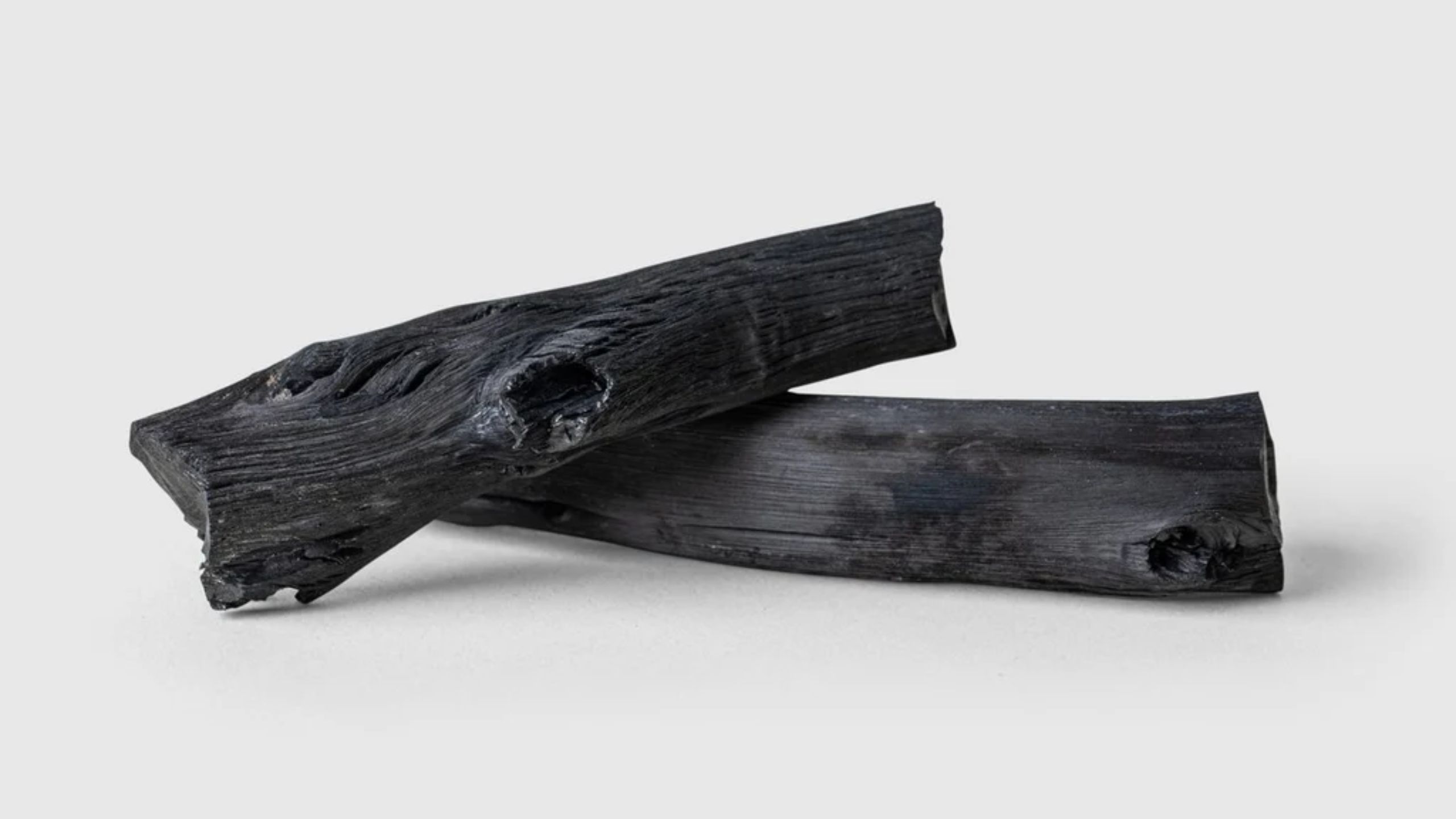
Step 1: Wood Selection And Preparation
Choosing the right timber and preparing the kiln correctly creates the foundation for high-quality charcoal. Artisans manage wood moisture and air channels to prepare for carbonization at the start of the Binchotan manufacturing process.
Selecting And Sizing High-Density Hardwoods
The production journey begins by harvesting extremely dense timber species, traditionally Kishu Ubame oak or equivalent tropical hardwoods, known for their tight grain structures. Artisans carefully cut the raw logs into uniform, straight lengths and strip away loose bark to promote clean, consistent carbonization throughout the batch. Controlling the wood’s initial moisture levels is an essential first step in the Binchotan manufacturing process, as green or uneven timber can crack under intense heat and compromise the final charcoal density.
Kiln Packing And Moisture Evaporation
Inside the specialized brick or clay kiln, artisans tightly stack the prepared timber vertically with small gaps left strategic to guide airflow. Once sealed, the kiln is fired gently at lower temperatures for several days to slowly evaporate all residual moisture from deep within the wood fibers. This gradual drying prevents the timber from splitting prematurely while establishing a stable environment for the chemical transition ahead.
Low-Temperature Carbonization Phase
After removing internal moisture, oxygen levels are restricted to initiate slow thermal decomposition without allowing the wood to catch fire. Over a period of one to two weeks, the timber steadily turns into carbon while venting steam and organic volatile gases through small exhaust flues. Artisans continuously monitor smoke color and odor to verify that all natural tar and impurities burn away before moving to the high-heat stage.
Step 2: High-Temperature Pyrolysis Refining
After carbonization completes, workers rapidly raise the heat to refine and harden the material. This critical high-temperature step in the Binchotan manufacturing process creates dense, long-burning white charcoal.
Reaching Extreme Heat Above 1000°c
The defining stage of production occurs when artisans open the kiln draft holes wide, flooding the chamber with fresh oxygen to surge temperatures upward. Reaching a Binchotan pyrolysis temperature well above 1000°C (1832°F) burns off remaining ash and organic residues while fusing the carbon matrix together. Mastering this sudden thermal surge demands constant vigilance, as slight timing errors can incinerate the entire batch instead of refining it.
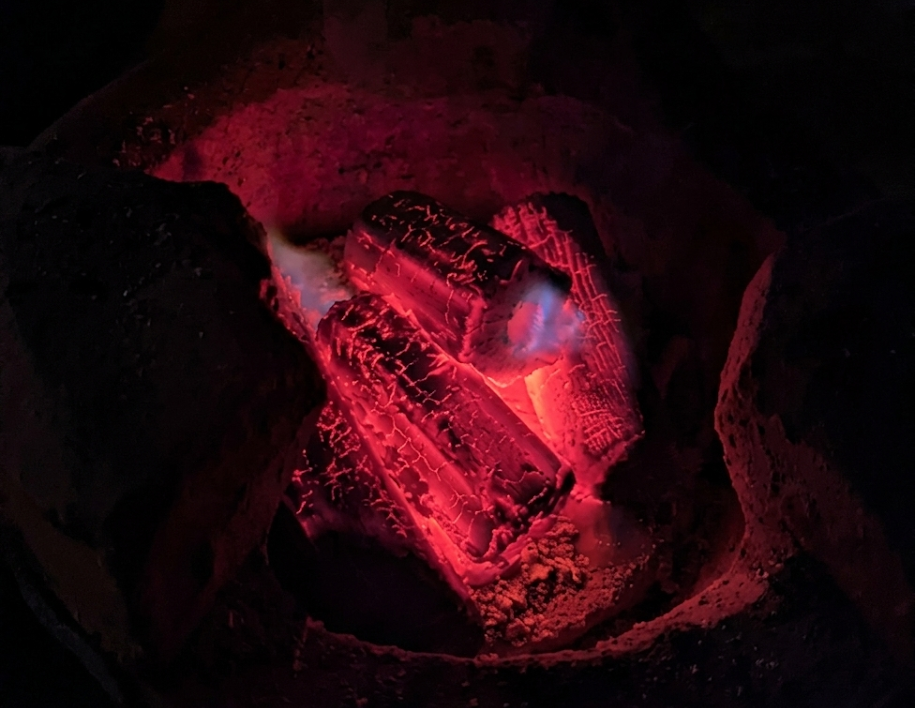
Converting Wood Structure Into Pure Carbon
At these extreme temperatures, the internal cellular network of the hardwood completely collapses, leaving behind an exceptionally dense lattice of crystalline carbon. This rapid structural shrinkage fills in microscopic pores, yielding a metallic, glass-like hard surface that resists fracturing. Consequently, the resulting charcoal burns cleanly without emitting smoke, odor, or sparks, making it ideal for delicate indoor grilling.
Step 3: White Ash Quenching Process
Creating the white outer layer requires a fast cooling method directly after burning, which is a signature phase of the authentic Binchotan manufacturing process. Workers pull red-hot charcoal from the kiln and extinguish it without water.
Pulling Glowing Charcoal From The Kiln
When thermal refinement reaches peak temperature, workers unseal the kiln entrance to drag out white-hot charcoal sticks directly into the open air. Working rapidly under extreme heat, the crew uses long iron hooks to pull out glowing logs before oxygen burns away the fuel. This dramatic extraction step in the Binchotan manufacturing process demands skilled teamwork and protective gear to ensure safety while preserving the high quality of the hot carbon.
Smothering The Hot Carbon With Sand And Ash
Instead of using water, which would fracture the superheated carbon, workers cover the glowing logs in a traditional cooling mixture of damp sand, soil, and fine white ash. This smothering technique deprives the carbon of oxygen instantly, stopping surface combustion without causing sudden thermal shock or structural cracks. The damp mixture absorbs heat steadily while forming a temporary protective blanket over the cooling embers.
How White Ash Creates The Final Coating
As the hot carbon cools within the specialized damp mixture, fine dust clings permanently to its outer skin, completing the white ash quenching process. This distinctive powdery coating gives white charcoal its name and serves as a physical layer that protects the carbon from moisture during transit. Once fully cooled and brushed off, the finished sticks reveal their characteristic smooth, metallic-grey appearance.
Step 4: Quality Inspection & Packaging
Every finished batch is checked carefully to meet international Binchotan export standards and commercial restaurant requirements. Adhering to strict standards throughout the entire Binchotan manufacturing process ensures safe packaging that protects the hard charcoal sticks during sea transportation.
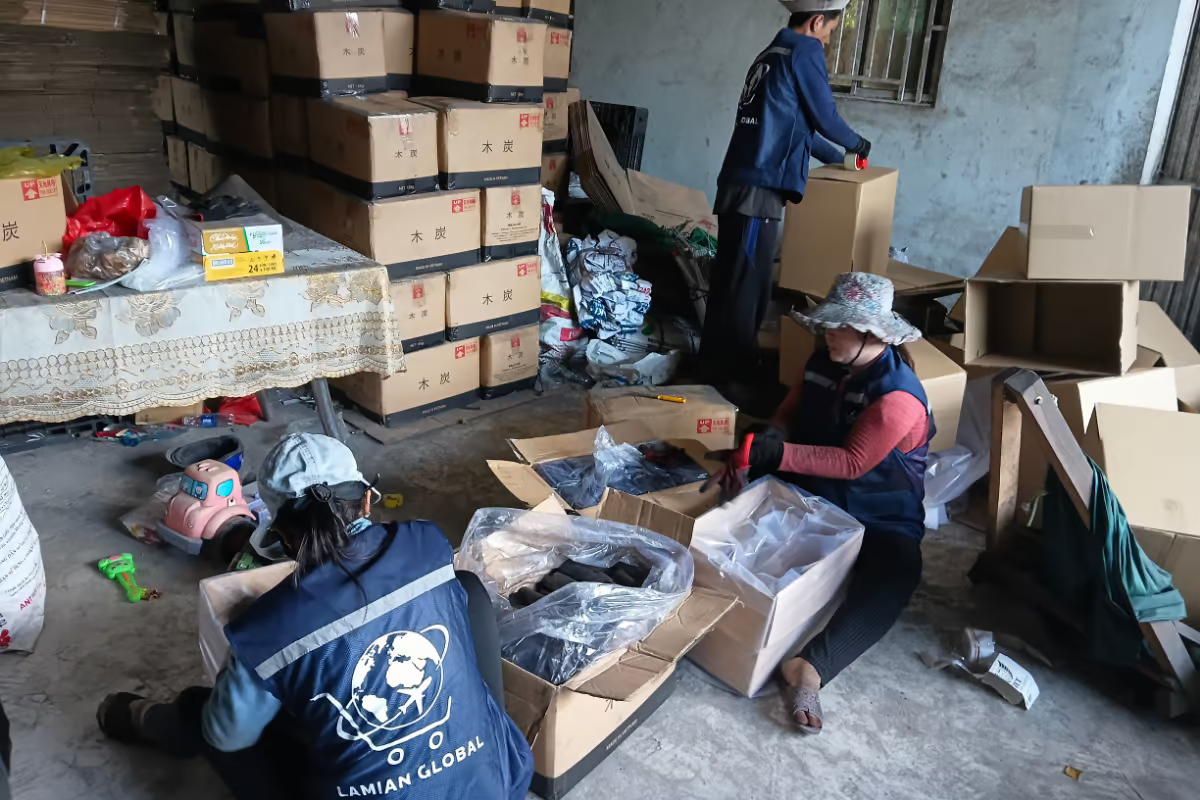
Sorting Charcoal Sticks By Size And Density
Grading teams visually inspect each piece, separating charcoal sticks into standardized commercial tiers based on length, diameter, and structural hardness. Sound testing is commonly used; high-grade pieces emit a clear ringing sound when tapped together, confirming maximum density and no internal fractures. Substandard or cracked pieces are removed to ensure commercial customers receive uniform burning performance.
Packaging For Safe B2b Export And Shipping
Sorted Binchotan is carefully lined with moisture-barrier film and packed into heavy-duty corrugated cartons to prevent physical damage during ocean freight. This final quality control step of the Binchotan manufacturing process includes clear labeling that indicates grade, piece size, and net weight, allowing commercial buyers to manage inventory efficiently. Sealing the product against atmospheric humidity ensures the charcoal arrives dry and ready for immediate high-heat grilling.
Conclusion
Mastering high-temperature pyrolysis and precise quenching throughout the Binchotan manufacturing process transforms raw timber into a clean-burning, high-performance fuel for professional kitchens. Partner with Lamian Global to stabilize your fuel costs, elevate food presentation, and streamline container procurement for your restaurant chain. Contact our B2B Export Team today to request factory-direct FOB/CIF pricing, schedule a virtual facility audit, or order a complimentary sample test kit.
- Company: Lamian Global
- Headquarters: 47 Street 36, Van Phuc Residential Area, Hiep Binh Ward, Ho Chi Minh City, Vietnam, 700000
- Hotline / WhatsApp / Commercial Line: +84 812 036 789
- Email: contact.charcoal@lamianglobal.com
- Website: https://lamiancharcoal.com/