Compare black charcoal vs white charcoal (Binchotan) by fixed carbon, burn time, heat stability, and overall cost. Learn which fuel best fits your commercial BBQ, catering, or restaurant operations.
What Are Black and White Charcoal?
Understanding the baseline characteristics of these two popular fuels is essential for any restaurant or BBQ business. While both originate from wood, their distinct carbonization processes create vastly different products tailored for specific culinary needs.
Black Charcoal: The Practical Standard
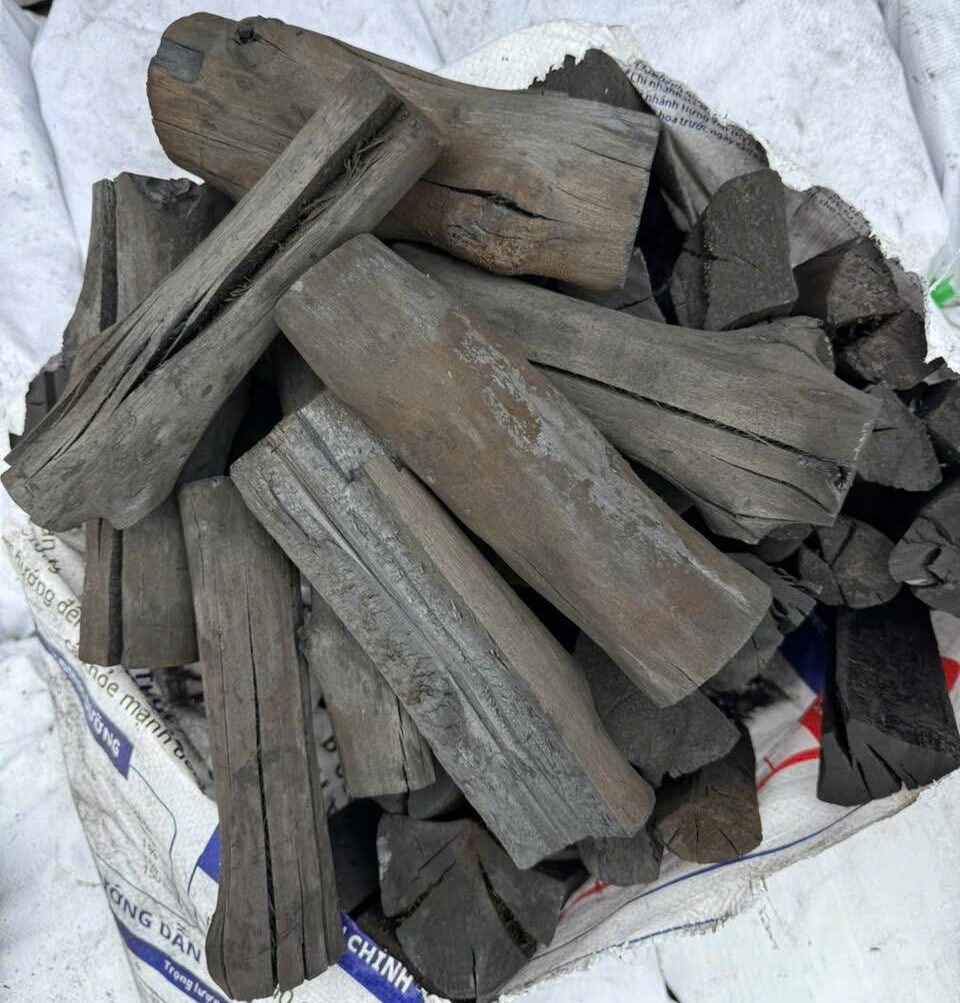
Black charcoal is wood that has been carbonized in a low-oxygen environment at moderate temperatures, typically between 400–700°C. Once carbonization is complete, the charcoal is left to cool slowly inside the kiln. This process creates a slightly porous, lightweight charcoal that is highly responsive to airflow. It is the global standard for traditional BBQ due to its accessibility, ease of use, and ability to deliver high heat relatively quickly.
White Charcoal (Binchotan): The Premium Choice
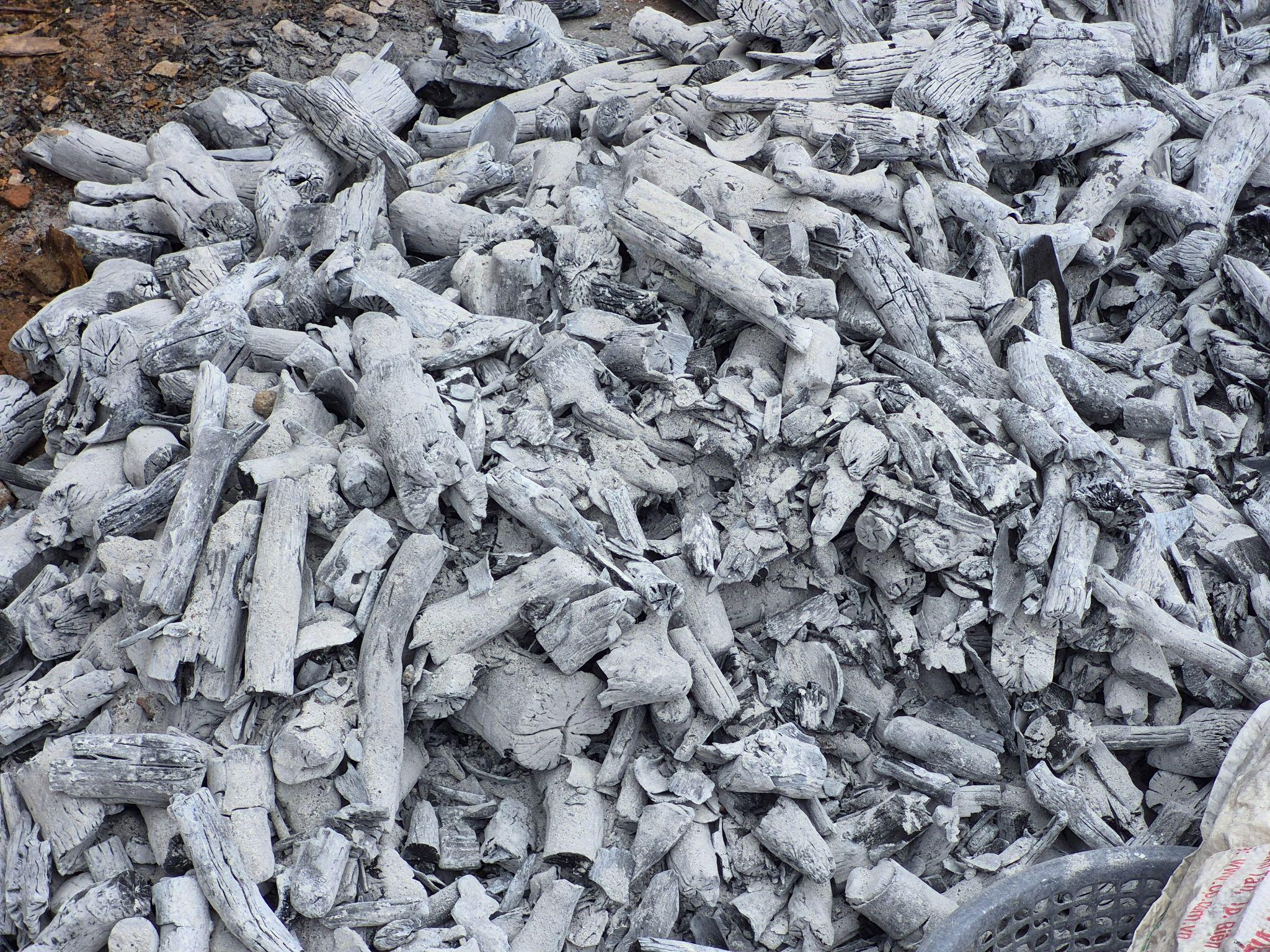
White charcoal, widely known as Binchotan or Shiro-zumi, undergoes a much more rigorous high-temperature refining process. The final firing stage reaches up to 1,000–1,200°C, followed by rapid extraction and cooling. Workers smother the glowing coals in a mixture of ash, earth, and sand to extinguish them quickly which leaves the signature whitish residue on the surface, giving the charcoal its name. This process results in a dense, hard structure with exceptional purity.
Lamian Global General Specifications Comparison
| Parameter | Black Charcoal |
White Charcoal (Binchotan)
|
| Fixed Carbon | >75% | >95% |
|
Moisture Content
|
<8% | <5% |
| Ash Content | <5% | <3% |
| Volatile Matter | <15% | <5% |
| Calorific Value | 7,000+ kcal/kg | 7,500+ kcal/kg |
| Burning Time | 2.5 – 4+ hours | 3.5 – 5+ hours |
Note: Actual specifications can vary according to wood species, charcoal size, and specific production conditions.
4 Key Differences Between Black Charcoal vs White Charcoal
Beyond the basic specifications, the true contrast between these charcoals lies in their physical structure and performance during a busy service. Here is how they compare across four critical operational metrics to help you make an informed sourcing decision.
1. Density, Fixed Carbon, and Heat Stability
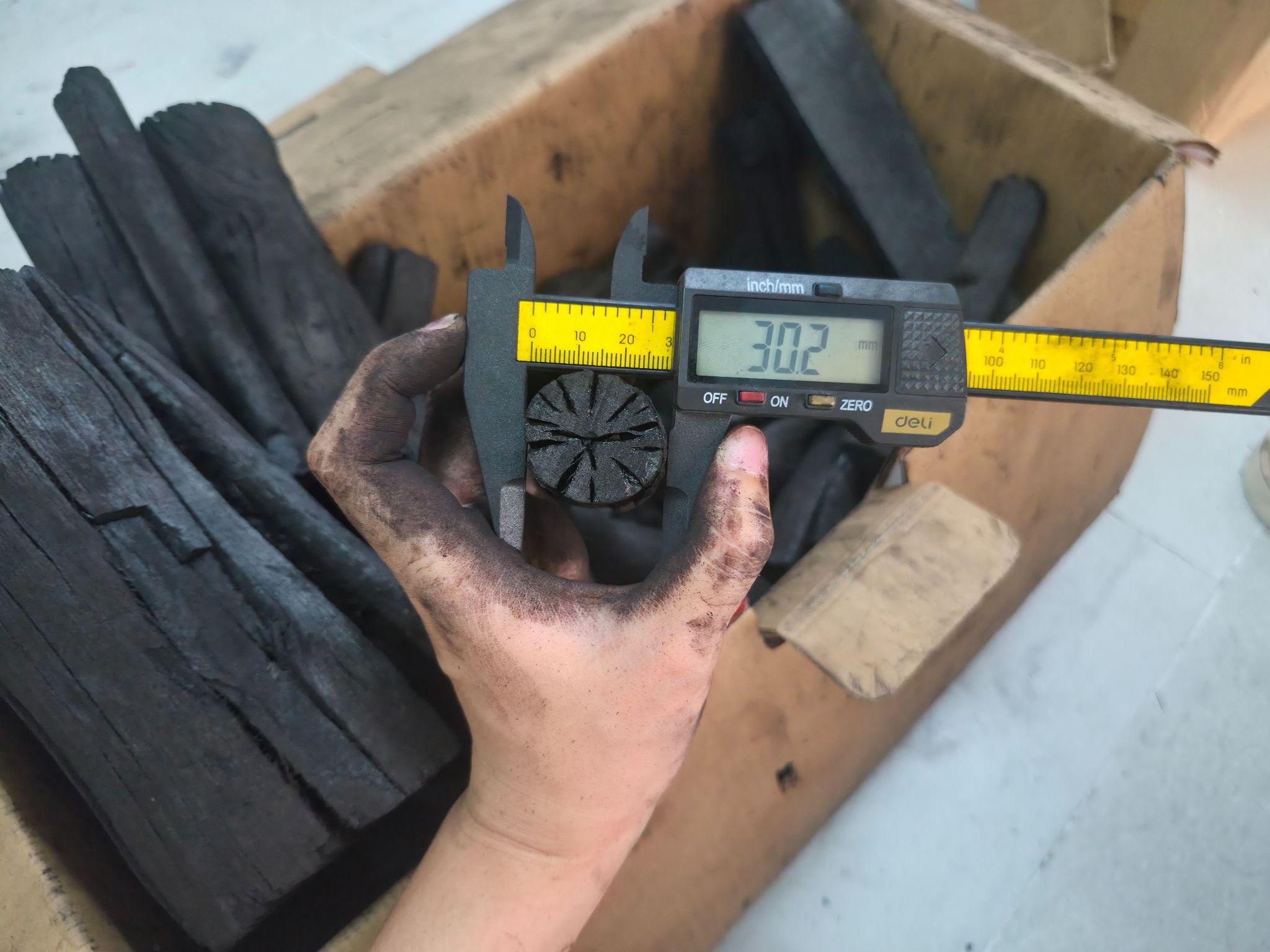
The high-temperature refining of Binchotan burns off almost all impurities, leaving a product with over 95% fixed carbon. This extreme density allows it to maintain a stable, highly concentrated radiant heat for hours without fluctuating. Conversely, black charcoal has a lighter, more porous structure. While it still delivers excellent heat (especially when made from dense hardwoods), its heat curve is slightly more volatile and responds faster to changes in grill airflow.
2. Smoke, Ash, and Odor Output
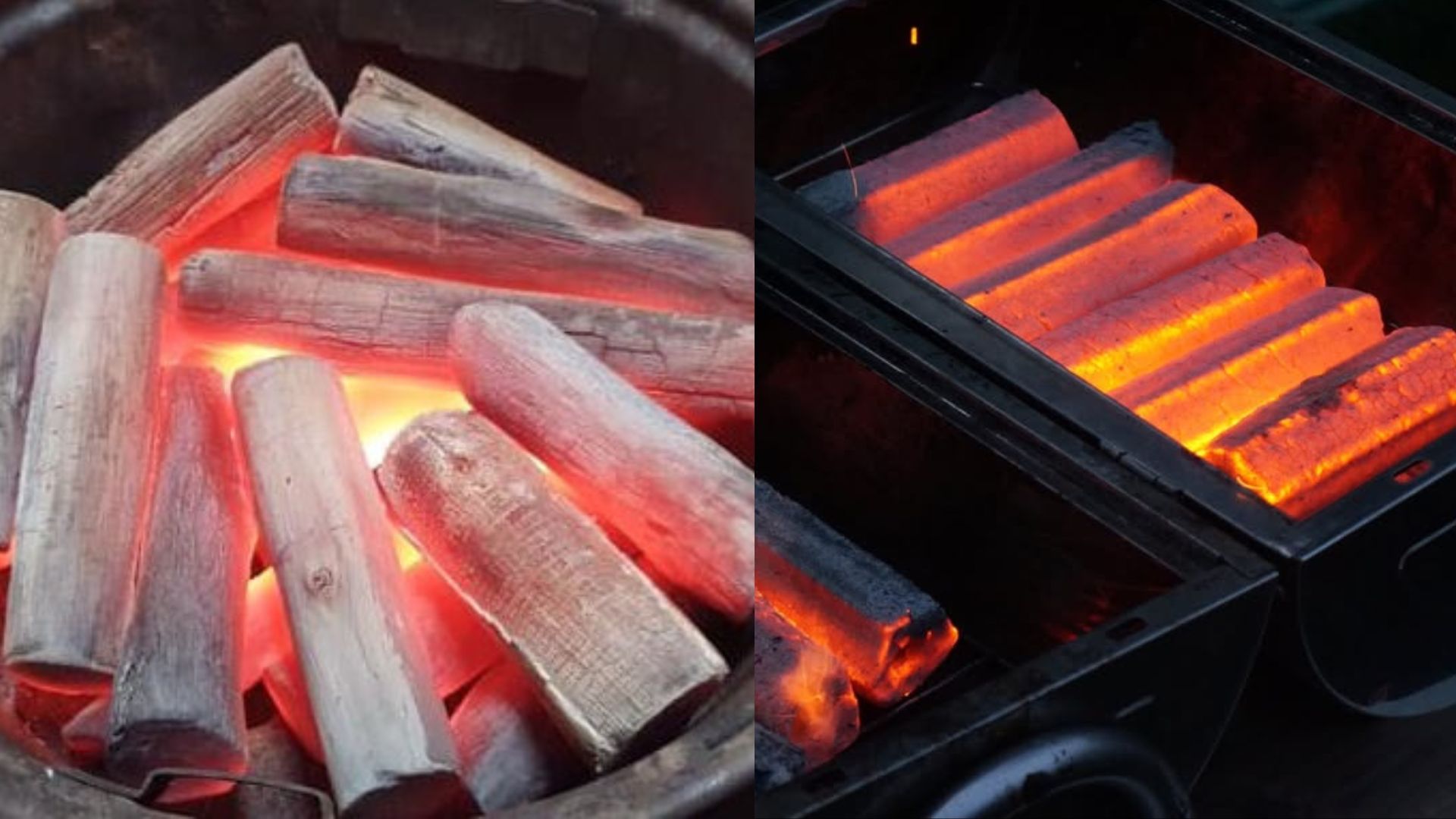
Volatile matter is the primary cause of smoke and unwanted odors during grilling. Because Binchotan has less than 5% volatile matter, it produces virtually zero smoke or odor when properly ignited, ensuring that the natural flavor of premium ingredients shines through. Black charcoal contains higher volatile matter (<15%), which can produce a stronger, traditional “charcoal aroma.” While desirable for classic outdoor BBQ profiles, this can be overwhelming in high-end, indoor open kitchens.
3. Ignition Requirements and Kitchen Handling
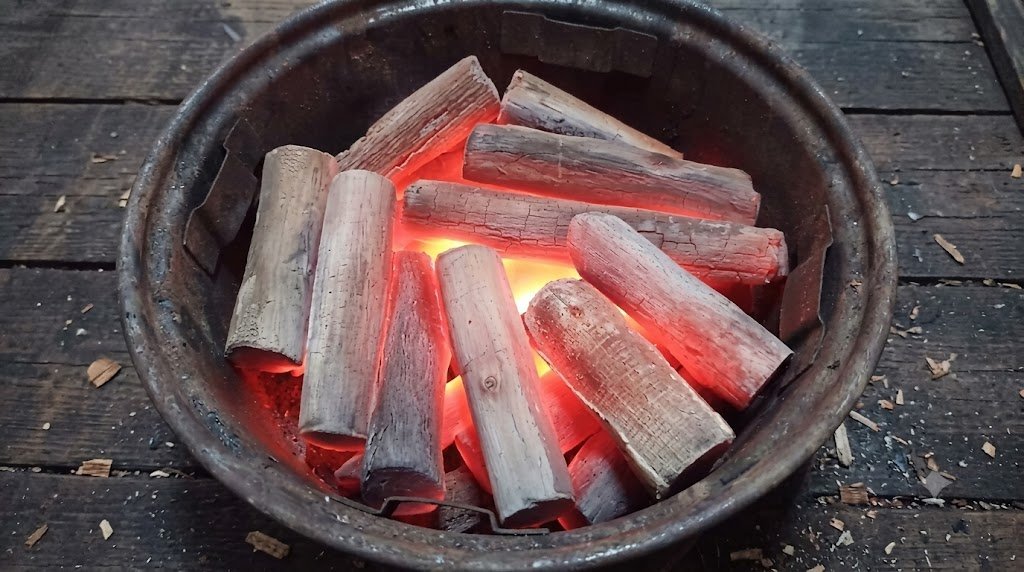
There is a direct trade-off between heat longevity and ease of ignition. Black charcoal’s porous nature makes it fast and easy to light, allowing kitchens to establish a cooking bed quickly during unexpected rushes. Binchotan, due to its rock-like density, is notoriously difficult to ignite. It requires stronger, sustained ignition equipment—such as a dedicated gas burner or a heavy-duty charcoal chimney pot—and takes significantly longer to reach cooking temperature.
4. Burn Time and Replenishment
In a commercial setting, how often chefs need to refill the grill impacts workflow. Lamian Global’s black charcoal provides a solid 2.5 to 4+ hours of burn time, which is more than enough for standard dinner services or catered events. However, Binchotan extends this baseline to 3.5 to 5+ hours. Its slow, steady consumption rate minimizes the need for mid-service grill refilling, allowing chefs to focus entirely on cooking rather than fire management.
Choosing the Right Charcoal for Your Commercial Operations
There is no universally superior charcoal; the best choice depends entirely on your menu, kitchen setup, and customer turnover rate. Selecting the correct fuel ensures optimal food quality while keeping kitchen operations running smoothly.
When Black Charcoal is the Ideal Choice
Black charcoal is the ultimate workhorse for high-volume operations where speed and flexibility are paramount. It is the practical choice if your business requires frequent grill start-ups, fast heat-up times, and regular menu changes. It is particularly well-suited for high-turnover BBQ joints, outdoor catering events, and operations looking for an accessible price point without sacrificing reliable cooking temperatures.
When Binchotan is the Essential Fit
Binchotan is an investment in precision. It is the mandatory choice for Japanese-style grilling setups like Yakitori, Robatayaki, and Yakiniku, where the food is cooked mere inches from the coals. If your operation demands precise temperature control, extended grilling sessions without refilling, and an indoor-friendly low-smoke environment, Binchotan’s premium performance justifies the extra effort required to ignite it.
Cost and Value: Analyzing the True Economic Impact
While Binchotan carries a higher upfront purchase price per kilogram, looking solely at the sticker price can be misleading for commercial buyers. True economic value in a professional kitchen is measured by efficiency, labor savings, and longevity.
For restaurants and distributors, the most accurate metric to evaluate is the cost per hour of usable heat (Charcoal Cost ÷ Usable Burning Time). While black charcoal offers immediate cost savings and flexibility, Binchotan’s extended burn time means you consume fewer kilograms per service.
Furthermore, businesses must factor in hidden operational costs: ash disposal, the labor time spent refilling grills, and the consistency of heat delivery. High-volume, casual setups often find black charcoal to be the most economical route, whereas fine-dining establishments recoup Binchotan’s premium cost through sustained performance and zero-smoke kitchen environments.
Quick Decision Guide for Restaurants and Distributors
Use this straightforward reference to match your specific business requirements with the most effective charcoal type. Lamian Global is equipped to supply high-quality options for both categories based on your volume needs.
|
Primary Operational Requirement
|
Recommended Charcoal Option
|
|
Quick ignition and rapid heat-up
|
Black Charcoal |
|
High-volume BBQ & outdoor catering
|
Black Charcoal |
|
Cost-sensitive daily operations
|
Black Charcoal |
|
Long, uninterrupted grilling sessions
|
White Charcoal (Binchotan)
|
|
Low smoke/odor for indoor open kitchens
|
White Charcoal (Binchotan)
|
|
Japanese-style Yakitori or premium BBQ
|
White Charcoal (Binchotan)
|
Choosing between black charcoal and Binchotan ultimately comes down to matching the fuel to your kitchen’s rhythm. For B2B buyers, the best approach is to evaluate supply based on wood species, size consistency, and guaranteed burn performance. If you are looking for reliable wholesale black charcoal or premium Binchotan for your distribution business or restaurant group, contact Lamian Global. Share your required wood species, application, and estimated volume with our team to discuss tailored specifications and global bulk supply options.
- Company: Lamian Global
- Headquarters: 47 Street 36, Van Phuc Residential Area, Hiep Binh Ward, Ho Chi Minh City, Vietnam, 700000
- Hotline / WhatsApp: +84 812 036 789
- Email: contact.charcoal@lamianglobal.com
- Website: https://lamiancharcoal.com/