The rising demand for Binchotan has flooded the market with low-quality and mislabeled products. Many sellers pass off ordinary black charcoal or poorly carbonized wood as “white charcoal,” leaving buyers with weak heat, short burn times, and wasted money.
This guide shares five simple, reliable tests – from the metallic ring check to burning behavior – that help professional kitchens and serious grillers quickly identify genuine Authentic Binchotan and avoid fakes.
Tip 1 – The Metallic Ring Test (Most Reliable Quick Check)
The metallic ring test is the fastest and most reliable way to assess density and carbonization quality.
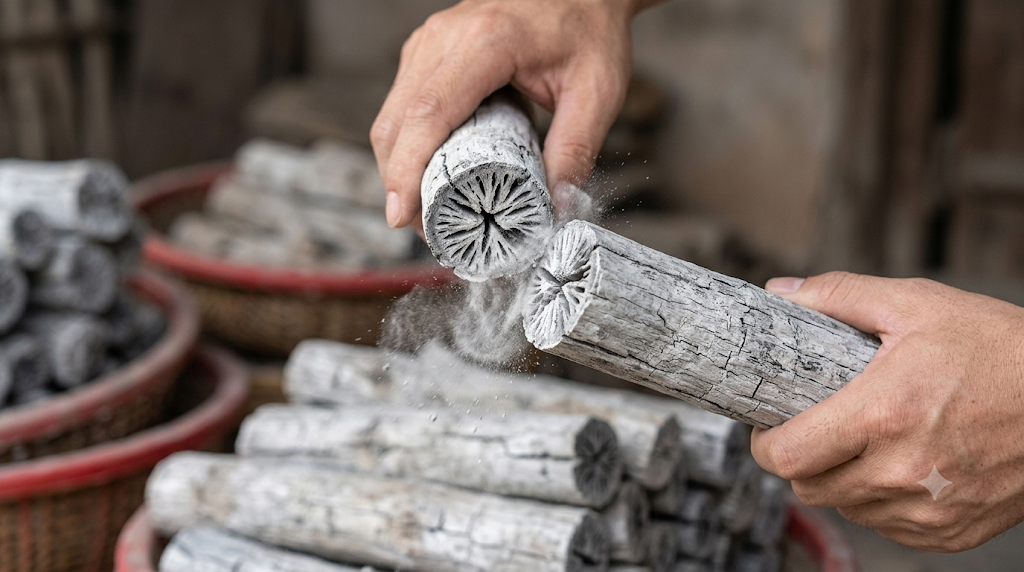
Take two pieces of charcoal and strike them firmly against each other.
- A clear, high-pitched metallic or glass-like ring indicates high density and proper high-temperature carbonization.
- A dull thud or muted sound usually signals low density, incomplete carbonization or ordinary black charcoal.
This simple acoustic test reflects the ordered carbon structure that develops only when dense hardwood is processed at 1,000-1,200°C and rapidly cooled. It remains one of the most trusted checks used by professional buyers and traditional producers.
Tip 2 – Density, Weight and Hardness
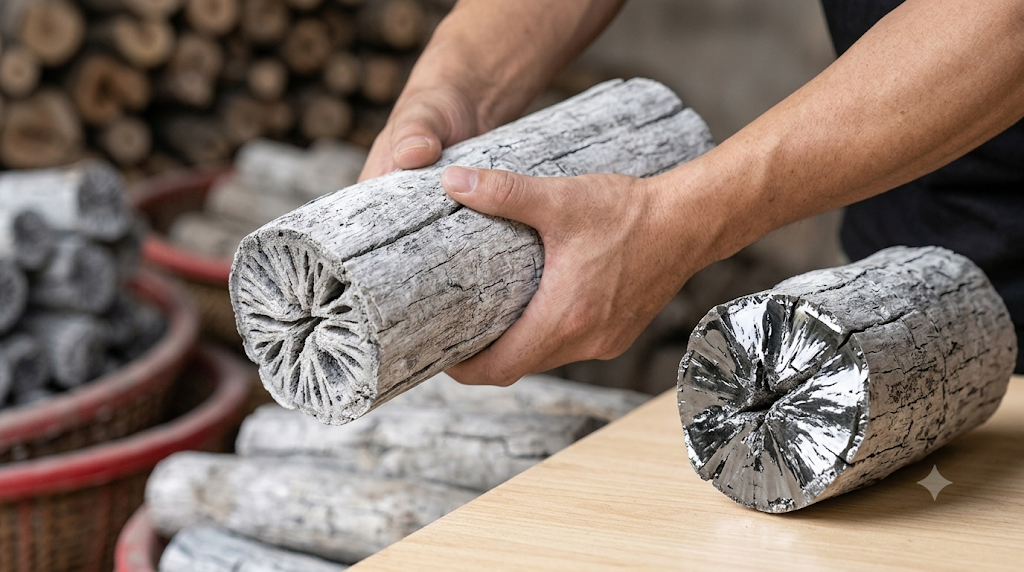
Authentic high-quality Binchotan feels noticeably heavy for its size. The extreme density comes from dense hardwood and thorough high-temperature carbonization that drives out volatiles and concentrates fixed carbon (typically 90-95% or higher).
Key indicators include:
- Significant weight when held in the hand
- Extreme hardness – difficult to break or crush by hand
- When broken, the cross-section often appears shiny or glassy rather than dull and crumbly
Low-quality or fake pieces feel lighter, break more easily and lack the solid, almost metallic hardness associated with properly made white charcoal.
Tip 3 – Surface Appearance and Ash Coating
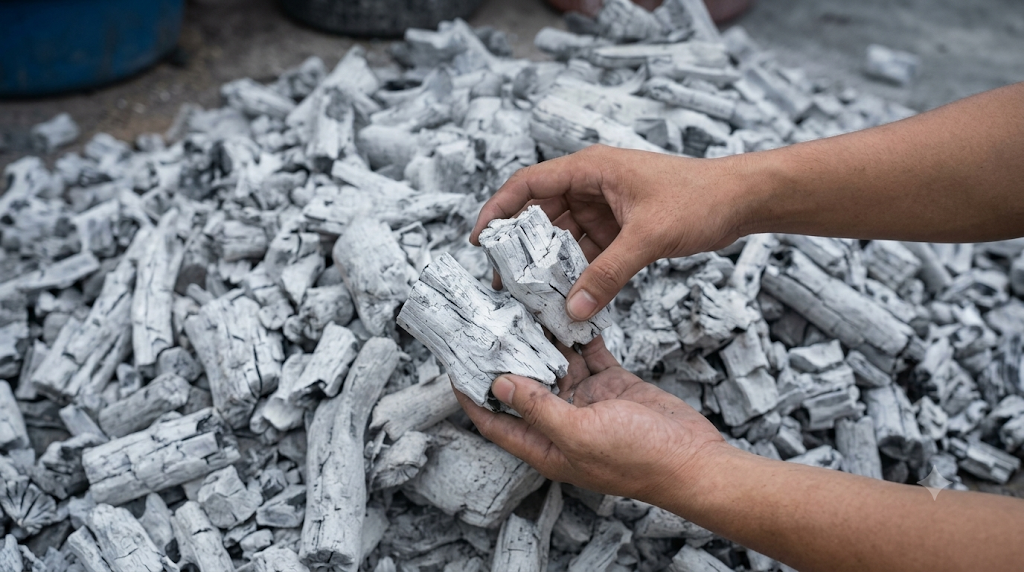
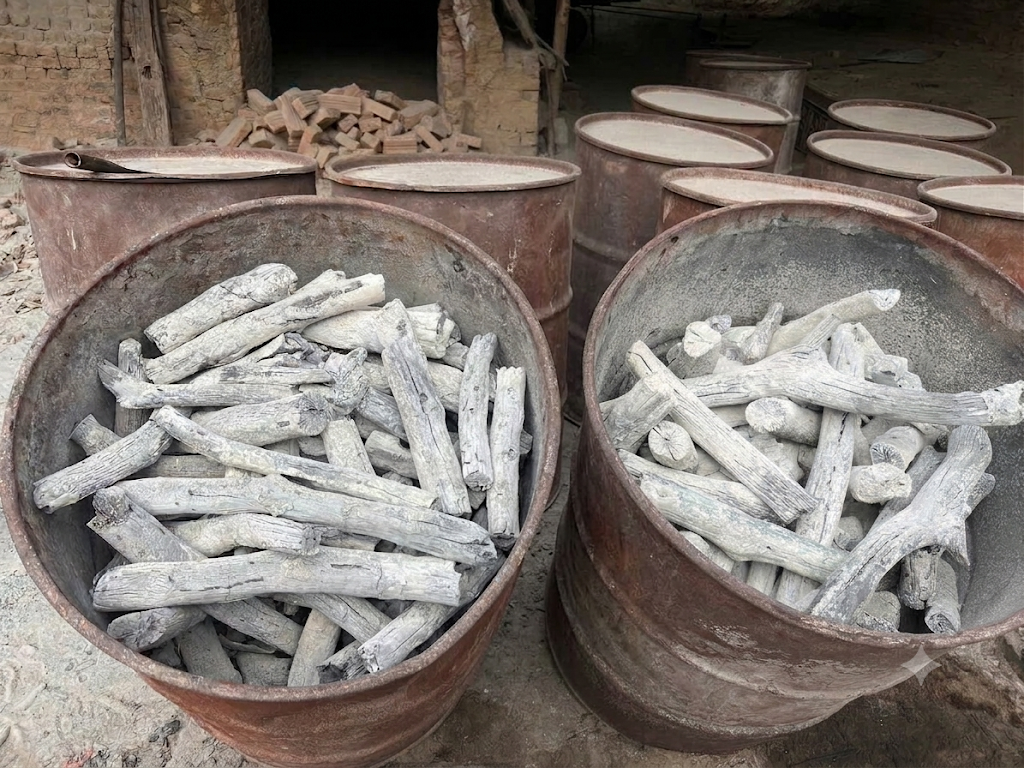
Genuine Binchotan produced with the high-temperature process and rapid removal while red-hot often carries a characteristic greyish-white or silvery ash coating on the surface. This coating forms during natural cooling after the charcoal is quickly removed from the kiln and placed into steel drums.
Additional visual clues:
- Natural wood shape, frequently in stick or cylindrical form
- Relatively clean, hard exterior
- Minimal black dust when handled
In contrast, ordinary black charcoal or poorly made imitations are usually fully black, softer, and leave more dust on the hands. The presence of a proper ash coating combined with density is a strong positive signal.
Tip 4 – Ignition and Burning Behavior
Performance during lighting and burning reveals a great deal about quality.
High fixed-carbon Binchotan:
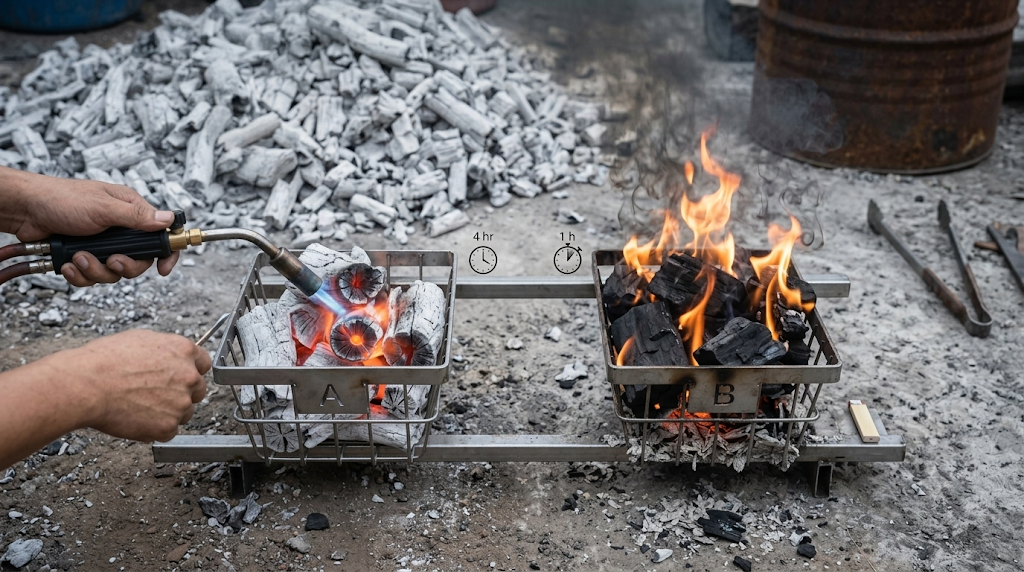
- Takes longer to ignite and requires sustained high heat (chimney starter or gas burner recommended)
- Once fully lit, delivers long, stable burn times (often 4-6 hours)
- Produces very low ash, almost no smoke and consistent radiant heat
Low-quality or fake pieces usually:
- Light easily with a match or lighter
- Burn faster with more flame and smoke
- Leave higher ash residue and less stable heat
If a product labeled “Binchotan” lights quickly like regular charcoal, it is unlikely to deliver the clean, long-lasting performance expected from true high-density white charcoal.
Tip 5 – Ask for Specs, Origin and Production Transparency
Physical tests are powerful, but supplier transparency adds another layer of confidence. Request:
- Fixed carbon percentage, ash content and moisture data
- Information on wood species (dense hardwood such as selected Eucalyptus, Acacia or traditional oak)
- Details of the carbonization process (high temperature reaching 1,000-1,200°C followed by rapid cooling)
Reputable producers of high-quality white charcoal can provide consistent batch specifications. Extremely low prices combined with vague answers about origin or production method are warning signs. Lab reports or clear technical data sheets further reduce the risk of receiving low-quality material.
Quick Comparison Table – Authentic Binchotan vs Low-Quality / Fake
Here’s a quick side-by-side comparison of authentic high-quality Binchotan versus low-quality or fake products.
| Indicator | High-Quality Binchotan |
Low-Quality / Fake
|
| Metallic Ring | Clear, high-pitched metallic sound | Dull thud |
|
Density & Weight
|
Heavy for size, very dense |
Lighter, less dense
|
| Hardness | Extremely hard, difficult to break |
Softer, breaks more easily
|
| Surface | Whitish/silvery ash coating possible |
Mostly black, more dust
|
| Ignition | Slow, needs sustained high heat | Lights easily |
|
Burn Time & Stability
|
Long (4-6 hrs), stable radiant heat |
Shorter, less stable
|
| Ash & Smoke | Very low ash, almost smokeless |
Higher ash, more smoke possible
|
|
Fixed Carbon (typical)
|
90-95%+ |
Often significantly lower
|
Conclusion
Authentic Binchotan is defined by physical properties that cannot be easily faked: extreme density, a clear metallic ring, high hardness, proper surface characteristics and stable long burn. By applying these five practical tests, buyers can confidently avoid low-quality counterfeits and select white charcoal that delivers clean radiant heat, consistent performance and good reusability.
Choosing suppliers who provide transparent specifications, consistent dense-hardwood production and reliable batch quality remains the most effective long-term strategy for professional kitchens and serious users.
Ready to source authentic, high-performance Binchotan?
Contact Lamian Charcoal for product specifications, samples and wholesale quotations of premium Binchotan that passes every quality test.
- Email: contact.charcoal@lamianglobal.com
- WhatsApp / Hotline: +84 812 036 789
- Website: https://lamiancharcoal.com/