Binchotan (white charcoal) is highly valued by professional chefs for its clean burn, high fixed-carbon content, and powerful far-infrared (FIR) radiant heat. Unlike gas, electric, or regular charcoal that relies mainly on convection, Binchotan emits strong FIR rays that cook meat efficiently while quickly searing the surface. This dual action creates an effective barrier that retains natural juices and intensifies flavor – the secret behind juicy yakitori, Wagyu, and premium grilled meats.
The Science of Binchotan Far-Infrared Heat in Binchotan Charcoal
Far-infrared radiation (FIR) is a specific wavelength range of radiant heat (typically 4–14 μm) that heats food especially effectively. Unlike convection (hot air circulating around the food) or near-infrared that mainly affects the surface, FIR penetrates deeper into the cellular structure of meat.
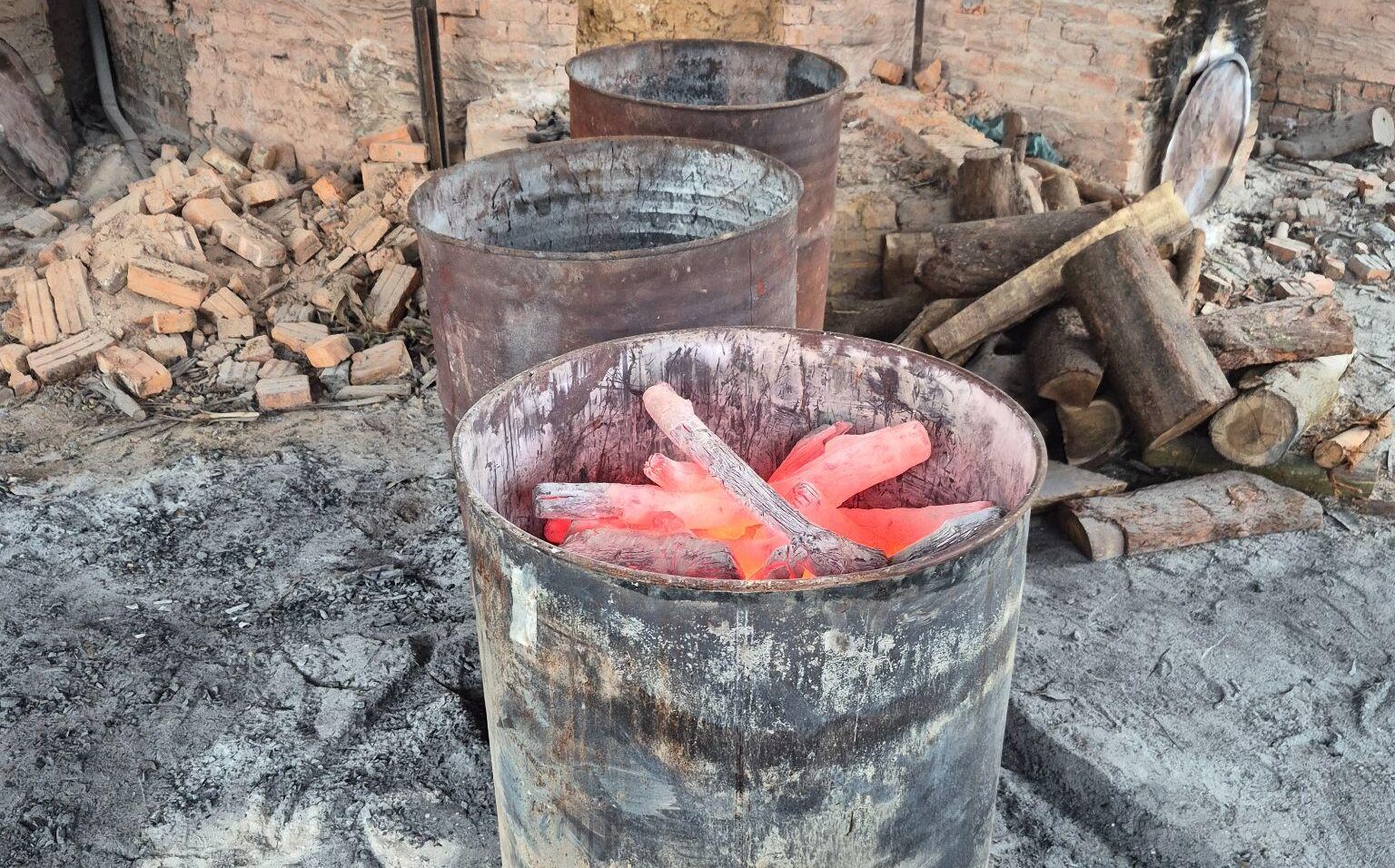
Binchotan’s advantage comes from its production process. High-temperature carbonization (1,000–1,200°C) of dense hardwood produces charcoal with very high fixed carbon content (often 90–95% or higher) and an extremely dense structure. This purity and density enable strong, consistent emission of far-infrared rays once the charcoal reaches glowing temperature. The result is stable radiant heat that cooks efficiently with almost no smoke or odor.
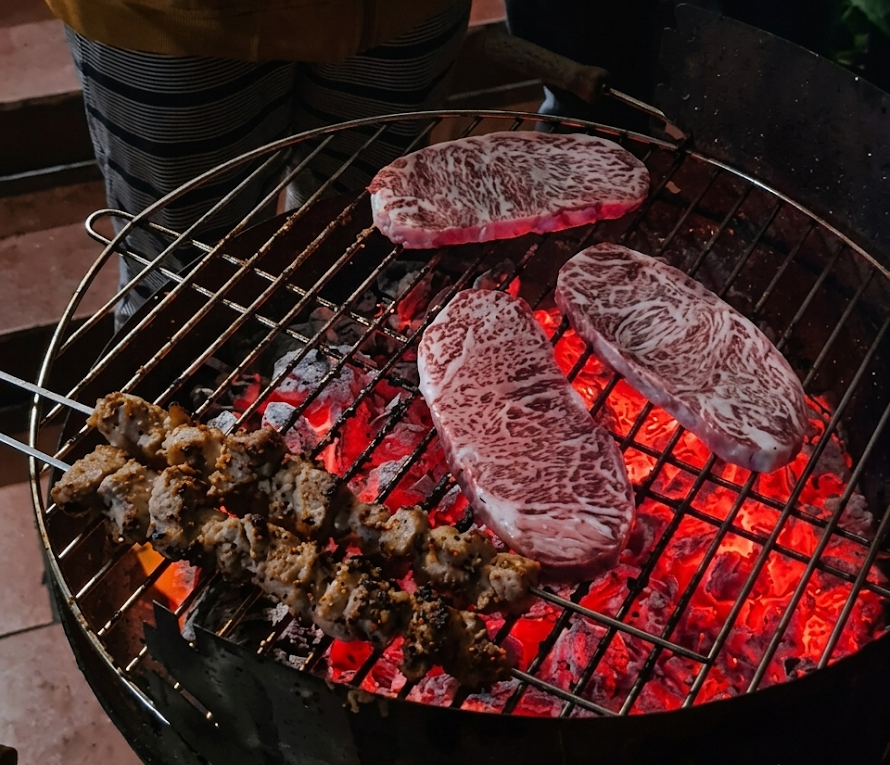
How Binchotan FIR Heat Creates the Umami Barrier & Locks Juices
The real value of Binchotan’s far-infrared heat lies in how it interacts with meat at both the surface and the interior.
Rapid surface searing creates the “umami barrier”
When FIR energy hits the surface, it is rapidly absorbed and converted into heat. This causes immediate coagulation of surface proteins, forming a tight barrier that traps moisture, flavorful amino acids (such as glutamic acid and inosinic acid), and natural juices inside the meat instead of allowing them to drip away or evaporate.
Deep penetration cooks the interior evenly without drying
Simultaneously, far-infrared rays penetrate several millimeters into the meat, heating it more evenly and at a controlled rate. This reduces the risk of overcooking the exterior while the center remains underdone. The combination produces the signature texture of Binchotan-grilled meat: a crisp, caramelized crust with a juicy, tender interior.
Enhanced Maillard reaction for superior crust and flavor
The intense, clean radiant heat also accelerates the Maillard reaction – the chemical process responsible for browning and complex flavor development. Because Binchotan produces almost no smoke or chemical by-products, the resulting flavors stay pure and focused on the natural character of the meat.
Binchotan vs Gas, Electric & Regular Charcoal: FIR Comparison
Different heat sources cook meat in fundamentally different ways. The table below highlights the practical differences that matter most to professional kitchens.
| Feature | Gas / Electric & Regular Charcoal |
Binchotan (White Charcoal)
|
|
Primary Heat Type
|
Convection + mixed radiant |
Dominant Far-Infrared (FIR)
|
|
Moisture Retention
|
Lower to Medium | High |
|
Smoke / Flare-ups
|
None to Moderate – High | Very low |
| Burn Stability | High control or Variable |
Excellent (4–6 hours)
|
| Best For | Everyday cooking / Casual BBQ |
Yakitori, Wagyu, professional kitchens
|
Binchotan delivers a high proportion of far-infrared radiation with exceptional stability. The dense structure and high fixed carbon content support long, consistent burn times and minimal ash – resulting in precise heat control, fewer flare-ups, and cleaner flavor highly valued in yakitori, robata, Wagyu grilling, and high-volume professional service.
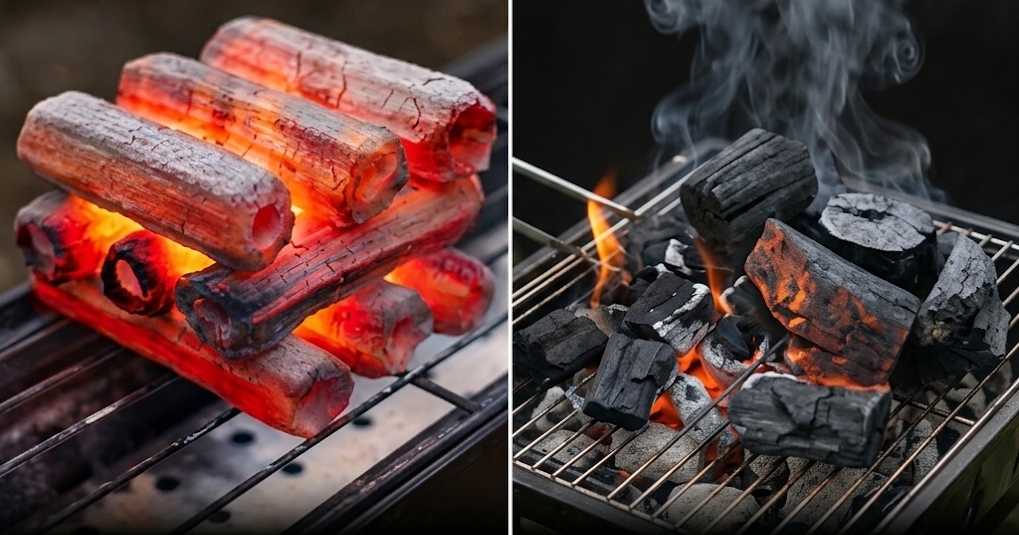
Why Dense Hardwood & High Fixed Carbon Maximize FIR Performance
The strength and consistency of far-infrared emission depend heavily on the raw material and production method.
| Factor | Impact on FIR Performance |
Professional Requirement
|
|
Dense hardwood (Ubamegashi, Eucalyptus, Acacia)
|
Stronger & more consistent FIR emission | Essential |
|
Fixed carbon ≥ 90–95%
|
Higher radiant efficiency, cleaner burn |
Target for premium grades
|
|
High-temperature carbonization (1,000–1,200°C)
|
Creates dense structure needed for sustained FIR |
Standard for true Binchotan-style
|
|
Rapid cooling + quality control
|
Maintains hardness & low ash |
Required for consistent professional use
|
Lower-density or poorly carbonized charcoal produces weaker and less consistent radiant heat. Careful wood selection, controlled kiln management, and pre-shipment verification of fixed carbon, ash, and hardness remain essential for reliable professional performance.
Practical Tips to Maximize Juice Retention with Binchotan
Even the best charcoal performs better when used correctly. Follow these practices to maximize the juice-locking effect of far-infrared heat:
- Light the charcoal thoroughly until it reaches a steady glowing state (usually 25–40 minutes depending on size and method).
- Maintain appropriate distance between the meat and the charcoal bed to balance searing intensity and internal cooking.
- Avoid overcrowding the grill so radiant heat can reach all surfaces evenly.
- For delicate items such as yakitori or seafood, use shorter cooking times to take full advantage of rapid surface sealing.
- For thicker cuts, use the stable long burn to finish gently after the initial sear.
Conclusion
Binchotan’s far-infrared heat delivers consistent juice retention, superior Maillard browning, and pure natural flavor that conventional fuels cannot match. High fixed carbon, dense hardwood structure, and clean radiant heat make it ideal for both fine-dining yakitori and high-volume professional service. Choosing well-processed, high fixed-carbon Binchotan is the key to unlocking stable, powerful performance.
Ready to source Binchotan made from carefully selected dense hardwoods?
Contact Lamian Charcoal for product specifications, samples and wholesale quotations of premium Binchotan.
- Email: contact.charcoal@lamianglobal.com
- WhatsApp / Hotline: +84 812 036 789
- Website: https://lamiancharcoal.com/