In high-volume BBQ restaurants, catering operations, and professional kitchens, lighting charcoal is not just a preparatory step; it is a critical operational workflow. Our guide, how to light black charcoal fast: No smoke, no sparks, explains how efficient ignition helps ensure that the kitchen is ready for service on time, while minimizing smoke and sparks to protect indoor air quality and staff safety.
Preparation: The Foundation of Clean Ignition
Choosing high-quality hardwood fuel is equally important for consistent ignition. Premium Mangrove Charcoal and Melaleuca Charcoal are suitable options for commercial kitchens seeking stable heat output and reliable combustion performance.
- Strict Moisture Control: The primary cause of excessive white smoke and slow ignition is damp charcoal. Charcoal acts like a sponge for ambient humidity. Always store bulk charcoal inventory in a climate-controlled, dry environment off the ground.
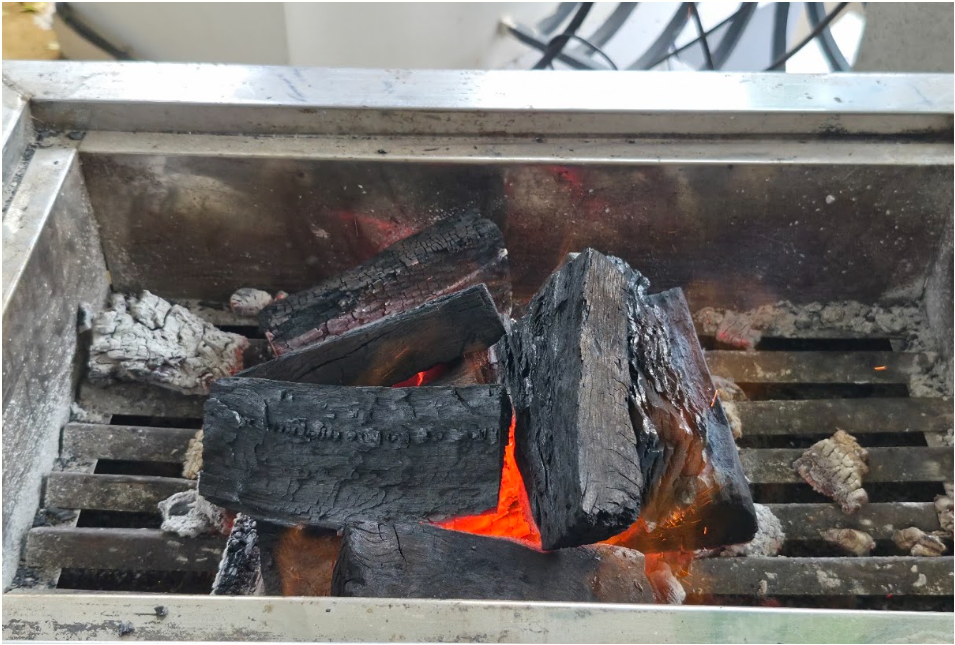
- Strategic Size Grading: A monolithic pile of massive charcoal lumps will struggle to catch fire. Chefs should build the foundation using a mix of smaller pieces at the bottom (which ignite rapidly) and larger pieces on top (which sustain the heat).
- Maximum Airflow: Selecting the right fuel is also essential for maintaining consistent combustion. Explore Lamian Global’s Black Charcoal collection to discover natural hardwood options for professional grilling and commercial kitchen applications.
The Industry Standard: The Charcoal Chimney Starter
For consistency and speed, the charcoal chimney starter is the most reliable tool for both commercial and high-end residential grilling. It utilizes the physics of the “stack effect” (natural convection) to ignite charcoal rapidly and evenly without chemical fluids.
The Chimney Technique
- The Base: Place 1 to 2 natural, wax-based fire starter cubes or tightly rolled paper on the fireproof lower grate of the grill.
- The Load: Fill the cylindrical chimney with black charcoal. Do not pack it too tightly; air must be able to travel vertically through the cylinder.
- The Ignition: Light the starter cubes and place the loaded chimney directly over them.
- The Convection Effect: As the heat rises through the metal cylinder, it draws fresh, oxygen-rich air in through the bottom vents. This continuous updraft ignites the charcoal progressively from bottom to top.
- The Transfer: When the top layer of charcoal begins to glow red and is lightly coated in white ash (typically 15–20 minutes), carefully pour the coals into the grill to establish your cooking zones.
Alternative Commercial Lighting Methods
Beyond black charcoal, commercial buyers can also explore White Charcoal as an alternative fuel option for professional grilling, BBQ restaurants, and food service operations. Choosing the right charcoal type helps businesses match fuel characteristics with their cooking methods and operational requirements.
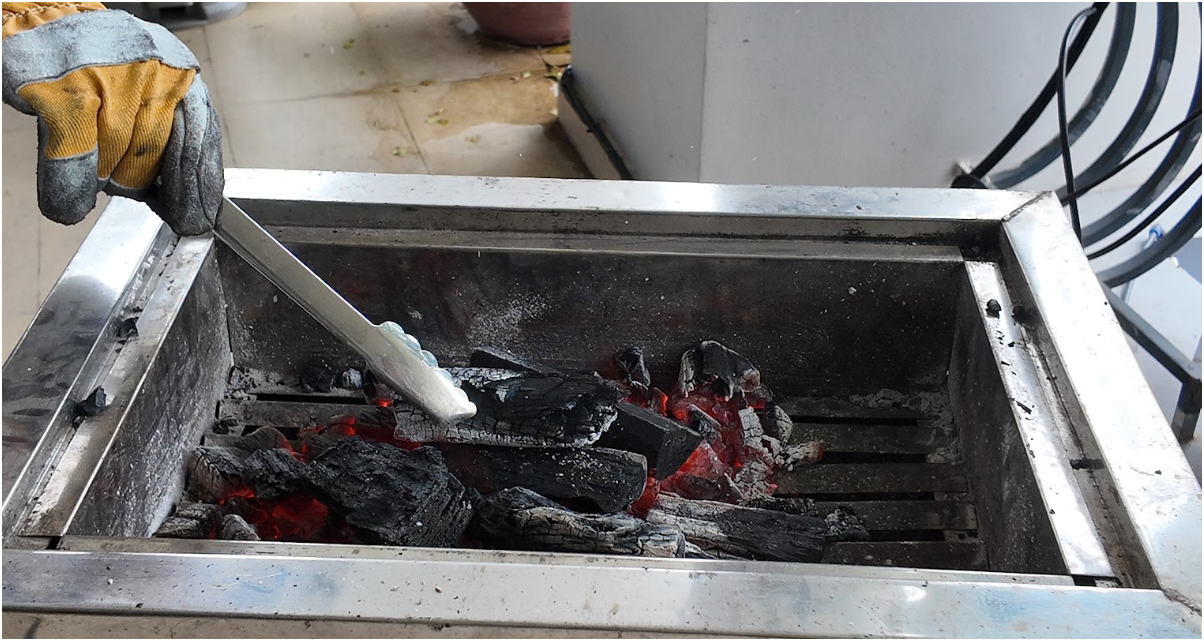
- Electric Heat Guns (Looftlighters): A staple in modern commercial kitchens, these devices blast superheated air (upwards of 600°C) directly onto charcoal. They can ignite black charcoal in under 60 seconds with minimal smoke and no chemical odors, though they require a nearby power source. For consistent heat and reliable combustion, consider Eucalyptus Black Charcoal for commercial grilling applications.
- Dedicated Gas Burners: Many commercial charcoal grills feature built-in bottom gas burners. The chef simply turns on the gas to ignite the charcoal bed, then turns it off once the coals are glowing. This is the fastest method for high-volume restaurant services.
Pro Tips: Preventing Smoke and Workplace Sparks
Sparks and popping charcoal present a severe burn hazard to kitchen staff and can contaminate food. Smoke, on the other hand, disrupts the dining environment. Managing these issues comes down to heat control and fuel purity.
Avoiding Thermal Shock (Sparks)
Sparks occur when moisture or volatile gases trapped deep inside the charcoal rapidly expand and burst the carbon structure under sudden, intense heat. To prevent this “thermal shock,” avoid blasting cold charcoal instantly with an overpowering industrial blowtorch. Allow the heat to build gradually. Furthermore, handle the glowing coals gently; dumping them aggressively out of a chimney will cause a shower of sparks.
Eliminating Unwanted Smoke
For businesses comparing different fuel options, exploring the Black Charcoal product range can help identify suitable hardwood varieties based on ignition speed, moisture levels, and combustion requirements.
- Using Chemical Fluids: Liquid lighter fluids soak into the pores of the charcoal, burning off slowly and emitting toxic, foul-smelling smoke that ruins the flavor of the food. Stick to natural wax cubes or electric starters.
- Starting to Cook Too Early: Never place food on the grill while the charcoal is still emitting dark or heavy smoke. Wait until the volatile compounds have entirely burned off and the coals are glowing with a thin layer of white ash.
- Low-Quality Charcoal: Charcoal that was not fully carbonized at the factory will still contain raw wood resins. When ignited, these resins burn and create thick smoke.
Operational efficiency at the grill relies entirely on the quality of your fuel. By sourcing premium, low-moisture black charcoal and utilizing professional ignition techniques, chefs can guarantee a fast, safe, and smoke-free startup for every service.
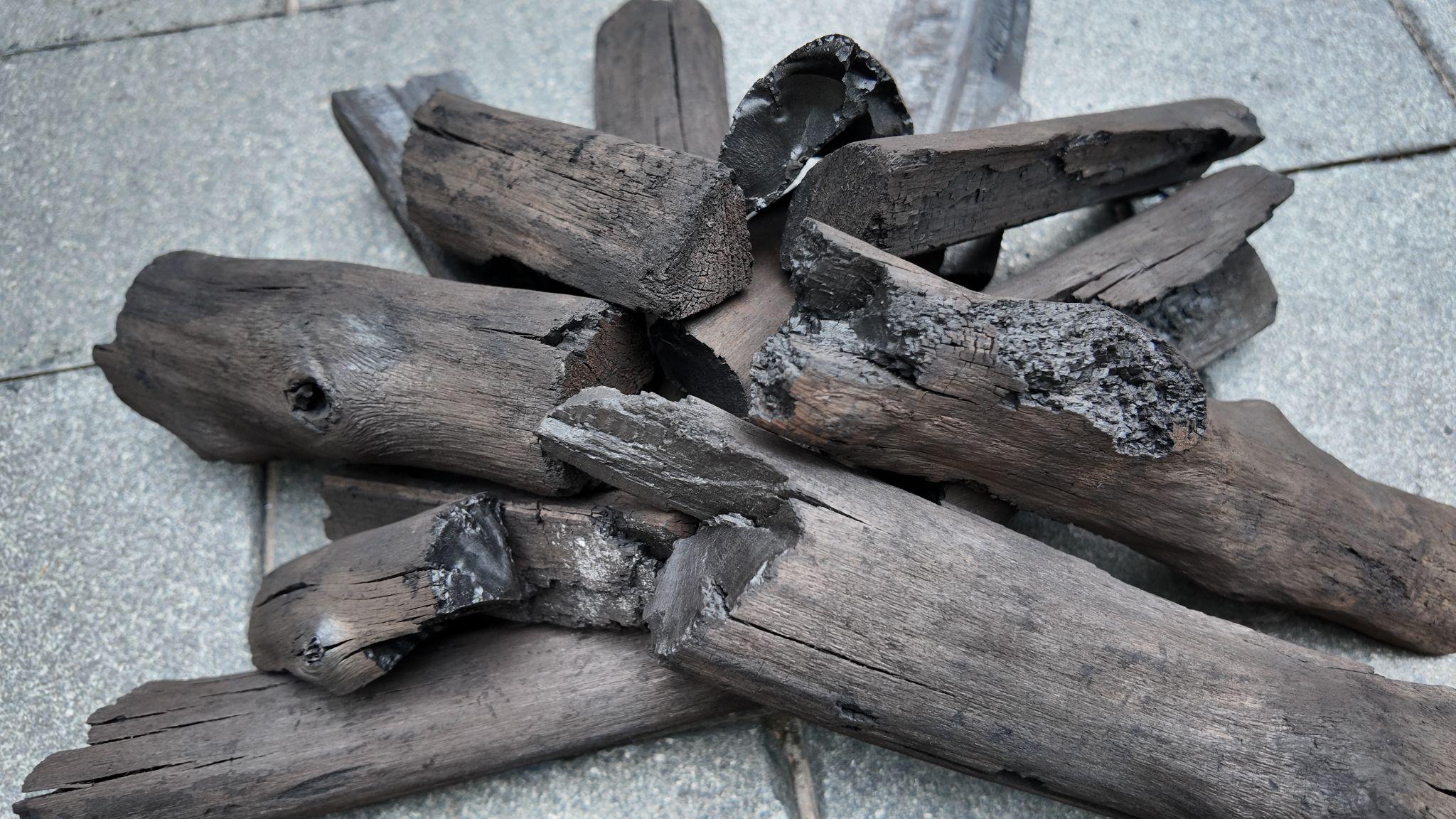
Looking to source consistently graded, low-moisture black charcoal for your restaurant group, catering business, or commercial distribution network? Lamian Global supplies premium charcoal engineered for fast ignition and stable commercial performance. Contact our team with your required charcoal size, application, packaging requirements, and estimated volume to discuss reliable bulk supply options.
- Company: Lamian Global
- Headquarters: 47 Street 36, Van Phuc Residential Area, Hiep Binh Ward, Ho Chi Minh City, Vietnam, 700000
- Hotline / WhatsApp: +84 812 036 789
- Email: contact.charcoal@lamianglobal.com
- Website: https://lamiancharcoal.com/