
The use of carbonized biomass in agriculture is transforming modern soil management. However, for large-scale farming operations and fertilizer manufacturers, understanding the strict chemical and physical distinctions between standard fuel charcoal and agricultural-grade biochar is the first step to successfully enhancing soil fertility and crop yields.
The Crucial Difference: Fuel Charcoal vs. Agricultural Biochar
While both materials are produced by carbonizing wood or biomass in low-oxygen environments, their intended end-use dictates completely different manufacturing controls and quality metrics.
Ordinary black charcoal is engineered for combustion. Its production focuses entirely on maximizing fixed carbon and caloric heat output. In contrast, biochar is engineered specifically for environmental and agricultural interaction.
Its value lies in its microscopic porosity, chemical stability, and safe pH levels. Burying commercial BBQ briquettes or heavily ash-laden fuel charcoal in an agricultural field can introduce unwanted contaminants, chemical binders, or extreme pH spikes that harm root systems.
| Quality Metric | Commercial Fuel Charcoal (BBQ) | Agricultural Biochar |
| Primary Goal | High heat, long burn time, easy ignition. | Soil conditioning, water retention, nutrient holding. |
| Key Specifications | Calorific value, fixed carbon, low ash. | Porosity, Cation Exchange Capacity (CEC), pH balance. |
| Purity Requirements | Safe for cooking (food-grade smoke). | Free from heavy metals, phytotoxins, and un-carbonized tars. |
| Agricultural Use | Strictly not recommended for direct soil application. | Engineered specifically for root-zone incorporation. |
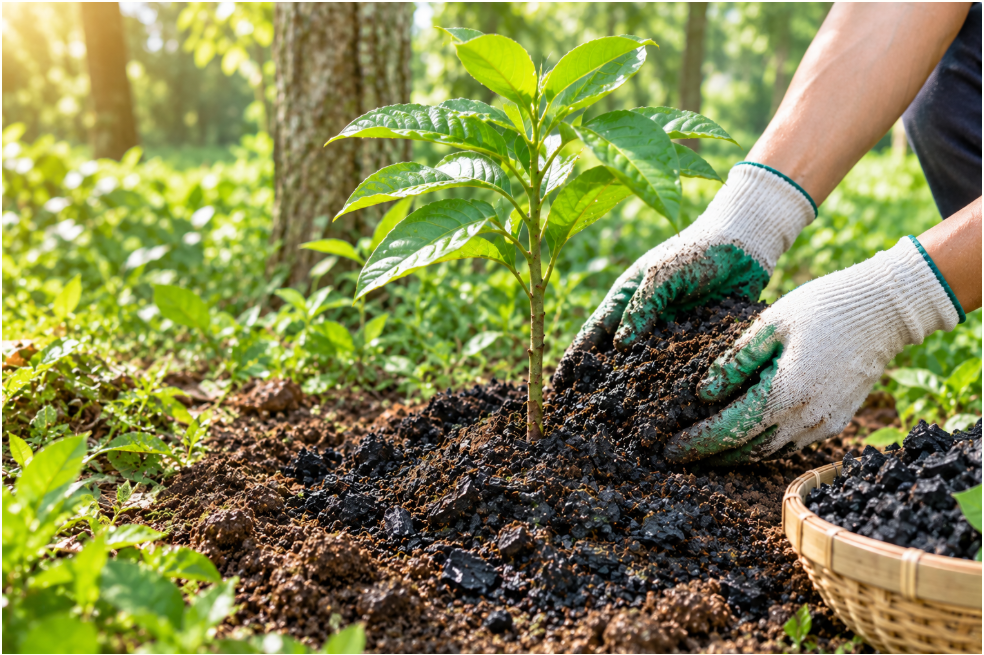
How Biochar Physically and Chemically Improves Soil
The true agricultural value of biochar comes from its rigid, highly porous carbon skeleton. Once incorporated into the soil matrix, it acts as a permanent physical framework that drastically alters the root zone environment.
Superior Water Retention
Biochar acts as a microscopic sponge. Its internal network of pores captures and holds water molecules, preventing rapid drainage and evaporation. This mechanical property is incredibly valuable in drought-prone regions and degrades sandy soils, fundamentally improving the soil’s water-holding capacity and reducing irrigation costs.
Nutrient Holding and CEC (Cation Exchange Capacity)
Biochar naturally develops a negative electrical charge on its surface. Through a property known as Cation Exchange Capacity (CEC), it acts like a magnet, holding onto positively charged vital nutrients (like calcium, magnesium, and potassium). Instead of these nutrients washing away during heavy rain (leaching), biochar holds them in the root zone, making them readily available for plants to absorb over time.
Creating Microbial Habitats
Biochar itself is not a fertilizer; it contains very few readily available nutrients. However, its microscopic pore spaces provide the perfect, protected microsites for beneficial soil bacteria and mycorrhizal fungi to thrive, shielding them from predators and extreme dry spells.
Realistic Yield Benefits: When Does Biochar Actually Work?
While biochar is a powerful tool, it should not be marketed as a universal, instant yield booster. Crop response depends heavily on the baseline health of the soil.
- Where Biochar Excels: The most dramatic yield improvements occur in highly degraded, acidic, sandy, or nutrient-leached soils. In these harsh environments, biochar’s ability to instantly improve water retention and buffer soil pH creates a noticeable surge in plant health.
- Where Biochar Plateaus: In naturally fertile, loamy soils that already possess excellent organic matter and moisture control, adding biochar will produce a much smaller, sometimes neutral, immediate yield response. Here, biochar acts more as a long-term carbon sequestration tool rather than an instant fertilizer.
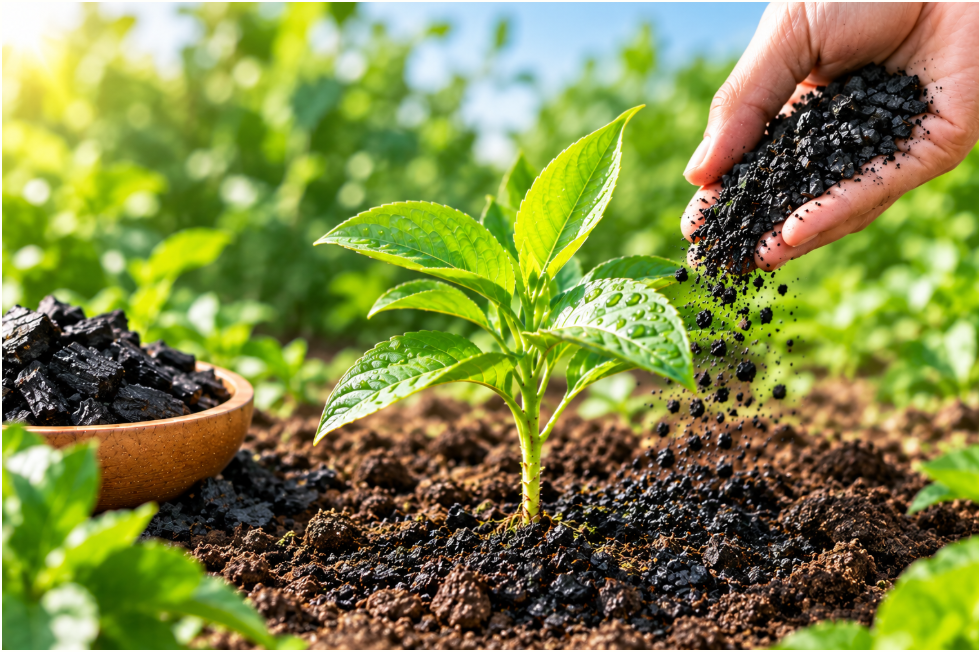
Best Practices for B2B Agricultural Application
Applying biochar requires strict agronomic protocols. Simply dumping dry raw carbon into a field can actually harm the current crop cycle if not managed correctly.
The Inoculation Rule (“Charging” Biochar)
Fresh, raw biochar is highly reactive. If applied directly to the soil, its powerful pores will aggressively absorb ambient water and nutrients, temporarily stealing them from the plant roots, a phenomenon known as nutrient tie-up. To prevent this, biochar must be “charged” or “inoculated” before application. This involves pre-mixing the raw biochar with nutrient-rich organic matter (like liquid compost tea, manure, or liquid fertilizers) for several weeks. Once the pores are fully loaded with nutrients and biology, it is safe to introduce to the field.
Application Rates and Incorporation
There is no universal application rate. Dosage depends entirely on soil testing, crop type, and the specific biochar’s pH. For commercial agriculture, best practices involve:
- Starting with a moderate, evidence-based application rate.
- Tilling or mechanically incorporating the charged biochar directly into the active root zone during pre-season soil preparation.
- Treating biochar as a permanent structural soil amendment that works in synergy with your standard seasonal fertilizer program.
For agricultural distributors, fertilizer manufacturers, and large-scale farming operations, sourcing clean, properly carbonized biomass is critical to a successful biochar program.
Looking for high-quality, agricultural-grade biochar raw materials tailored for soil conditioning? Lamian Global supplies premium carbonized products processed strictly for environmental and agricultural safety. Contact our team with your required specifications, intended agricultural application, and estimated bulk volume to discuss tailored supply options.
- Company: Lamian Global
- Headquarters: 47 Street 36, Van Phuc Residential Area, Hiep Binh Ward, Ho Chi Minh City, Vietnam, 700000
- Hotline / WhatsApp: +84 812 036 789
- Email: contact.charcoal@lamianglobal.com
- Website: https://lamiancharcoal.com/