Binchotan quality depends heavily on the raw wood. This article compares three main species used in production – traditional Japanese Ubamegashi oak, fast-growing Eucalyptus, and dense Acacia – covering density, fixed carbon content, burn performance, supply and ideal applications for professional kitchens.
Why Wood Species For Binchotan
Binchotan (white charcoal) is produced through high-temperature carbonization, typically reaching 1,000-1,300°C (sometimes up to 1,500°C in traditional Japanese kilns) over 10-20 days, followed by rapid cooling in a mixture of sand, ash and soil. This process yields charcoal with very high fixed carbon, extreme hardness, a metallic ring when struck, almost no smoke and long, stable heat.
The density and cellular structure of the raw wood directly determine the final fixed carbon content, hardness, burn duration and ash level. Even with identical kiln methods, different species produce measurable differences in performance.
Kishu Ubamegashi Oak – The Traditional Japanese Standard
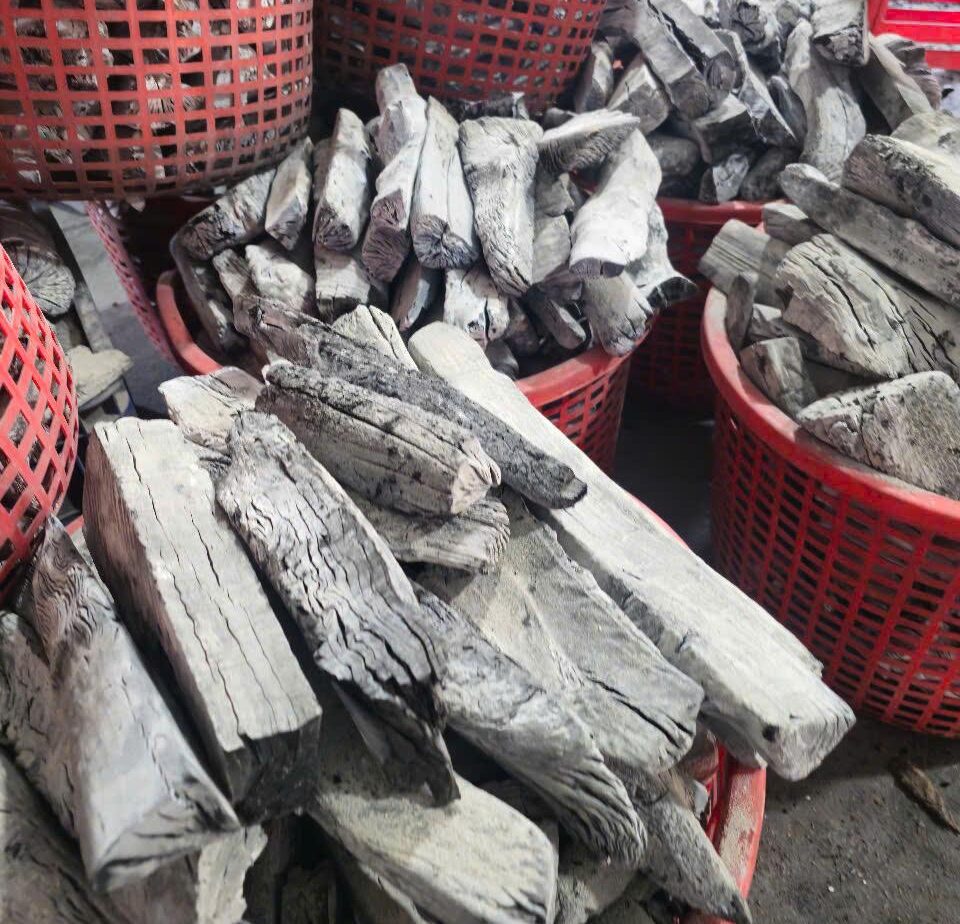
Ubamegashi oak (Quercus phillyraeoides), native to the Kishu region (Wakayama Prefecture, Japan), is the classic raw material for authentic Japanese Binchotan. This slow-growing evergreen oak has exceptionally high density. Suitable trees are typically harvested at 30-40 years of age (older trees of 80-100 years can produce more brittle charcoal).
Laboratory and commercial data show authentic Kishu Binchotan typically reaches:
- Fixed carbon: 91-96% (often >93-95%)
- Ash: Usually <3%
- Burn time: 4.5-6.5 hours (or longer in closed grills such as Konro)
- Hardness: ≥15 on the traditional Miura scale (some pieces reach 20, comparable to certain metals)
- Clear metallic ring when struck
Because of limited natural supply and slow growth, true Ubamegashi Binchotan remains scarce and commands a significant premium. It is mainly used in high-end yakitori, robata and fine-dining kitchens.
Eucalyptus – The Most Widely Used Alternative
Eucalyptus is currently the dominant hardwood for Binchotan-style white charcoal outside Japan, especially in Vietnam. It is fast-growing (harvestable in 5-7 years), abundant and has good density that responds well to the high-temperature process.
Typical laboratory and supplier specifications for properly made Eucalyptus Binchotan:
- Fixed carbon: 90-95% (commonly 92-93%)
- Ash: ≤3%
- Moisture: ≤5%
- Calorific value: approx. 7,500-8,200 kcal/kg
- Burn time: 4-5 hours
- Good to excellent metallic ring potential when densified correctly
Its reliable supply and lower cost make it the preferred choice for high-volume professional kitchens, restaurant chains and export markets that need consistent performance at scale.
Limitation: While high-quality Eucalyptus Binchotan can approach Japanese performance, it rarely matches the absolute hardness and longest burn times of top-grade Ubamegashi oak.
Acacia – Dense and Reliable Hardwood Option
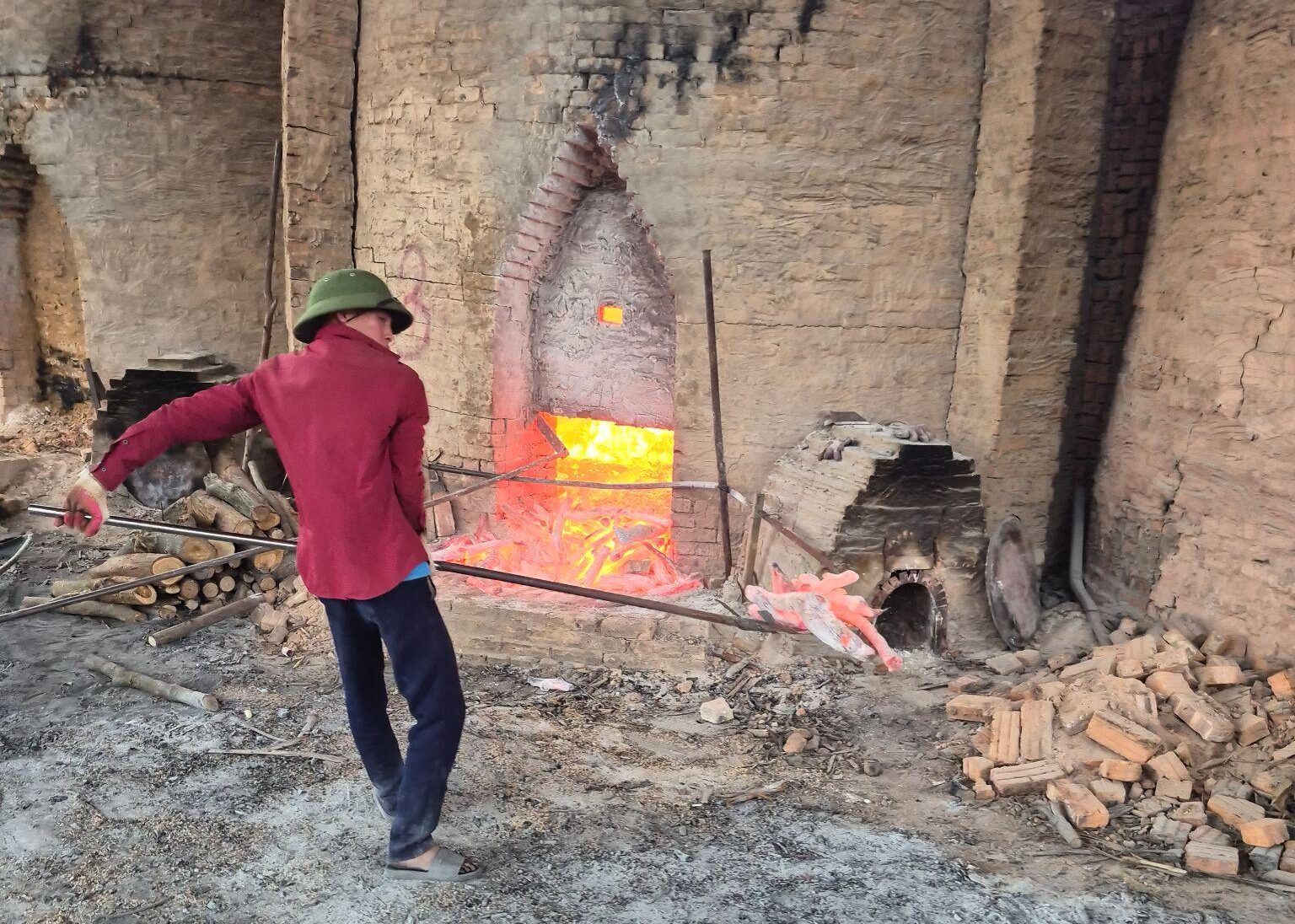
Acacia (commonly Acacia mangium and related species) is another dense hardwood used for white charcoal production, particularly in Southeast Asia. It offers good natural density and works well with the same high-temperature carbonization and rapid-cooling method.
Available data for Acacia-based white charcoal typically show:
- Fixed carbon: High (often in the 90% range when processed as Binchotan-style; some commercial grades list ≥75-90% depending on exact process)
- Burn time: 4-6 hours in good batches
- Low smoke and ash
- Solid hardness and competitive performance
When sourced from well-managed plantations it supports more sustainable production and is suitable for standard to mid-to-premium white charcoal grades. Consistency can vary more than with Eucalyptus or true Ubamegashi; careful kiln control and wood selection are essential.
Comparison of the Three Wood Species
Each wood species brings different strengths to Binchotan production. The table below summarizes the key differences in origin, density, fixed carbon potential, supply and ideal applications.
| Parameter | Ubamegashi Oak (Kishu) | Eucalyptus | Acacia |
| Origin | Japan (traditional) | Vietnam & tropical regions |
Vietnam, Indonesia & tropical regions
|
| Growth Speed | Slow (30-40 years typical) | Fast (5-7 years) | Fast to medium |
| Density | Extremely high | High | High |
|
Typical Fixed Carbon
|
91-96% (often >93-95%) | 90-95% (commonly 92-93%) |
High (often ~90% in good batches)
|
|
Metallic Ring Potential
|
Excellent | Good to excellent | Good |
|
Typical Burn Time
|
4.5-6.5+ hours | 4-5 hours (up to 5-6 in top batches) | 4-6 hours |
| Supply & Cost | Limited / Premium | Abundant / Competitive |
Abundant / Competitive
|
| Best For | Ultra-premium / fine dining | High-volume professional use |
Reliable mid-to-premium use
|
How Professional Producers Select and Process Wood
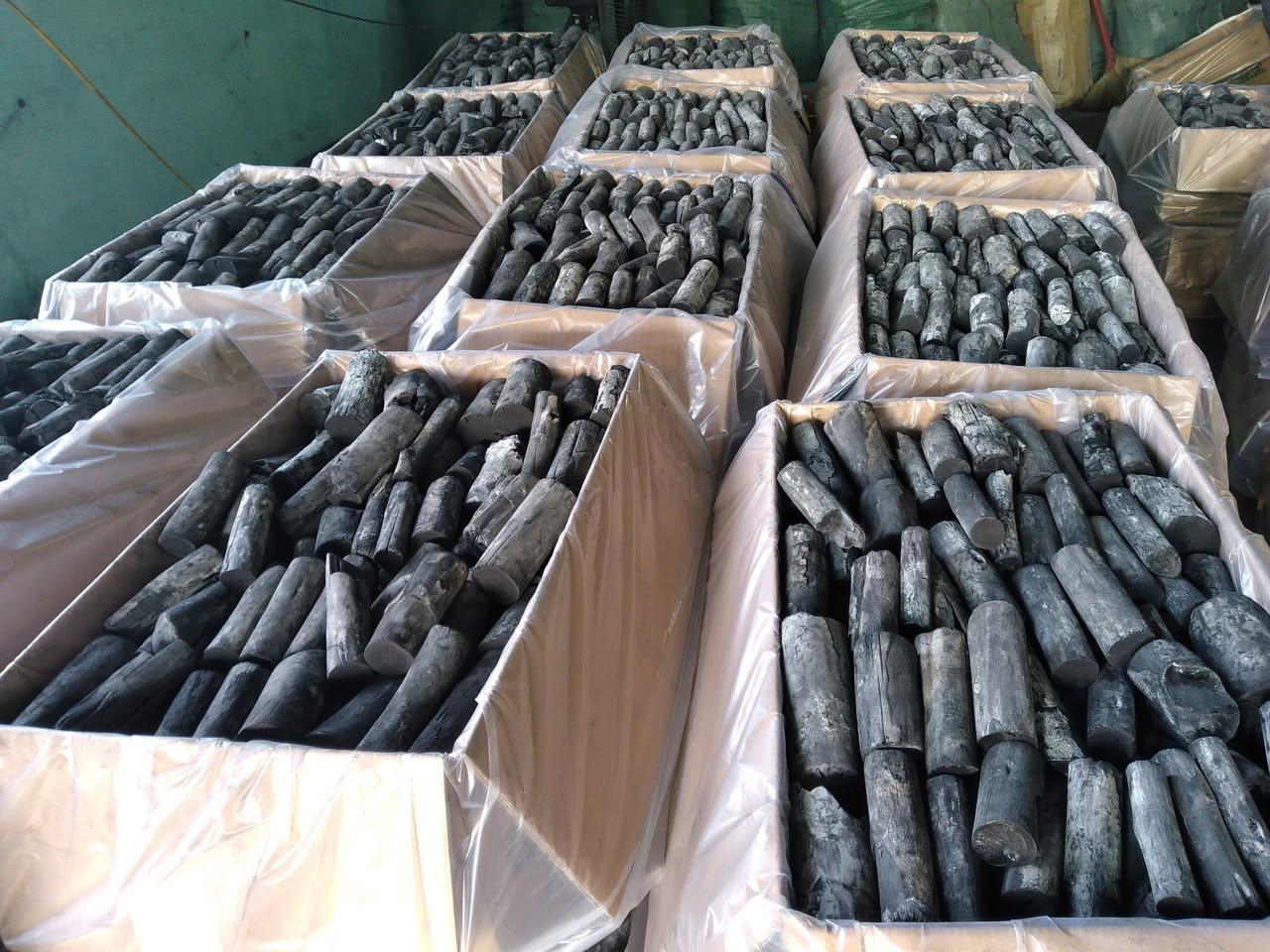
The quality of Binchotan depends not only on the wood species but also on rigorous selection and precise processing. Reliable producers follow strict standards at every stage:
- Carefully select dense, well-dried hardwood
- Apply controlled high-temperature carbonization (reaching 1,000-1,200°C over 12-15 days)
- Remove the charcoal while red-hot and cool it rapidly in sand, ash and soil (or steel drums in some modern setups)
- Conduct pre-shipment inspection to verify fixed carbon, ash, moisture, hardness and consistency
- Quality can vary significantly between producers; laboratory reports and sample testing are strongly recommended for buyers seeking reliable performance
Conclusion
Kishu Ubamegashi oak remains the gold standard for authentic Japanese Binchotan thanks to its extreme density and purity. When the same high-temperature process is applied correctly, Eucalyptus and Acacia also yield high-quality white charcoal with fixed carbon above 90%, stable burn times, low smoke and competitive cost.
The best choice depends on performance needs, volume and budget: True Ubamegashi for the most demanding uses, while well-made Eucalyptus or Acacia Binchotan delivers excellent results for professional and high-volume applications.
Looking for a reliable supply of Eucalyptus or Acacia Binchotan?
Partner with Lamian Global for premium, factory-direct white charcoal. Contact our B2B Export Team for FOB/CIF pricing, technical specifications, or a complimentary sample kit:
- Email: contact.charcoal@lamianglobal.com
- WhatsApp / Hotline: +84 812 036 789
- Website: https://lamiancharcoal.com/