
BLACK CHARCOAL
BLACK CHARCOAL
BLACK CHARCOAL
BLACK CHARCOAL
BLACK CHARCOAL
BLACK CHARCOAL
BLACK CHARCOAL
BLACK CHARCOAL
WHITE CHARCOAL
BLACK CHARCOAL
BLACK CHARCOAL
BLACK CHARCOAL
Natural Wood Charcoal: Complete Guide to Types, Specs & Wholesale Supply
Natural wood charcoal is an essential commodity in the global BBQ and commercial grilling market. However, inconsistent burn rates, unverified wood species, and chemical binders can create sourcing challenges for B2B buyers. Understanding charcoal types and technical specifications is key to ensuring consistent quality.
This guide helps importers, restaurants, and BBQ professionals understand wood charcoal and source it wholesale from Vietnam. Lamian Global supplies 100% natural wood charcoal in lumpwood, briquette, black, and white (Binchotan) formats.
What Is Natural Wood Charcoal?
Natural wood charcoal is the solid residue left when wood is heated in a low-oxygen environment, a process known as pyrolysis or carbonisation. The wood does not burn, it decomposes: moisture and volatile compounds are driven off, leaving a porous, carbon-rich structure that burns hot with little flame and low smoke.
The word “natural” matters commercially. It separates true wood charcoal from charcoal briquettes with chemical binders, from coal-derived products, and from activated charcoal, which is engineered for adsorption rather than combustion. Natural wood charcoal contains no added binder and no chemical treatment. Its properties come from the wood species, the carbonisation temperature, and the cooling method.
How Wood Charcoal Is Classified
The global charcoal trade uses two overlapping classification systems, and confusion arises because suppliers often mix them. Lamian separates them explicitly so buyers can compare offers on a like-for-like basis.
By Production Form
This is the first question any buyer should ask: was the charcoal formed from whole wood pieces, or pressed from particles? The answer determines ignition speed, burn profile, and aroma.
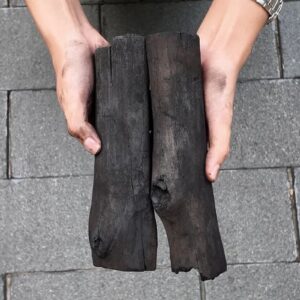
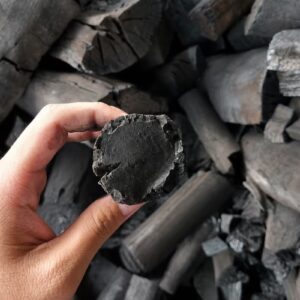
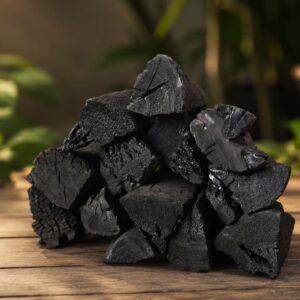
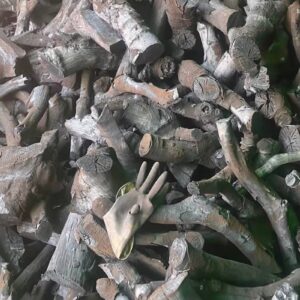
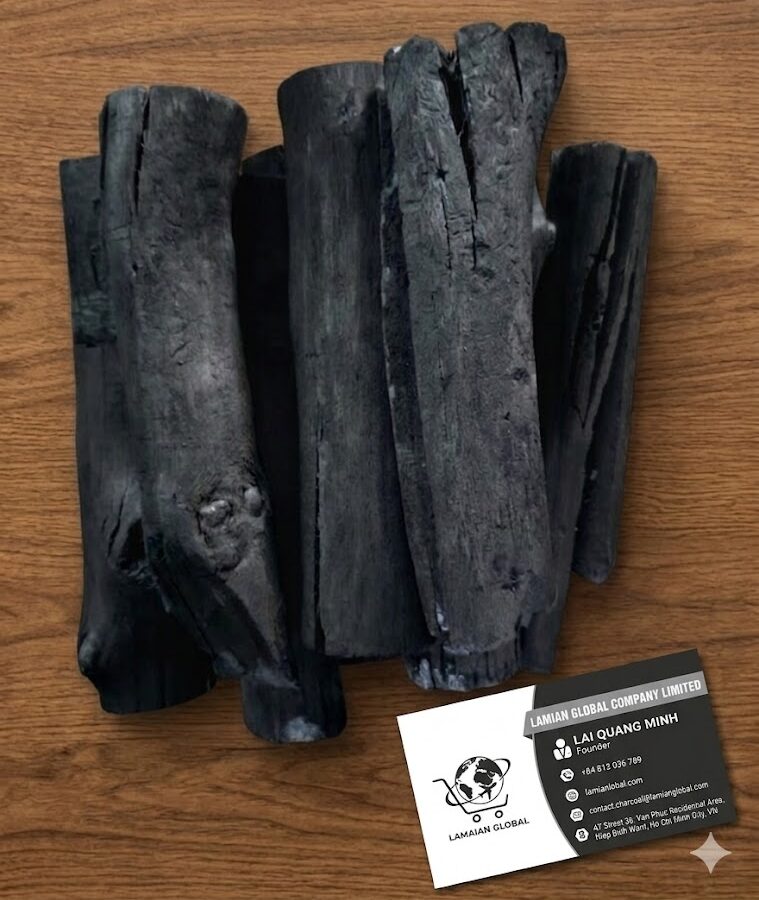
Lumpwood Charcoal (Lump Charcoal) is carbonised directly from branches, logs, or split wood pieces, without grinding, extrusion, or binder. The pieces are irregular in size and shape, which is a visual signature that the product has not been reconstituted. It is the default format for traditional BBQ, kamado cooking, and low-and-slow smoking in North America, Europe, and Australia. See our dedicated Lump Charcoal category page for full detail.
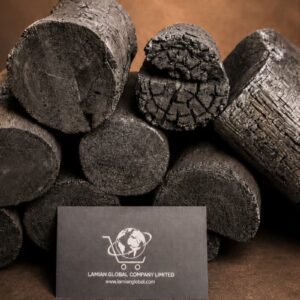
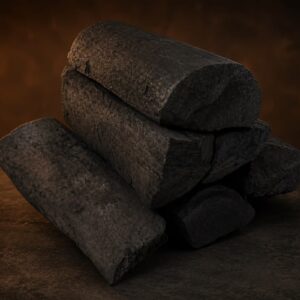
Briquette Charcoal is made by grinding sawdust or charcoal fines into powder, then pressing it into a mould, most commonly a hexagonal stick with a centre hole or a pillow-shaped BBQ briquette. Briquettes offer uniform size and predictable packing, and dominate Korean and Japanese BBQ chains. Our Sawdust Charcoal range covers this format in depth.
By Thermal Technology
The second system concerns how the charcoal reached its final state, regardless of shape. It determines appearance, density, smoke behaviour, and price positioning.
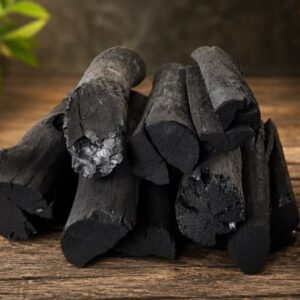
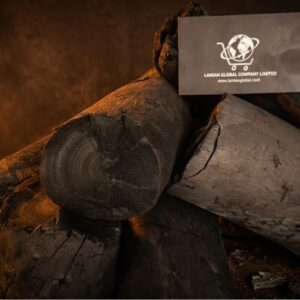
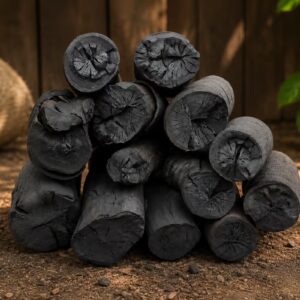
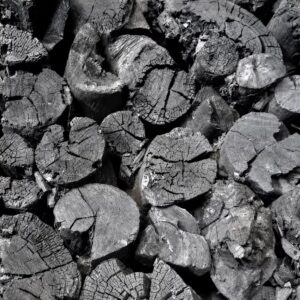
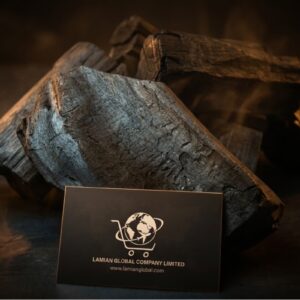
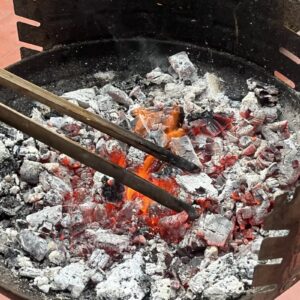
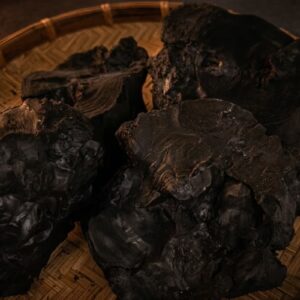
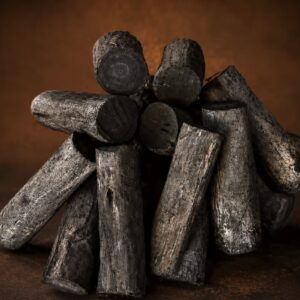
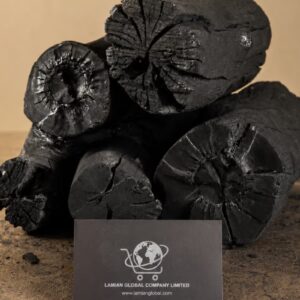
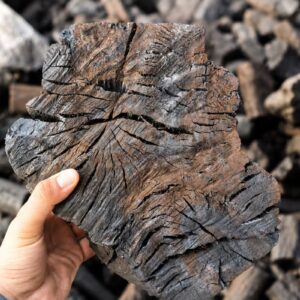
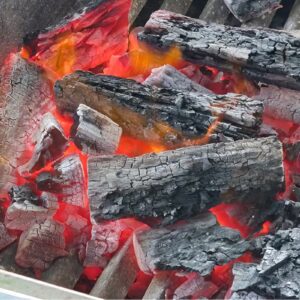
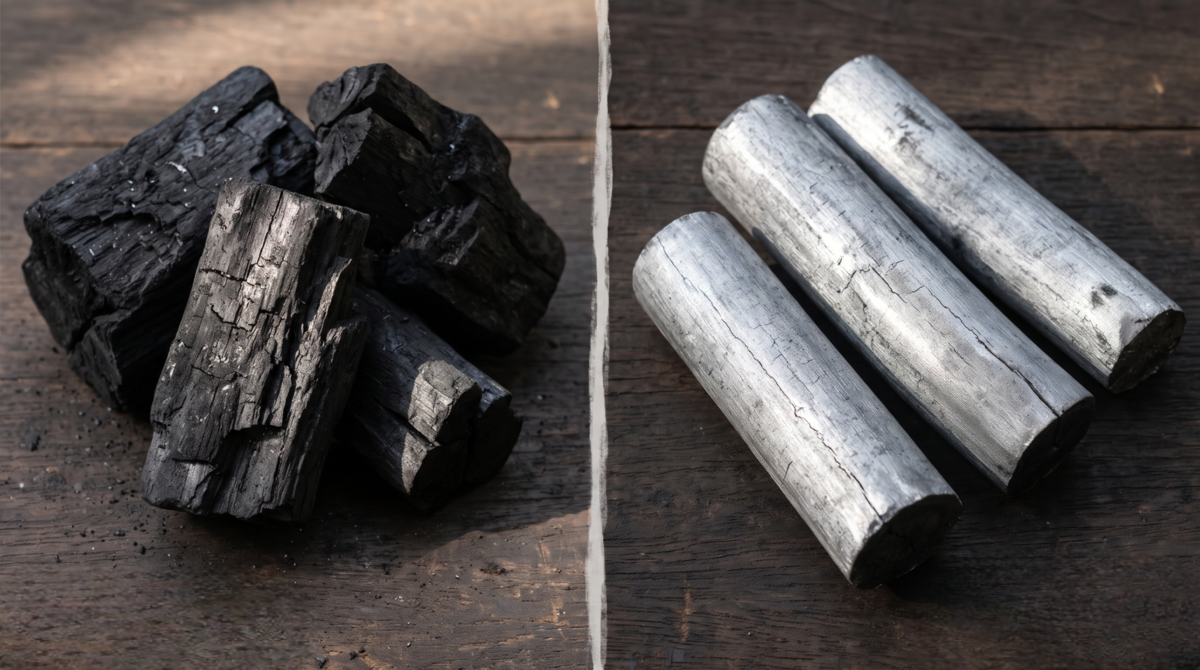
Black Charcoal is the conventional product of pyrolysis followed by cooling in a restricted-oxygen environment. Most lumpwood sold into Western BBQ markets falls into this category, from Indonesia, Namibia, Vietnam, and South America. Our Black Charcoal pillar page covers the technical and commercial side.
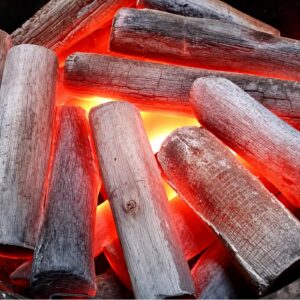
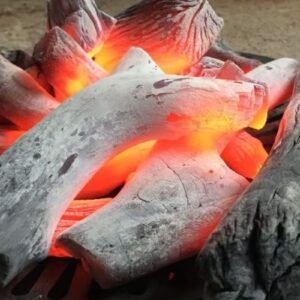
White Charcoal or Binchotan also starts with natural wood branches, typically oak, eucalyptus, or acacia, but is carbonised at very high temperature and then quenched with ash, sand, and earth. This produces a hard, dense, pale-surfaced carbon that burns longer with almost no smoke or odour. The trade-off is ignition difficulty and cost. See our White Charcoal (Binchotan) pillar page.
A buyer can therefore legitimately specify “lumpwood black charcoal” or “briquette white charcoal”. Collapsing both systems into a single “charcoal” label makes comparison impossible.
Wood Charcoal Specifications at a Glance
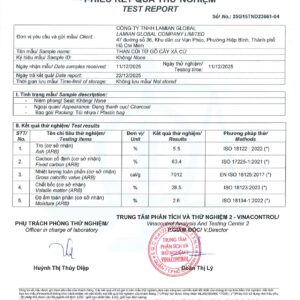
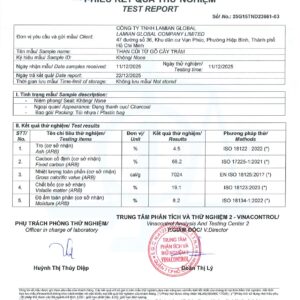
Charcoal quality is assessed through proximate analysis plus a calorific value determination. The five numbers that matter in a commercial specification sheet are moisture, ash, fixed carbon, volatile matter, and gross calorific value.
Published benchmarks give useful reference ranges. Lump charcoal with fixed carbon above 75%, moisture below 8%, and ash below 8% is consistently associated with complete combustion and better grilling performance, and heating values above 27 to 29 MJ/kg are achievable in well-made products. Well-made briquettes can perform just as strongly: a briquette sample documented in Laos reached a GCV of 7,595 cal/g with fixed carbon of 78.68%, moisture of 1.88%, and ash of 3.79%.
The lesson is that format alone does not determine quality. A well-made briquette can outperform a poorly made lump product. How to read those figures properly is covered in our guide on how to interpret a wood charcoal lab test report.

Wood Charcoal by Wood Species
Wood species is the largest determinant of charcoal character after carbonisation itself. Density drives burn time, extractive content shapes aroma, and cell structure affects ignition and spark behaviour.
Lamian supplies or sources several categories, each with a dedicated technical treatment: Mangrove for dense hardwood with a long, clean burn; Khaya for heavy African mahogany with fixed carbon in the 63 to 78% range; Melaleuca for high fixed carbon between 79 and 87%; Cassia for its cinnamon-family aroma and heat; Acacia for cost-effective volume; Longan for clean-scented density; Eucalyptus for fast ignition and high flame; Coffee Wood for a distinctive aroma story; and Mixed Hardwood for commercial wholesale. Our comparative overview is maintained in the Vietnam hardwood charcoal species guide.
Lumpwood vs. Briquette: A Quick Decision Guide
The choice between lumpwood and briquette is not a quality hierarchy. It is a fit-for-use decision based on cooking style, system design, and flavour expectation. Lumpwood suits high-heat searing, direct grilling, kamado cookers, and low-and-slow programmes with natural draft, and it delivers species-specific aroma.
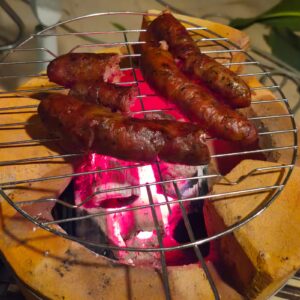
Briquettes suit long steady cooks, Korean and Japanese table grills, and any system with fixed fuel dimensions, offering greater consistency and slower burn-down. A deeper technical comparison is available in Lumpwood Charcoal vs. Wood Briquettes, alongside our B2B comparisons of sawdust versus mangrove and sawdust versus coconut shell.
Applications of Natural Wood Charcoal
Commercial grilling operations choose wood charcoal on three criteria: heat consistency across the service window, ash management, and flavour contribution. Those priorities differ sharply by format and by cooking style. Restaurant steakhouses and barbecue operations typically use lump hardwood charcoal, while Korean and Japanese chains standardise on briquettes for fixed grill geometry.
Kamado cookers are designed around lump pieces in a defined size band, where oversized chunks choke airflow and undersized pieces fall through the grate, as explained in our kamado and ceramic grill sizing guide. Offset smoking relies on a steady coal bed and is addressed in Wood Charcoal vs. Firewood.
Quality Standards, Testing & Certifications
A charcoal shipment that looks correct in a photograph can still fail at the port, in the warehouse, or on the grill. Three testing and compliance layers matter most. First, a lot-specific Certificate of Analysis reporting moisture, ash, fixed carbon, volatile matter, and calorific value. Second, Self-Heating Test certification, because charcoal shipped by sea is regulated as UN 1361, Class 4.
Second, substances liable to spontaneous combustion, and a valid SHT certificate is a condition of loading acceptance for major carriers, covered in our SHT and IMDG Code 4.2 guide. Third, sourcing legality: phytosanitary certificates and, for the EU, EUDR proof that wood charcoal under HS 4402 is deforestation-free and legally harvested, detailed in wood sourcing compliance.
Wholesale Wood Charcoal Supply from Vietnam
Vietnam has become a major charcoal origin for three structural reasons: species diversity, mature kiln capacity, and competitive conversion cost. That combination supports both volume programmes and premium single-species supply.
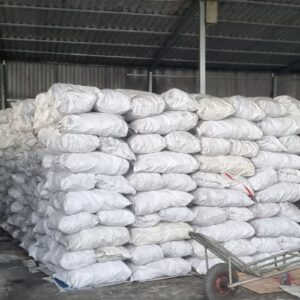
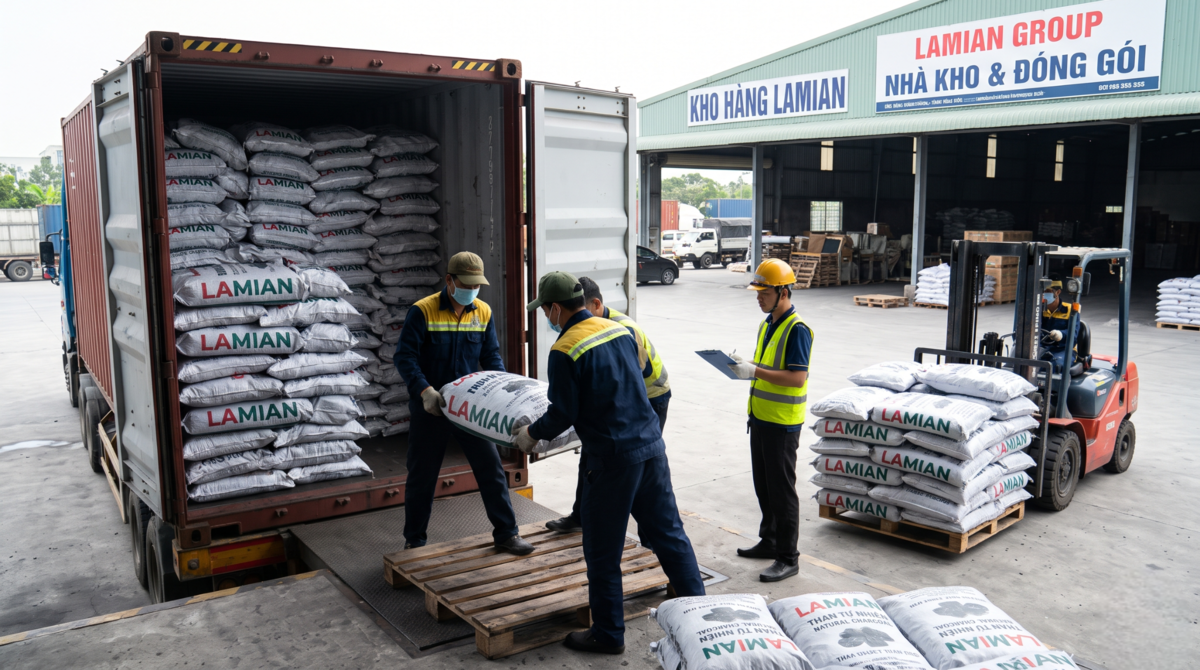
Lamian’s export model runs on four operational pillars: traceable sourcing with chain of custody from forest or plantation to kiln; lot-level specification control against an agreed COA; OEM and private label packaging, covered in packaging solutions for wood charcoal; and container optimisation, with bulk loose loading versus palletised loading explained in our container stuffing guide. The full end-to-end process is set out in sourcing wood charcoal from Vietnam.
Why Choose Lamian Global?
Species breadth matters only when it comes with specification discipline. Lamian supplies mangrove, melaleuca, Khaya, cassia, acacia, longan, eucalyptus, coffee wood, and mixed hardwood, each against a written specification and a lot-level COA rather than a generic description.
We cover both production forms and both thermal classes, so buyers can consolidate lumpwood, briquette, black, and Binchotan with one supplier without losing technical clarity. Export compliance is built in rather than added later: SHT certification, IMDG Code 4.2 declaration, phytosanitary documentation, and EUDR-ready traceability are part of the standard file.
Request a Wholesale Quotation
Send us your target species or format, required specification range, packaging preference, estimated volume, and destination port. Our export team will respond with a firm quotation and a lot-specific specification sheet.
Lamian Global Company Limited
- Hotline/Whatsapp: +84 812 036 789
- Email: contact.charcoal@lamianglobal.com
Read more: Premium Natural Black Charcoal Manufacturer & Exporter