One of the most distinctive features of genuine Binchotan (white charcoal) is the clear metallic chime it produces when two sticks are struck together. This sound results from extreme density and high fixed carbon content created by a unique high-temperature process. For professional buyers, it serves as a quick and reliable quality indicator.
What Causes the White Charcoal Metallic Sound?
Ordinary black charcoal is relatively porous and lower in carbon purity. When struck, it produces only a dull thud. Properly made Binchotan behaves differently. Its tightly structured carbon matrix allows sound waves to travel cleanly through the material, creating a sharp, resonant tone similar to metal or porcelain.
This acoustic property has long been recognized in traditional Japanese charcoal making and remains a practical test used by experienced buyers worldwide. A clear ring signals thorough carbonization, high hardness, and structural integrity. A dull or muffled response usually points to incomplete carbonization, residual moisture, lower density, or ordinary black charcoal.
The Production Process Behind the Metallic Sound
The raw material for Binchotan is essentially the same dense hardwood used for high-quality black charcoal. The decisive difference lies in the carbonization temperature and the cooling method.
| Stage | Binchotan (White Charcoal) |
Ordinary Black Charcoal
|
|
Carbonization period
|
12–15 days in specialized kilns | Typically shorter |
|
Final temperature
|
Raised to 1,000–1,200°C |
Usually 400–700°C
|
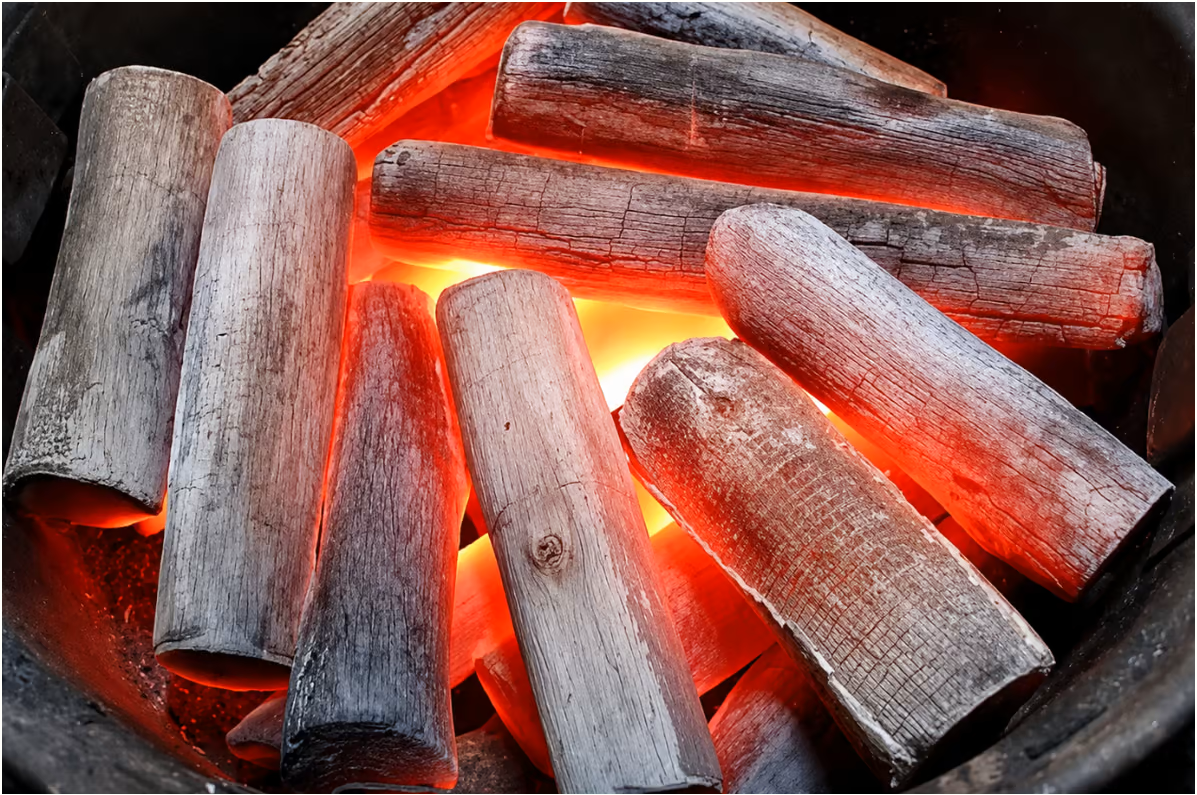
| Cooling method | Kiln is opened; air is introduced to make the charcoal glow bright red-hot, then rapidly removed |
Kiln is sealed for slow cooling inside
|
| Cooling medium | Placed into steel drums or covered with ash, sand and earth |
Remains inside the sealed kiln
|
|
Resulting characteristics
|
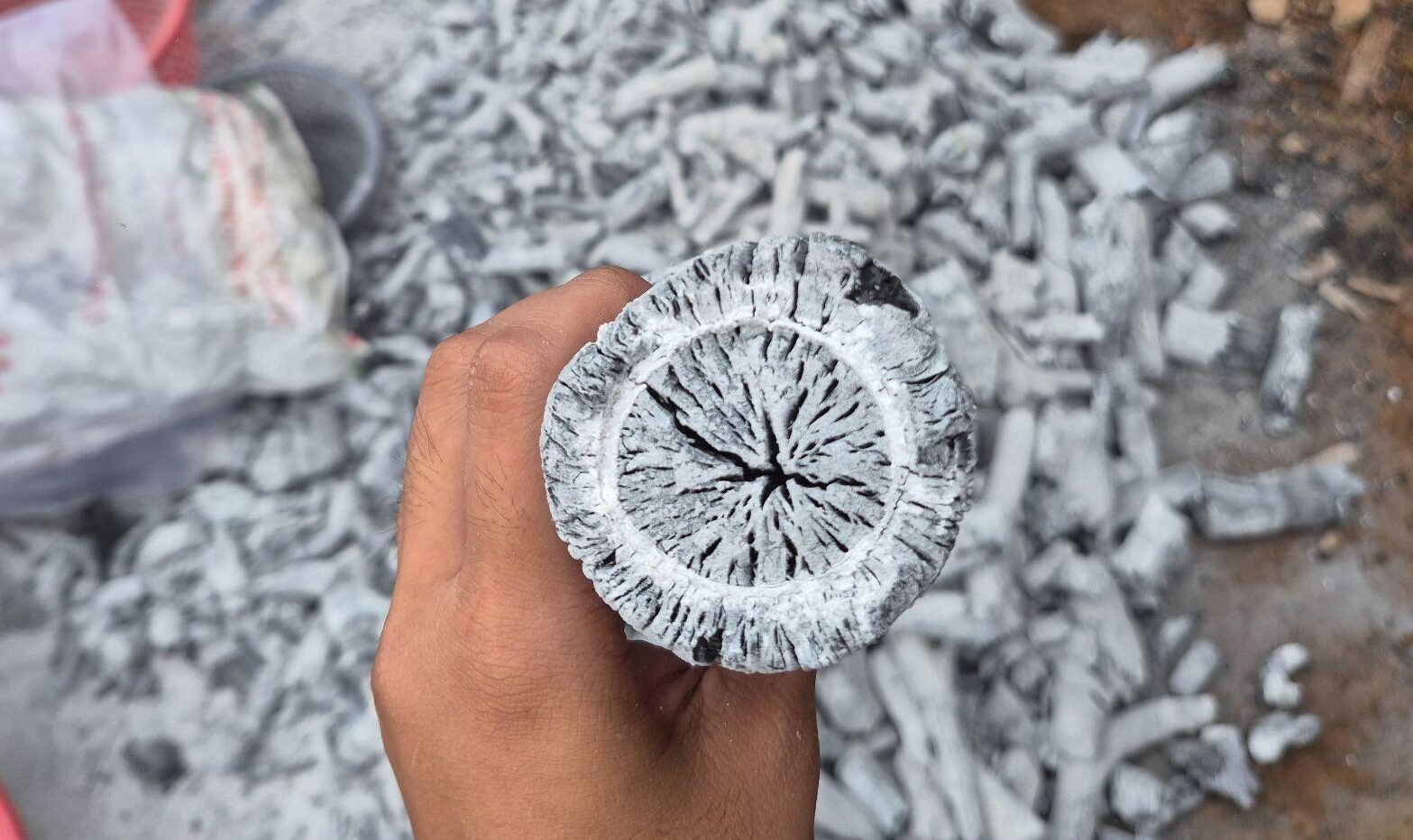
Dense carbon structure, extreme hardness, greyish-white surface ash, metallic chime |
Softer structure, dull sound when struck
|
This rapid removal and controlled cooling locks in the dense structure and hardness that produce the characteristic metallic chime.
How the White Charcoal Rings Serves as a Quality Test
Professional buyers often use a simple field test: pick up two pieces of charcoal and tap them firmly together.
- A clear, ringing metallic chime indicates high density and high fixed carbon, the hallmark of properly made Binchotan.
- A dull thud usually signals lower density, incomplete carbonization or ordinary black charcoal.
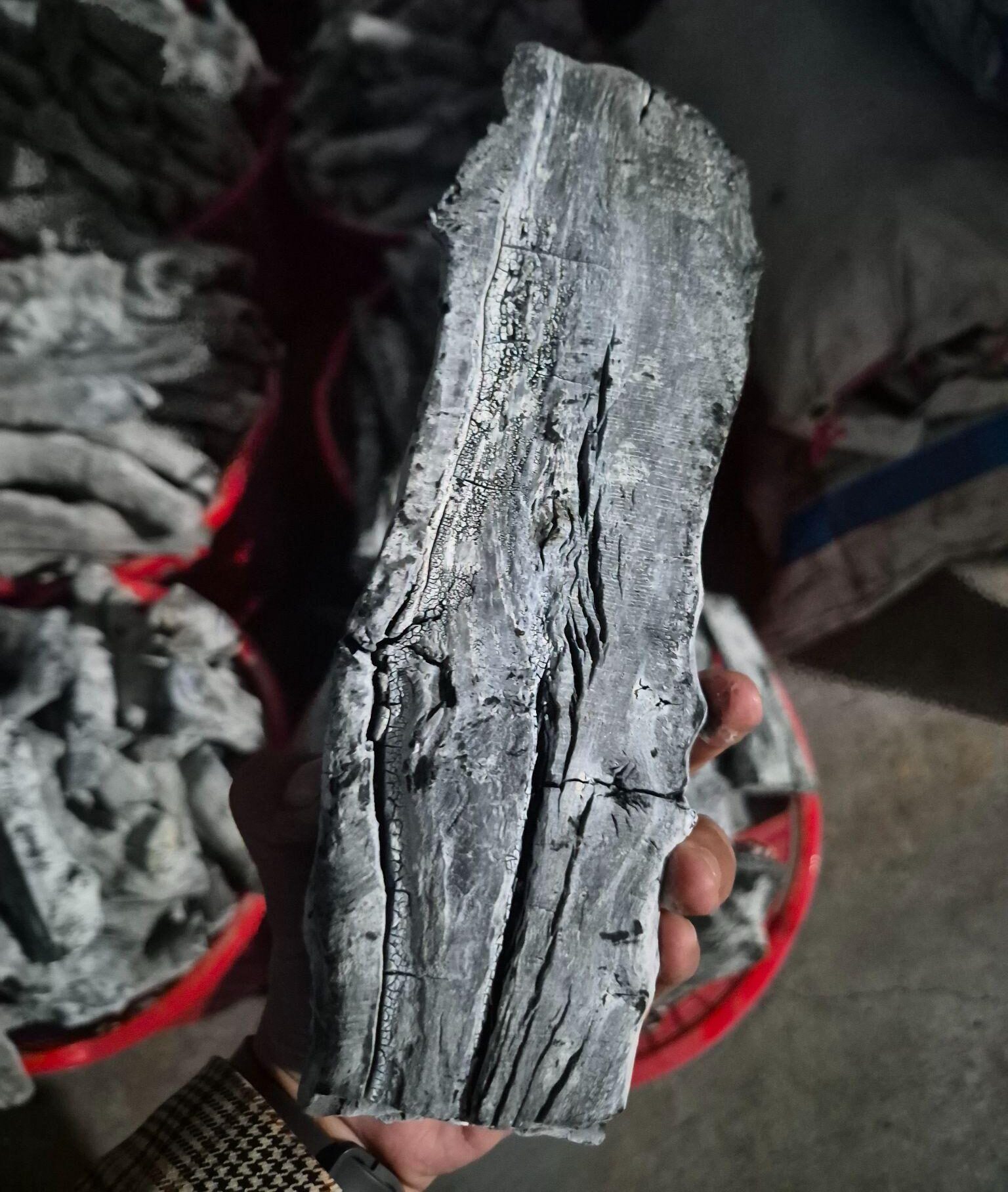
This acoustic test requires no equipment and can be done on samples before placing bulk orders. When combined with visual inspection (greyish-white surface ash and clean fracture) and a basic weight/density check, it helps importers and restaurants verify authenticity and consistency.
Why Density and Hardness Matter for Performance
The same structural characteristics that create the metallic chime also deliver superior performance:
- Longer, more stable burn times
- Nearly smokeless and odorless combustion
- Strong, consistent infrared heat ideal for yakitori, robata, and fine grilling
- Lower ash residue and cleaner airflow
These advantages make genuine Binchotan the preferred fuel where heat stability, food purity, and flavor clarity are critical.
Consistency in Professional Production
Reliable producers start with carefully selected dense hardwood and maintain tight control over the high-temperature refining stage (1,000–1,200°C) and the cooling process. Pre-shipment inspection typically includes checks for hardness, fixed carbon level (commonly 90–95%+), surface appearance, and the clarity of the metallic ring. Transparent technical specifications further support buyers who require predictable performance across full containers.
Conclusion
The metallic chime of Binchotan is more than an interesting acoustic trait. It is physical evidence of thorough high-temperature refinement and a dense, high-carbon structure. Understanding this characteristic allows professional buyers to identify authentic, high-performance white charcoal quickly and with greater confidence.
Ready to choose the superior charcoal for your kitchen?
Contact Lamian Charcoal for product specifications, samples and wholesale quotations of premium Binchotan (white charcoal) and high-quality black charcoal from Vietnam.
- Email: contact.charcoal@lamianglobal.com
- WhatsApp / Hotline: +84 812 036 789
- Website: https://lamiancharcoal.com/