
Comparing Hardwood Binchotan vs Sawdust Binchotan helps commercial kitchens choose the right balance of heat performance, burn time, consistency, and cost. While both fuels are designed for high-temperature grilling, their materials, production methods, and combustion characteristics differ. This guide compares their key specifications, operational benefits, and supply chain considerations to help restaurants make a more informed purchasing decision.
Hardwood Binchotan vs Sawdust-Based Briquettes
Selecting the right commercial fuel requires a clear understanding of the fundamental differences between traditional wood logs and modern compressed briquettes. Exploring these two primary types of Binchotan charcoal helps procurement managers match fuel characteristics with specific kitchen demands.
Hardwood Binchotan: Traditional Lump Charcoal
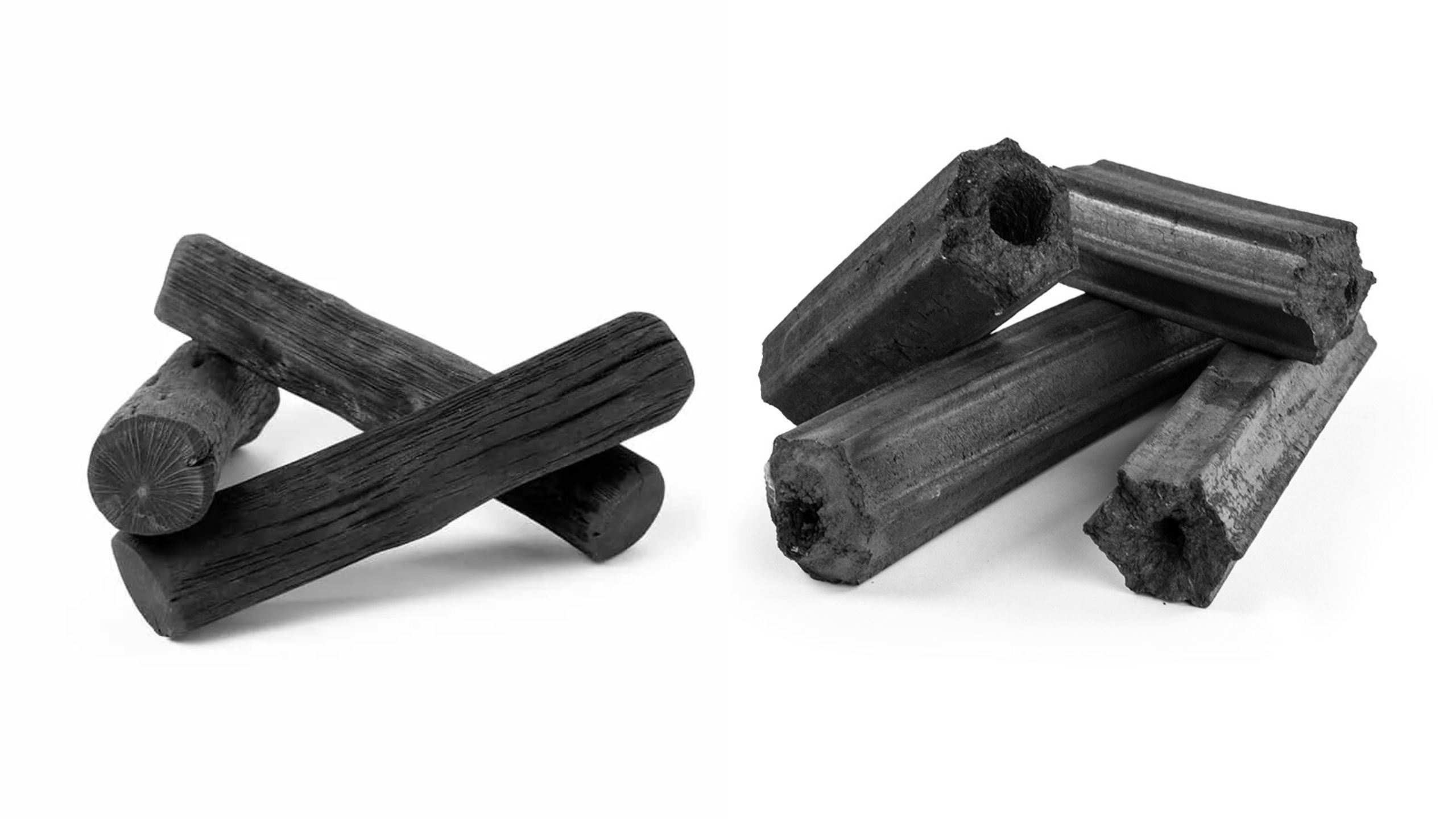
Natural lump Binchotan is crafted from solid natural hardwood logs that undergo high-temperature carbonization in specialized kilns to produce an exceptionally pure, high-density white charcoal. Known for its distinct metallic ring when struck, this premium fuel burns at extreme temperatures while generating intense far-infrared heat that quickly sears meats to lock in natural juices and natural flavors.
Sawdust-Based Binchotan-Style Briquettes
Engineered from 100% natural hardwood sawdust compressed under high pressure without chemical additives, Binchotan briquettes offer an eco-friendly and highly uniform fuel alternative. These dense hexagonal briquettes feature a central hole for optimized airflow, delivering consistent heat output and steady combustion performance for busy commercial kitchens.
Production Process and Structural Differences
The methods used to create white charcoal directly influence its physical strength, density, and resistance to breakage during shipping and daily handling. Understanding these production techniques highlights the structural unique traits of each charcoal type.
Traditional Kiln Carbonization For Hardwood Logs
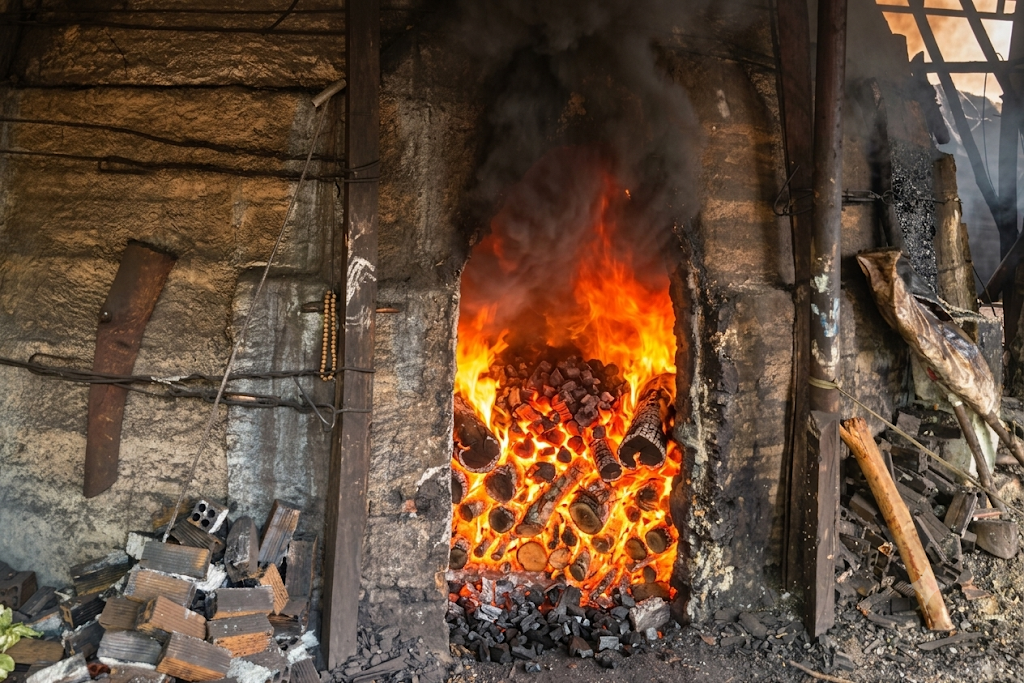
Solid timber logs are slowly carbonized over weeks in traditional brick kilns before being smothered with a wet mixture of ash, earth, and sand at temperatures exceeding 1,000 degrees Celsius. This rapid cooling process seals the wood fibers tightly together, creating an extremely hard charcoal structure that resists moisture and retains heat for long hours.
Mechanical Extrusion And Molding For Sawdust Briquettes
Sawdust briquettes rely on high-pressure extrusion to bind fine wood particles together purely through heat and natural wood lignin before entering the carbonization kiln. The resulting uniform density ensures that every single briquette burns at the exact same rate, simplifying heat management for line cooks during busy shifts.
How Density Impacts Durability And Transport Integrity
Because solid hardwood retains its natural log shape, individual pieces vary in thickness and length, requiring protective packaging to prevent fracturing during sea transit. In contrast, mechanically extruded briquettes possess identical physical dimensions and high structural density. Evaluating Hardwood Binchotan vs sawdust Binchotan in terms of density demonstrates how extruded options allow for tighter packing inside export cartons and reduced shipping damage.
Performance Differences on the Grill
Evaluating thermal dynamics and combustion behavior helps chefs determine which charcoal offers the best operational efficiency for their specific grill setups. Examining heat radiation, burn duration, and emissions clarifies how each fuel performs under peak cooking pressure.
Heat Intensity And Infrared Radiation Levels
Natural hardwood lump generates higher peak temperatures and delivers powerful far-infrared heat that cooks food deeply and quickly without scorching outer surfaces. Compressed briquettes deliver a slightly lower maximum temperature but distribute exceptionally even, stable heat across the entire grilling bed.
Burn Duration: Long-Burning Lump Vs. Steady Briquettes
Solid hardwood pieces provide an impressive burn duration of up to 4 to 6 hours, making them perfect for long dining services that require uninterrupted high heat. Meanwhile, sawdust briquettes deliver a reliable 3 to 5 hours of steady, predictable burning that keeps fuel usage manageable and easy to calculate.
Ignition Speed, Smoke, And Ash Output
Evaluating sawdust Binchotan differences alongside natural lump reveals that both options burn virtually smoke-free, odorless, and produce extremely minimal ash due to their pure carbon content. A direct performance review of Hardwood Binchotan vs sawdust Binchotan shows that due to their extreme density, both varieties require a dedicated gas starter or burner to ignite, typically taking around 20 to 30 minutes to reach optimal grilling temperature.
Cost and Supply Chain Considerations for B2B Buyers
Balancing initial wholesale unit pricing against long-term operational performance allows purchasing managers to optimize their fuel budgets. Examining container packing efficiency and restaurant concepts helps streamline international procurement.
Unit Price Vs. Operational Burn Efficiency
Weighing Binchotan briquettes vs lump Binchotan shows that natural hardwood carries a higher upfront cost per kilogram due to limited raw timber supplies and labor-intensive production. However, its long burn duration helps offset expenses in high-end establishments, whereas cost-effective sawdust briquettes maximize profit margins for high-volume dining chains.
Packaging Density And Container Logistics
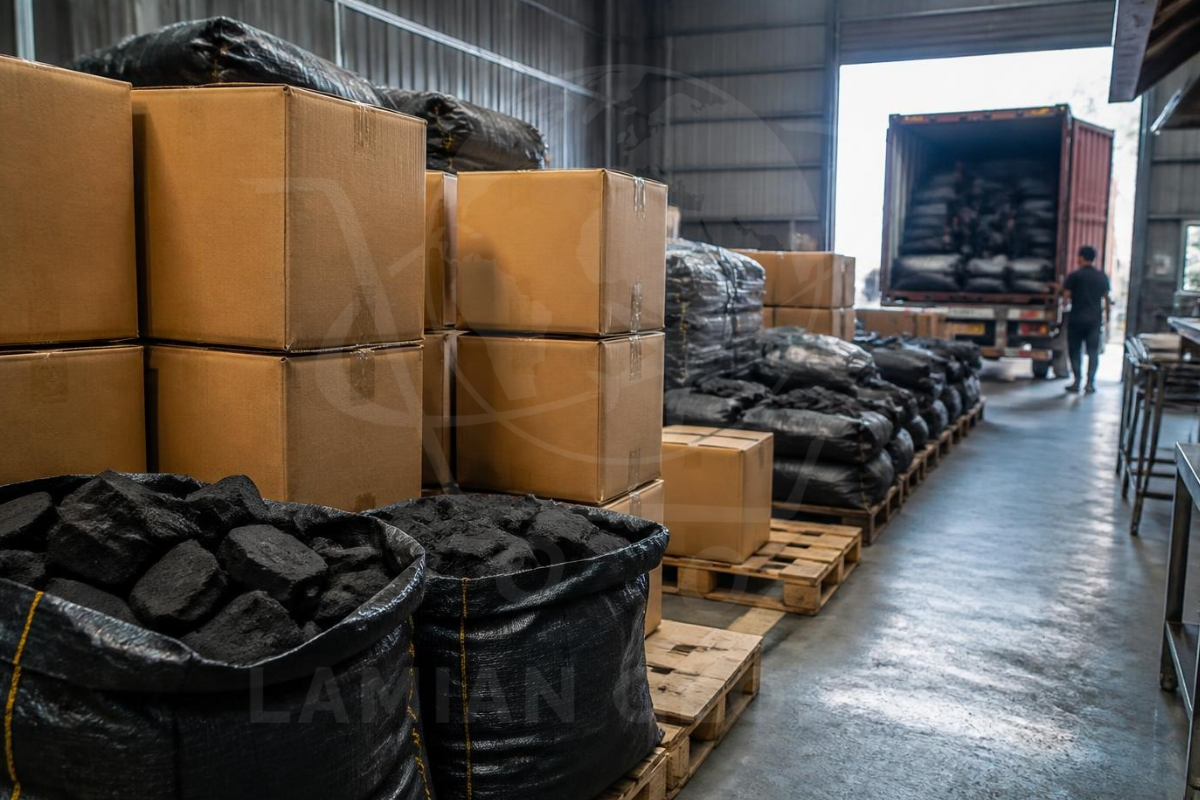
Comparing shipping logistics for Hardwood Binchotan vs sawdust Binchotan highlights significant differences in container space usage. The standardized hexagonal shape of briquettes allows exporters to fill shipping cartons with minimal dead space, maximizing total weight capacity per ocean freight container. Natural lump charcoal requires careful manual sorting and heavier protective box liners to prevent breakage during international logistics transit.
Fuel Selection Based On Restaurant Concept
Upscale Yakitori bars, fine-dining steakhouses, and premium traditional concepts often choose natural hardwood lump for its intense searing power and authentic visual appeal. On the other hand, Korean BBQ chains, Robatayaki venues, and high-volume hotel buffets favor sawdust briquettes for their consistent performance, easy stackability, and predictable fuel costs.
Comparison Hardwood Binchotan Vs. Sawdust Binchotan
To help procurement managers and head chefs make an informed decision, the comparison table below outlines the core physical, thermal, and economic characteristics when evaluating Hardwood Binchotan vs sawdust Binchotan.
| Property | Hardwood Binchotan | Sawdust-Based Briquettes |
| Raw Material | Selected hardwood logs/branches | Hardwood sawdust |
| Shape | Irregular natural pieces | Uniform molded briquettes |
| Density | Very high | High and consistent |
| Heat Performance | High, sustained radiant heat | Stable and predictable heat |
| Burn Time | Typically long-burning | Typically long-burning |
| Smoke & Odor | Very low when properly ignited | Very low when properly ignited |
| Ash | Low | Low |
| Price | Premium | More cost-efficient |
| Handling | Requires size sorting | Easy to stack and portion |
| Best For | Premium yakitori, fine dining, steakhouses | High-volume BBQ and commercial kitchens |
Note: Performance varies by wood species, moisture content, density, production method, and grill configuration. Buyers should request product-specific specifications and test samples before placing bulk orders.
Conclusion
The final decision between Hardwood Binchotan vs sawdust Binchotan depends on your restaurant’s priority. Hardwood Binchotan is well suited to premium grilling applications where high-density charcoal and traditional presentation matter, while uniform briquettes can offer easier handling, predictable combustion, and more efficient procurement for high-volume operations. Contact Lamian Global for product specifications, samples, and factory-direct FOB or CIF quotations.
- Company: Lamian Global
- Headquarters: 47 Street 36, Van Phuc Residential Area, Hiep Binh Ward, Ho Chi Minh City, Vietnam, 700000
- Hotline / WhatsApp / Commercial Line: +84 812 036 789
- Email: contact.charcoal@lamianglobal.com
- Website: https://lamiancharcoal.com/