The wood-processing industry generates large volumes of sawdust each year. Rather than sending this material to landfills or open burning, it can be converted into dense, high-quality charcoal briquettes. When produced under controlled conditions from clean industrial residues, sawdust charcoal offers a renewable solid fuel option that combines measurable environmental benefits with consistent commercial performance.
The Environmental Challenge of Wood Waste
Furniture factories, sawmills, and other wood-processing facilities produce substantial quantities of sawdust as a byproduct. When disposed of in landfills, organic wood residues can undergo anaerobic decomposition and release methane, a greenhouse gas with high short-term warming potential. Open burning of sawdust contributes to particulate matter and local air pollution.
At the same time, conventional lump charcoal production in many regions continues to rely on wood harvested specifically for charcoal making. This practice has been linked to forest degradation and tree-cover loss in parts of the tropics. Redirecting existing industrial wood residues into higher-value energy products therefore represents both an environmental opportunity and a practical response to resource pressure.
What Is Upcycling Wood Waste into Eco-Friendly Sawdust Charcoal?
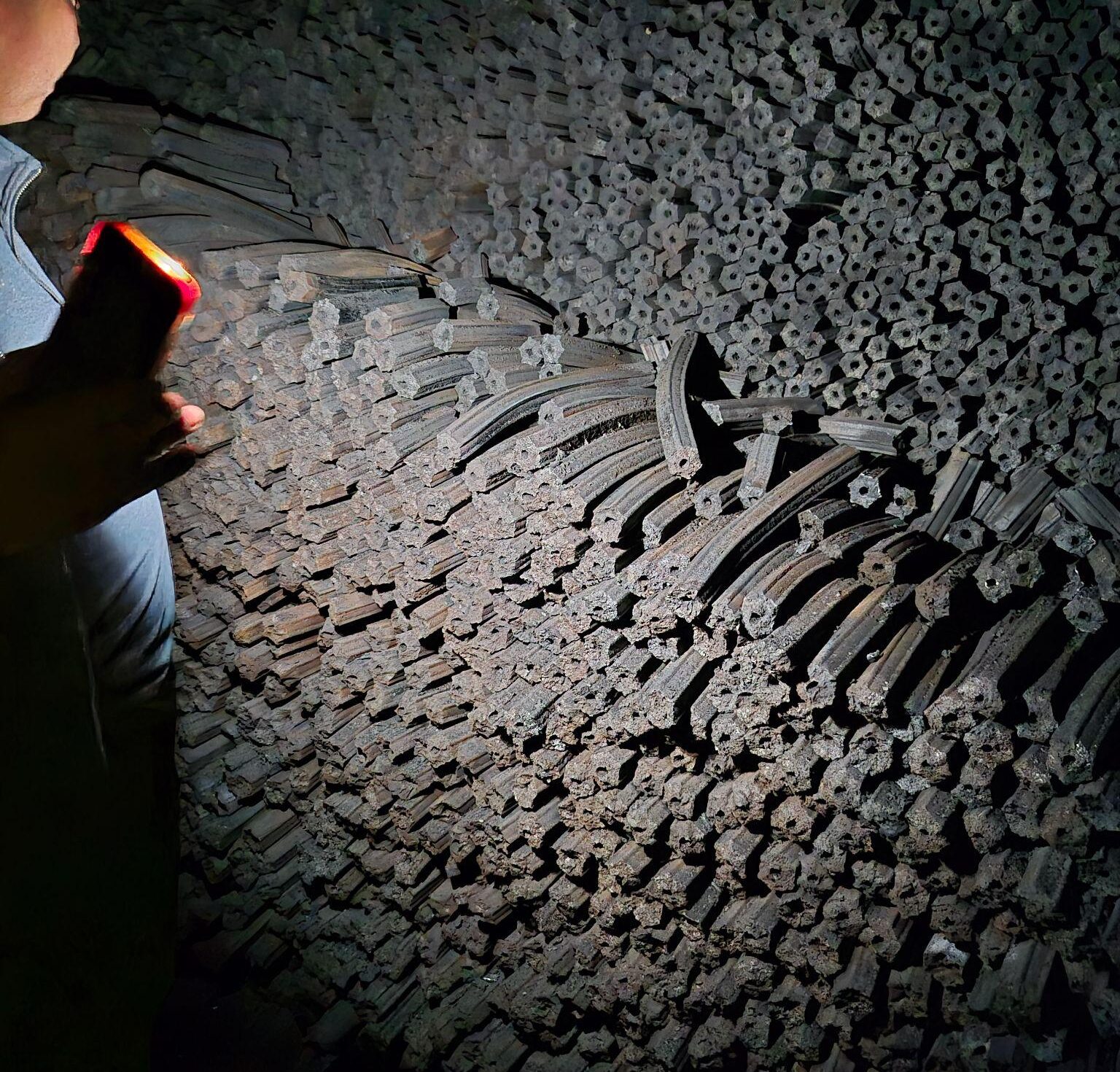
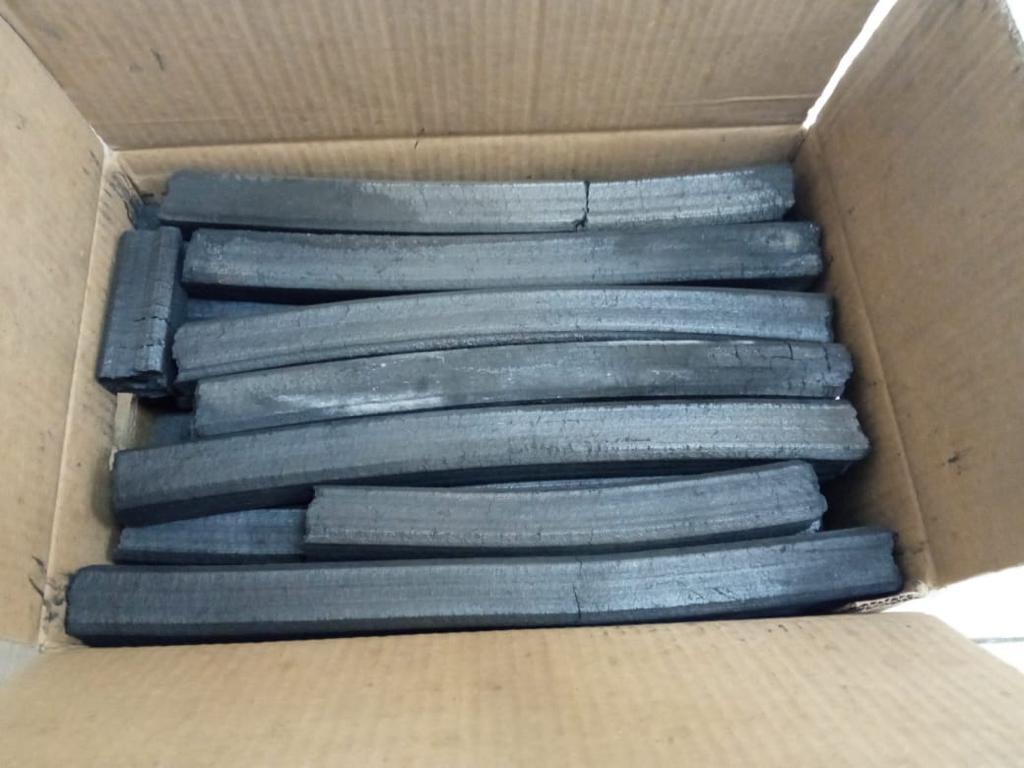
Upcycling in this context means converting a low-value industrial byproduct into a higher-value, standardized fuel without introducing chemical binders. Clean hardwood sawdust is collected from furniture and wood-processing operations, dried to a suitable moisture level, compressed under high pressure into dense blanks (commonly hexagonal or cylindrical), and then carbonized under controlled temperature and atmosphere conditions.
The resulting briquettes are uniform in size and density. Compared with uncontrolled disposal or simple combustion of raw sawdust, the process diverts material from landfills and reduces the need for charcoal produced from newly harvested trees.
Production Process and Quality Parameters
Environmental and performance outcomes depend heavily on process discipline.
Raw-material control
Producers focused on quality select clean hardwood sawdust from known industrial sources and exclude chemical binders. Traceability from feedstock to finished product supports both consistency and credible sustainability claims.
Briquetting and carbonization
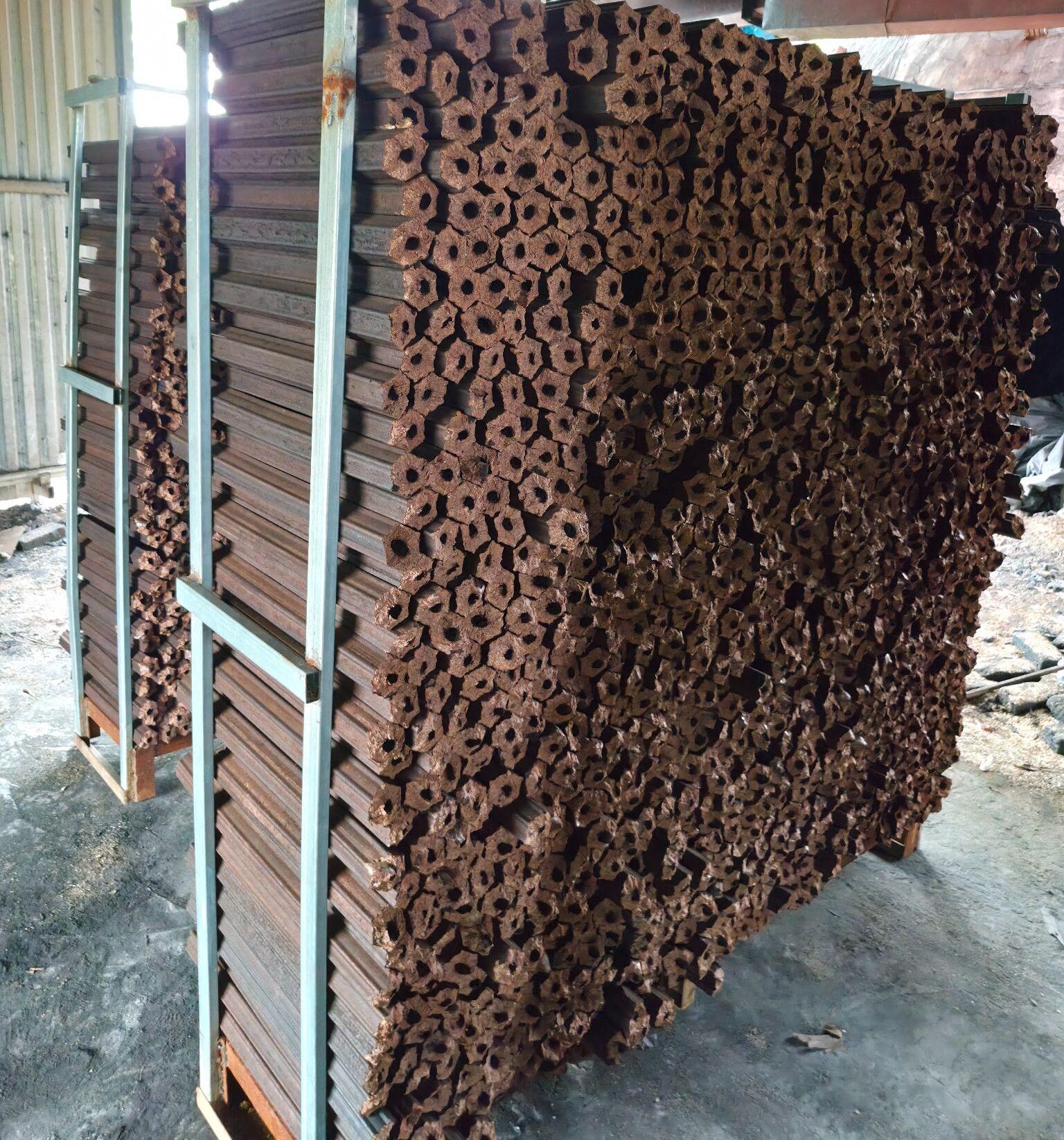
High-pressure compression creates dense blanks that are subsequently carbonized in managed kilns. Well-controlled production commonly yields:
- Fixed carbon ≥ 80%
- Calorific value ≥ 7,500 kcal/kg
- Ash content ≤ 3–4%
- Moisture ≤ 5%
These parameters contribute to longer, more stable burn times and lower residual ash relative to many lower-grade solid fuels.
Combustion characteristics
The combination of high density and high fixed-carbon content typically produces steady heat output lasting several hours, with relatively low smoke and particulate emissions under proper use. This profile suits commercial kitchens, indoor barbecue settings, and export markets that prioritize both heat performance and cleaner combustion.
It should be noted that carbonization itself requires energy input and generates process emissions. The net environmental benefit therefore depends on efficient kiln design, heat recovery where feasible, and the avoidance of uncontrolled open burning of residues.
Environmental Benefits in Context
Converting clean industrial sawdust into charcoal briquettes offers several documented advantages when the process is properly managed:
- Reduced pressure on natural forests: Utilizing an existing byproduct lowers demand for trees harvested specifically for charcoal.
- Landfill diversion: Material that might otherwise decompose anaerobically and release methane is instead stabilized as a usable fuel.
- Circular-resource contribution: Waste streams from furniture and wood processing become energy products for restaurants, commercial barbecue operations, and other users.
- Improved air quality at point of use: Higher-density, higher-fixed-carbon briquettes generally produce less smoke and particulate matter than many traditional solid fuels when burned correctly.
These benefits are greatest when feedstock is genuinely residual (not diverted from higher-value wood uses) and when production emissions are minimized.
Performance Considerations for Commercial Buyers
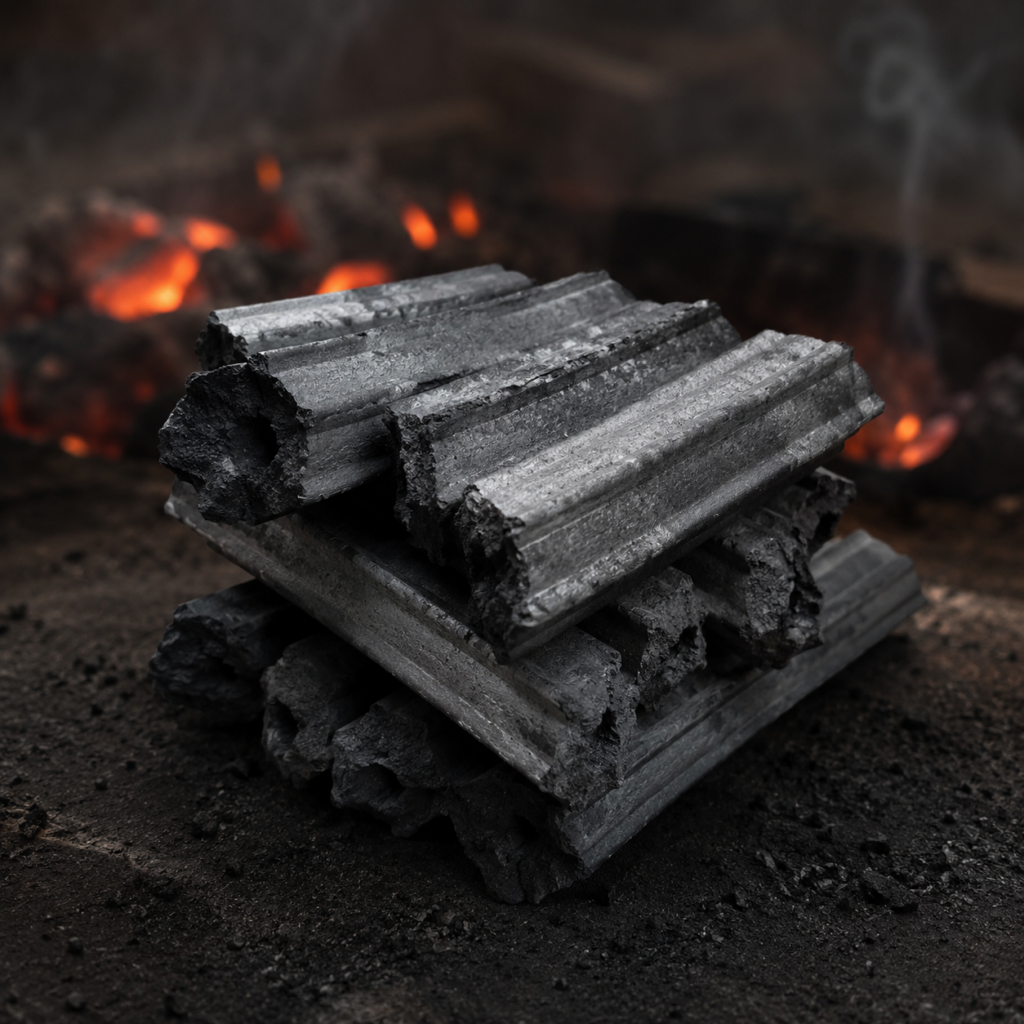
Buyers evaluating sawdust charcoal typically look for a balance of heat stability, burn duration, ash volume, and smoke level. Well-produced hexagonal or cylindrical briquettes meeting the technical ranges listed above often deliver consistent results across high-volume restaurant and export applications. Performance can exceed that of average-grade lump charcoal in burn time and ash control, although direct comparisons depend on the specific grades being tested.
No chemical binders are required when high-pressure compression of clean hardwood sawdust is used. Laboratory verification of fixed carbon, ash, moisture, and calorific value remains the most reliable way to confirm batch quality.
How Professional Producers Maximize Environmental Value
Reliable exporters such as Lamian Global apply strict source control on hardwood sawdust, monitor every stage of high-pressure briquetting and carbonization, and conduct laboratory testing for fixed carbon, ash, moisture, and calorific value.
Consistent process control ensures that every batch delivers both high performance and measurable environmental benefits – from raw material selection through final packaging.
Frequently Asked Questions
Below are answers to the most common questions about sawdust charcoal, its environmental benefits, and performance – helping buyers make informed, sustainable choices.
Is sawdust charcoal better for the environment than traditional lump charcoal?
When produced from clean industrial wood residues under controlled conditions, it reduces demand for newly harvested wood and diverts material from landfills or open burning. Net benefits depend on the full production chain, including energy use during carbonization.
Does sawdust charcoal burn as well as lump charcoal?
Premium sawdust briquettes frequently show longer and more stable burn times, higher density, and lower ash than average lump charcoal, owing to controlled feedstock and carbonization.
Are chemical binders used?
Quality producers rely solely on high-pressure compression of clean hardwood sawdust; no chemical binders are added.
Who typically buys eco-friendly sawdust briquettes?
Commercial kitchens, barbecue operators, importers, and distributors that require consistent heat output, low smoke, and documented sustainability attributes.
Conclusion
Upcycling clean industrial sawdust into charcoal briquettes is a practical route to higher-value use of wood-processing residues. When feedstock selection, compression, and carbonization are carefully managed, the resulting fuel can deliver both commercial performance and measurable environmental advantages – lower pressure on forests, reduced landfill methane potential, and cleaner combustion at the point of use.
For businesses seeking reliable solid fuel that aligns operational needs with sustainability goals, source-controlled sawdust charcoal represents a concrete option within the broader circular bioeconomy.
Ready to choose a more sustainable charcoal solution for your business?
Contact Lamian Charcoal today for product specifications, samples, and wholesale quotations of premium eco-friendly sawdust charcoal briquettes.
- Email: contact.charcoal@lamianglobal.com
- WhatsApp / Hotline: +84 812 036 789
- Website: https://lamiancharcoal.com/