As global demand for mangrove charcoal continues to rise, so does the risk of encountering illegal or low-quality counterfeits. Sustainably sourced mangrove charcoal delivers consistent high heat, long burn time and clean performance. In contrast, illegally harvested or poorly processed charcoal often suffers from incomplete carbonization, high moisture, excessive smoke and unreliable heat.
This guide provides professional buyers – restaurants, importers and distributors – with clear, practical methods for authentic mangrove charcoal identification and helps them avoid costly mistakes.
Why Differentiating Matters for Professional Buyers
Purchasing bulk mangrove charcoal without proper verification exposes businesses to real operational risks: Excessive smoke, unstable heat, short burn time, higher ash and inconsistent cooking results. For importers, a single poor container can lead to financial losses, product returns, damaged reputation and potential compliance issues related to illegal harvesting.
That is why authentic mangrove charcoal identification and sustainability checks should be treated as a mandatory quality-control step.
Quick Overview: Authentic vs Counterfeit
Before diving into detailed tests, here’s a clear side-by-side comparison of the key differences between sustainably sourced mangrove charcoal and common low-quality or illegal counterfeits.
| Criteria | Sustainably Sourced Mangrove Charcoal |
Illegal / Low-Quality Counterfeits
|
| Appearance | Deep black, natural sheen, uniform pieces |
Dull, greyish, uneven, soft spots, excessive dust
|
|
Hardness & Sound
|
Dense, clear solid sound when tapped |
Soft or crumbly, dull thud
|
| Density | Heavy and compact for its size |
Lightweight or porous
|
| Ignition & Smoke | Lights reasonably well, minimal smoke once lit |
Hard to light, thick smoke
|
|
Heat & Burn Time
|
Stable high heat, longer burn |
Unstable heat, short burn time
|
| Ash | Fine, light ash |
Higher ash residue
|
| Documentation | Clear origin, test reports, batch consistency |
Little or no traceability
|
Practical Ways to Differentiate Authentic vs Counterfeit Mangrove Charcoal
These simple, practical tests can be performed on samples or upon receiving goods. They help professional buyers quickly assess quality and authenticity before committing to bulk orders.
1. Visual Inspection
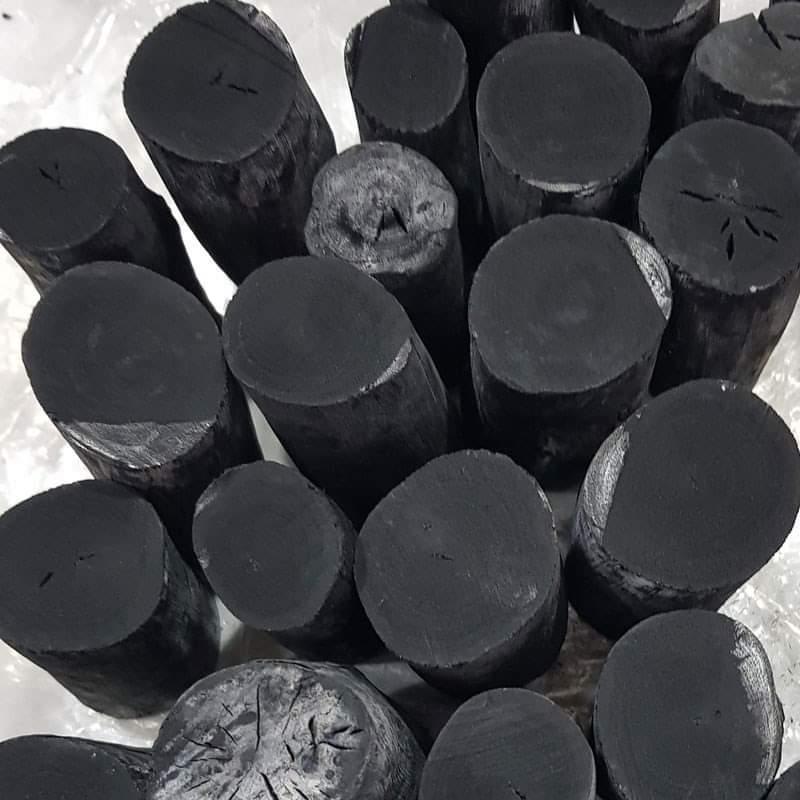
Sustainably sourced mangrove charcoal typically shows a deep black color with a natural sheen and clean, uniform breaks. Illegal or low-quality charcoal often appears dull, greyish or uneven, with soft spots and excessive dust.
2. Hardness and Sound Test
Tap two pieces together. Premium dense mangrove charcoal produces a clear, solid sound. Soft or incompletely carbonized pieces give a dull thud.
3. Density and Weight Check
Premium charcoal feels heavy and compact for its size. Lightweight or porous pieces usually indicate lower density and poorer carbonization.
4. Burning Performance Test
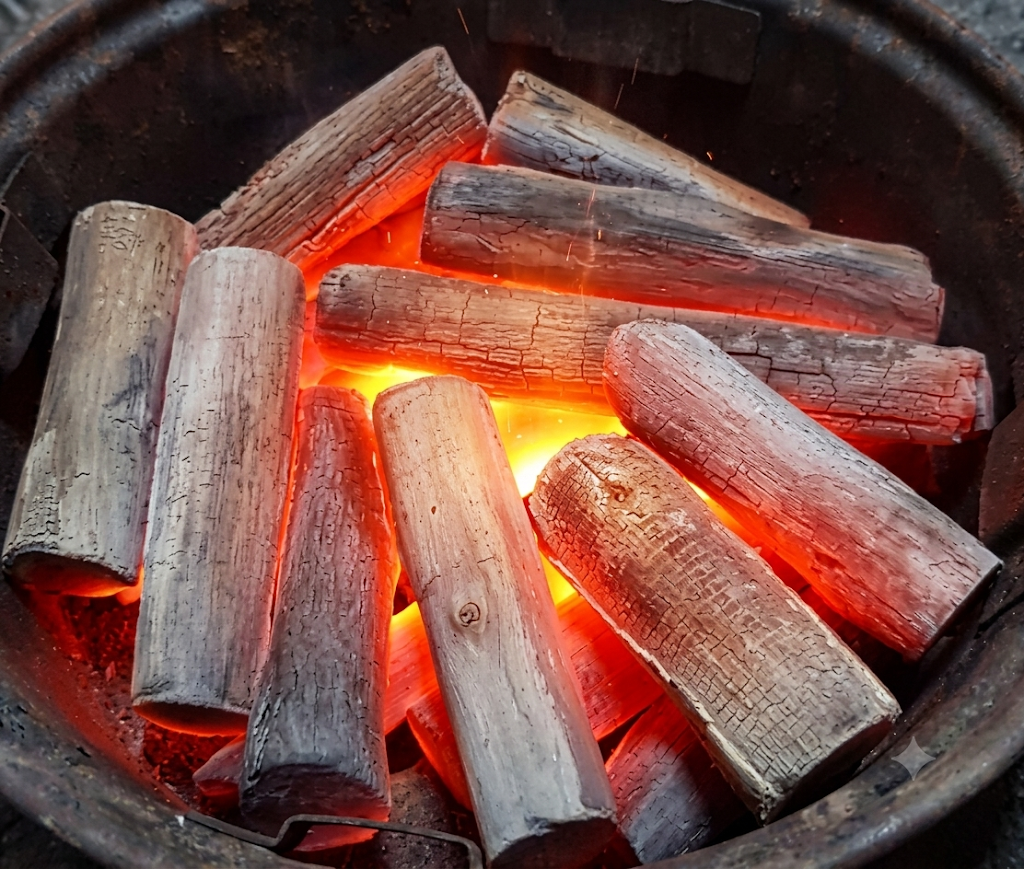
Light a sample under controlled conditions. Authentic charcoal produces minimal smoke once fully lit, maintains stable heat and leaves fine ash. Counterfeits often struggle to light, release thick smoke and leave heavier residue.
5. Documentation and Supplier Transparency
Always request legal origin information, moisture and fixed-carbon reports, and evidence of pre-shipment inspection. Reliable suppliers provide clear specifications and batch consistency data.
6. Quick Checklist for Buyers
- Deep black color with natural sheen?
- Clear solid sound when tapped?
- Feels heavy and dense?
- Minimal smoke and stable heat when burning?
- Supplier provides origin and lab reports?
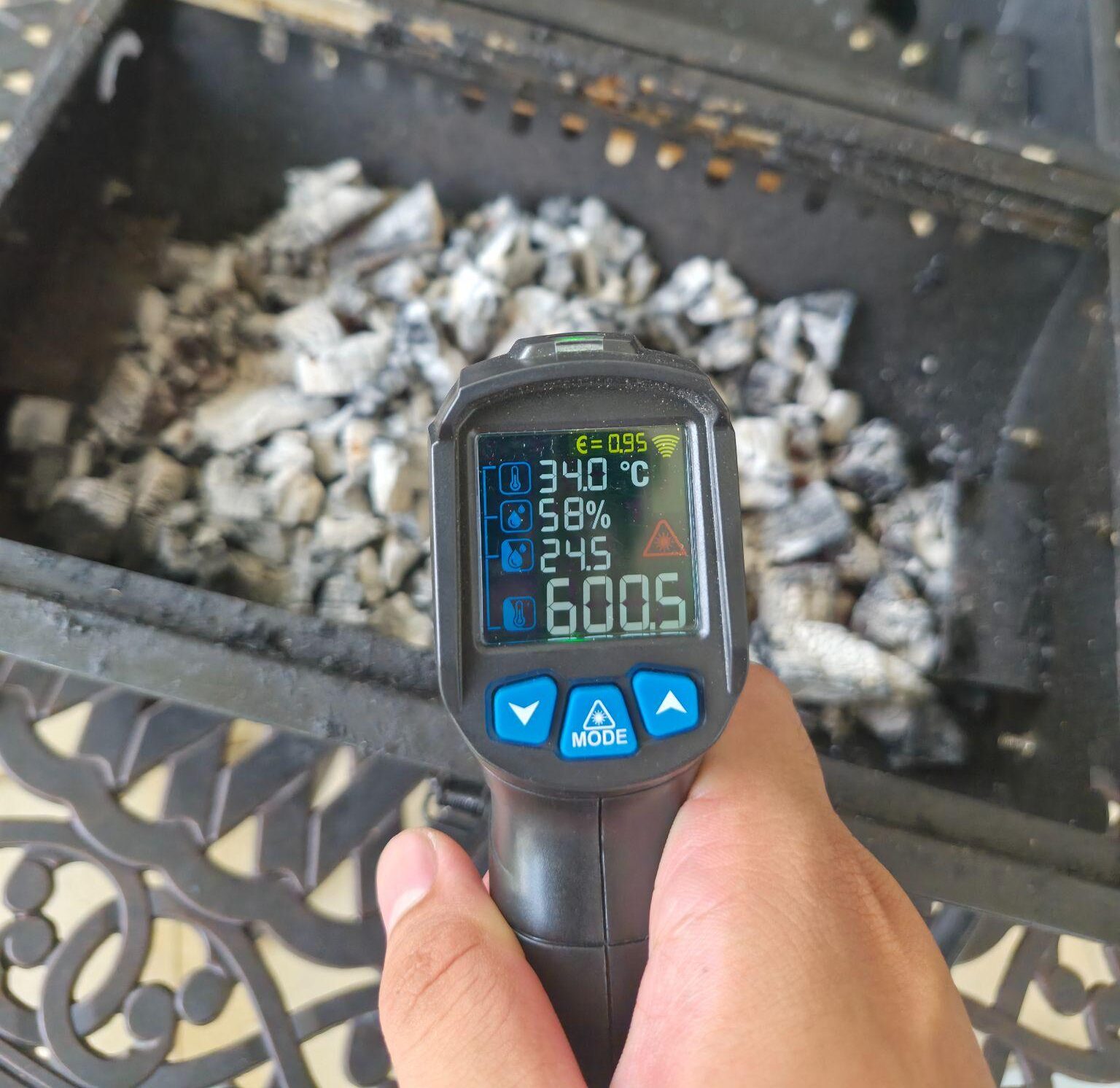
Burning test of authentic mangrove charcoal showing stable heat and minimal smoke
Key Technical Indicators to Request from Suppliers
To support accurate evaluation of both performance and authenticity, professional buyers should request:
- Fixed carbon content
- Moisture content (ideally ≤ 5%)
- Ash content
- Approximate calorific value
- Size grading and packaging standards
- Batch consistency records
These parameters, combined with physical tests, provide a reliable basis for evaluating both performance and authenticity.
How Professional Exporters Ensure Authenticity and Sustainability
Professional exporters focus on source-controlled mangrove wood, monitor every stage of carbonization and conduct thorough pre-shipment inspection. Laboratory verification of key parameters (fixed carbon, moisture and ash) together with transparent documentation helps ensure consistent performance and supports sustainability claims.
Conclusion
Knowing how to differentiate sustainably sourced mangrove charcoal from illegal, low-quality counterfeits protects your business from poor performance, hidden costs and compliance risks. By combining simple field tests with clear technical specifications and supplier documentation, buyers can make confident, informed purchasing decisions.
Consistent quality and reliable supply remain the foundation of long-term success.
Ready to source authentic, sustainably managed mangrove charcoal?
Contact Lamian Charcoal for product specifications, samples, laboratory reports and wholesale quotations.
- Email: contact.charcoal@lamianglobal.com
- WhatsApp / Hotline: +84 812 036 789
- Website: https://lamiancharcoal.com/