Both Standard Sawdust Charcoal vs Sawdust Binchotan (also called white sawdust charcoal) are produced from compressed hardwood sawdust. The decisive difference lies in the carbonization temperature and cooling method. These differences significantly affect fixed carbon content, hardness, burn time, heat stability, and price. Understanding them helps restaurants, importers, and professional BBQ operators choose the right product for performance and cost efficiency.
What Is Standard Sawdust Charcoal?
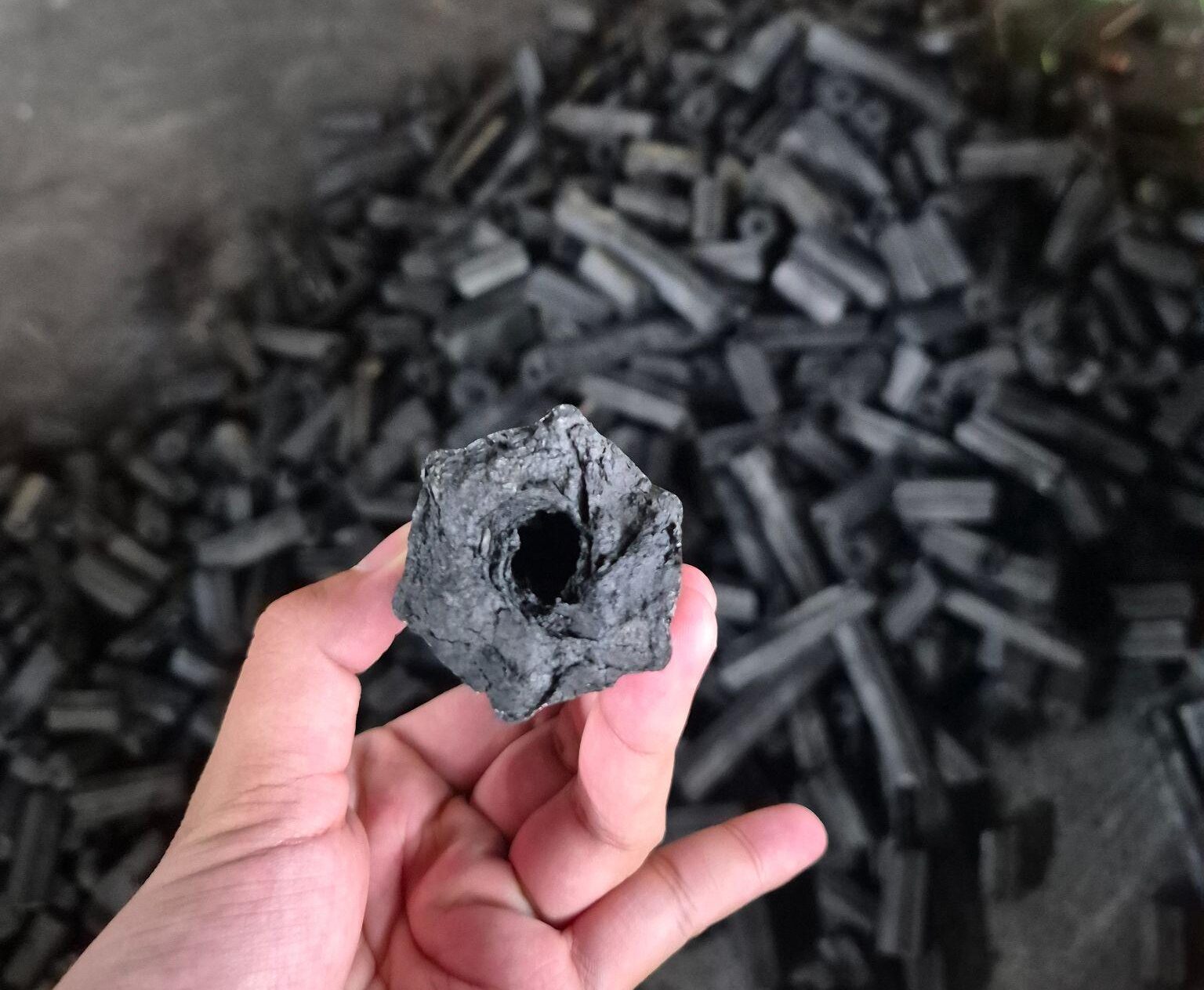
Standard sawdust charcoal (also known as black sawdust charcoal or Ogatan-style briquettes) is made by compressing clean hardwood sawdust under high pressure into dense hexagonal or cylindrical blanks, followed by controlled carbonization.
The process typically involves moderate to high temperatures with the kiln sealed at the end to gradually remove oxygen. The result is a consistent, cost-effective charcoal with:
- Fixed carbon usually ≥ 80%
- Calorific value ≥ 7,500 kcal/kg
- Ash content ≤ 3–4%
- Moisture ≤ 5%
- Burn time of 3–6 hours
- Nearly smokeless and odorless combustion
It is widely used in restaurants, commercial BBQ operations and export markets that require reliable performance at a competitive price.
What Is Sawdust Binchotan (White Sawdust Charcoal)?
Sawdust Binchotan, also called white sawdust charcoal, uses the same hardwood sawdust raw material. The key difference is the high-temperature carbonization and special cooling method, which is similar in principle to traditional Japanese white charcoal (Binchotan) but applied to compressed sawdust blanks rather than solid wood logs.
This process produces a much harder charcoal with higher fixed carbon, a metallic ringing sound when struck, longer and more stable burn time, and cleaner infrared heat. It is preferred by premium Japanese-style, Korean, and fine-dining restaurants that require maximum purity and precise heat control.
Note: True traditional Binchotan is made from solid hardwood (commonly Ubame oak in Japan). Sawdust Binchotan is a high-quality industrial alternative produced mainly in Vietnam and other Asian countries using the white-charcoal method on sawdust briquettes.
Key Difference – The Production Process
Although both types of charcoal start from the same hardwood sawdust blanks, the carbonization temperature and cooling method create fundamentally different results. Understanding these process differences is essential to explaining why sawdust Binchotan achieves higher fixed carbon, greater hardness, and superior burn performance.
Standard Sawdust Charcoal Production
- Clean hardwood sawdust is dried and high-pressure briquetted into dense blanks.
- The blanks are stacked in kilns and carbonized under controlled conditions.
- At the end of the process, the kiln is sealed to gradually cut off oxygen and cool the charcoal inside.
- After cooling, the charcoal is rested, sorted, packed and loaded into containers.
Sawdust Binchotan Production Process
The raw material source is the same (hardwood sawdust blanks). The difference is entirely in the firing and cooling method:
- The blanks are carbonized at very high temperatures of 1,000–1,200°C.
- Total firing time is typically 12–15 days.
- There is no sealed cooling inside the kiln.
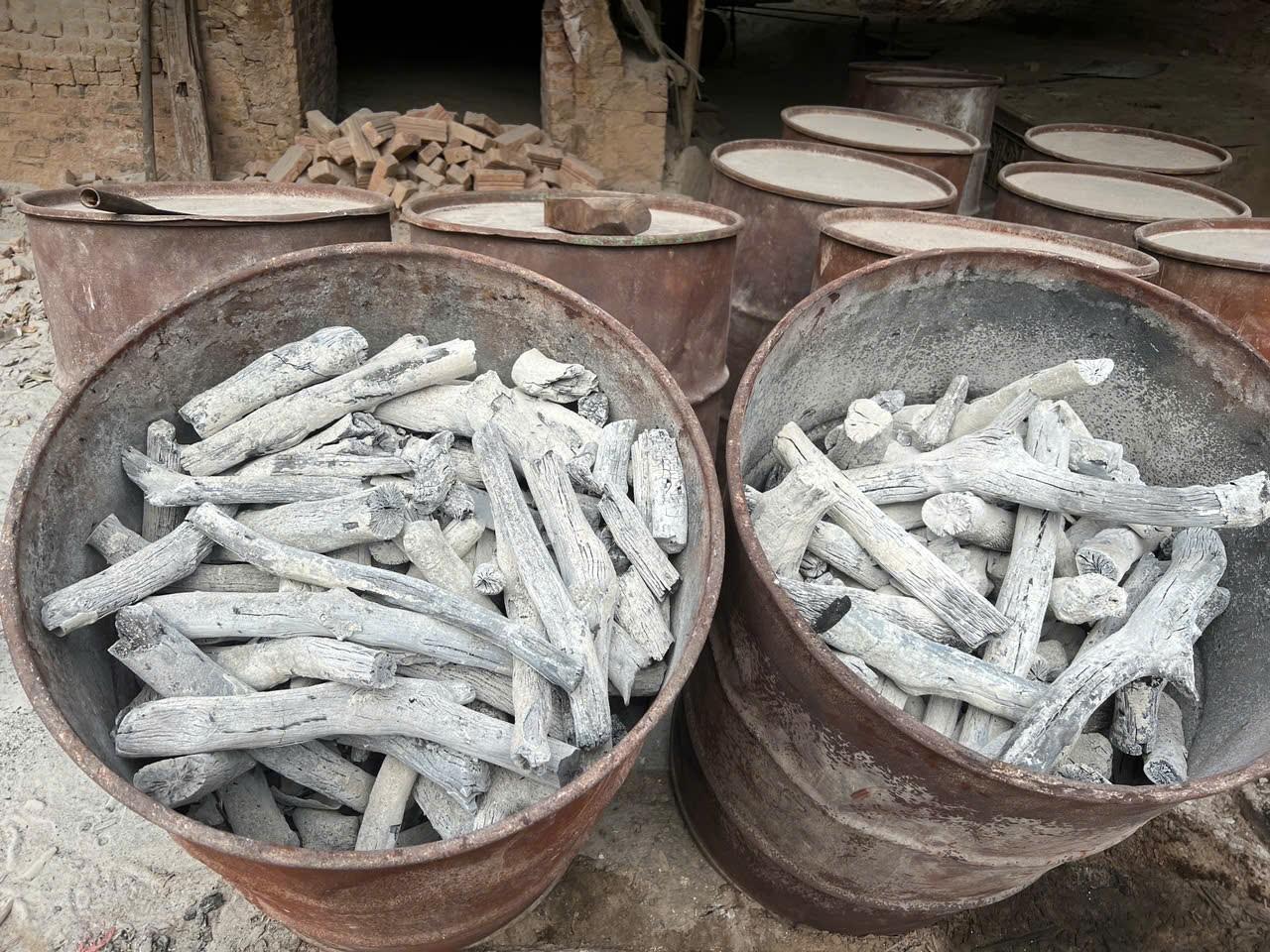
- When the kiln door is opened, strong air and fire are blown in to make the charcoal glow bright red-hot.
- The red-hot charcoal is immediately scooped into steel drums.
- It then cools naturally inside the drums.
- After full cooling, the charcoal is packed and loaded.
This rapid high-temperature activation and external drum cooling create higher carbon purity, greater hardness, and superior burning characteristics.
Technical Comparison Table: Standard Sawdust Charcoal vs Sawdust Binchotan
The table below summarizes the key technical specifications of standard sawdust charcoal and sawdust Binchotan (white sawdust charcoal). These figures are based on typical laboratory results from professional Vietnamese producers and help buyers quickly compare performance and value.
| Parameter | Standard Sawdust Charcoal | Sawdust Binchotan (White) |
| Fixed Carbon | ≥ 80% | Typically 85–95%+ |
| Calorific Value | ≥ 7,500 kcal/kg | Higher (often 7,800–8,500+ kcal/kg) |
| Ash Content | ≤ 3–4% | Very low |
| Moisture | ≤ 5% | ≤ 5% |
| Burn Time | 3–6 hours | Longer and more stable |
| Hardness | High | Extremely hard (metallic ring) |
| Smoke & Odor | Almost none | Almost none / cleaner |
| Ignition | Relatively easier | Slower, requires more skill |
| Best For | Restaurants, export, volume | Premium & Japanese-style grilling |
| Price Level | More competitive | Higher |
Performance Differences in Real Use
Laboratory specifications only tell part of the story. In daily restaurant and commercial BBQ operations, differences in heat stability, burn duration, ash production, and ease of ignition become clearly noticeable and directly affect cooking results and kitchen efficiency.
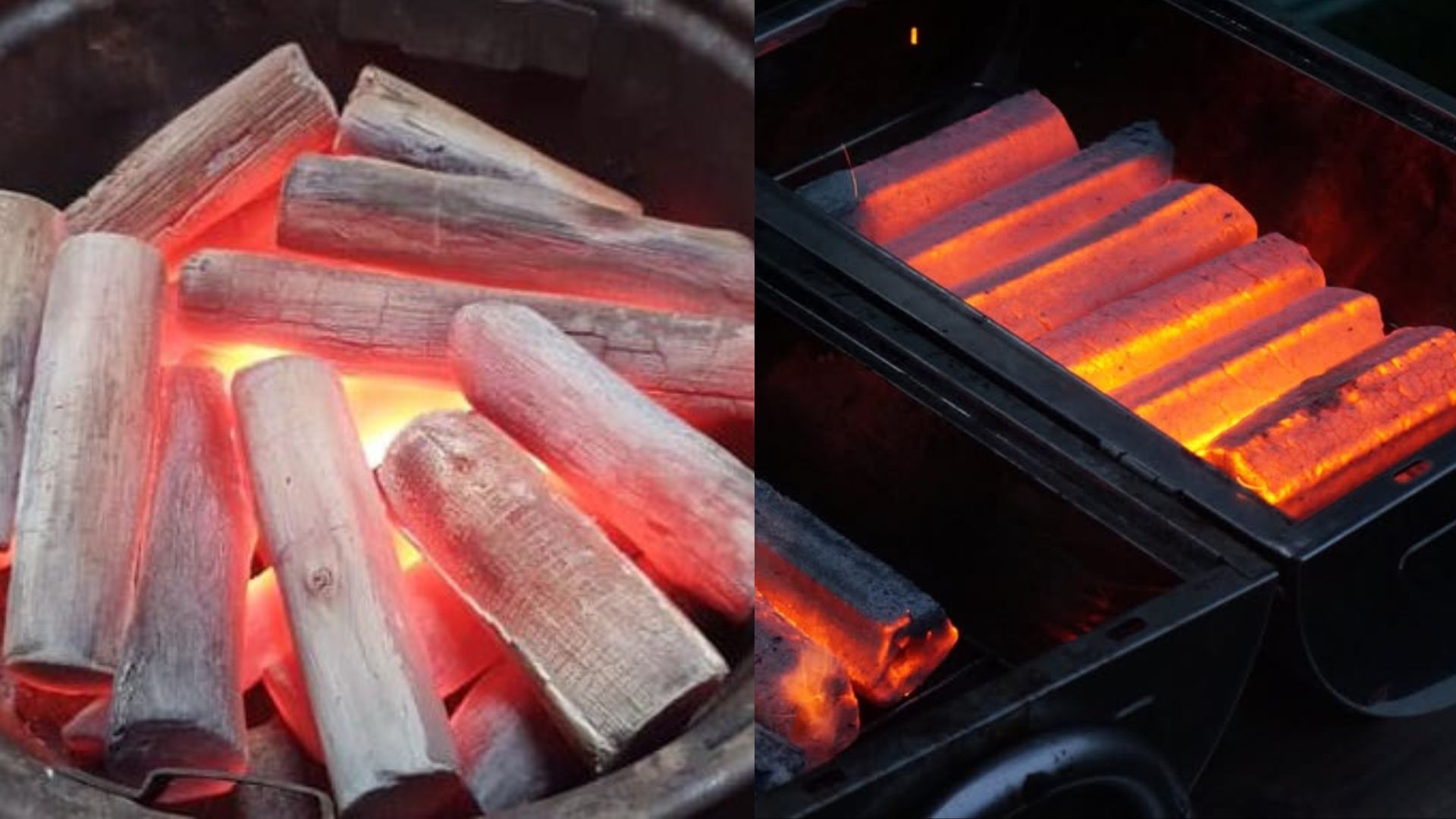
- Heat Output & Stability: Sawdust Binchotan delivers more stable and often higher infrared heat, making it excellent for precise temperature control. Standard sawdust charcoal already offers very good stability for most commercial needs.
- Burn Time: Binchotan generally burns longer with less temperature drop. Standard grades still provide 3–6 hours of reliable heat.
- Smoke, Odor & Ash: Both types are nearly smokeless when properly made. Binchotan tends to produce even less ash and a cleaner burn due to higher carbon purity.
- Ease of Use: Standard sawdust charcoal is easier and faster to light, making it more practical for high-volume kitchens. Binchotan requires more attention during ignition but rewards users with superior control once lit.
Which One Should You Choose?
Many professional buyers use both grades depending on the specific application and customer segment.
- Choose Standard Sawdust Charcoal if you need a reliable, cost-effective fuel for high-volume restaurants, everyday commercial BBQ, or large export orders that prioritize consistent performance and competitive pricing.
- Choose Sawdust Binchotan (White Sawdust Charcoal) if you serve premium Japanese, Korean or fine-dining concepts that demand maximum purity, longer stable heat, and superior infrared performance.
How Professional Exporters Ensure Quality
Reliable exporters apply strict source control on hardwood sawdust, monitor every stage of briquetting and carbonization, and perform laboratory testing for fixed carbon, ash, moisture, and calorific value.
Consistent process control is the key to delivering stable quality batch after batch, whether producing standard sawdust charcoal or sawdust Binchotan.
Frequently Asked Questions (FAQ)
Below are the most common questions from importers, restaurant owners, and professional buyers regarding the differences between standard sawdust charcoal and sawdust Binchotan.
1. Is sawdust Binchotan the same as traditional Japanese Binchotan?
No. Traditional Binchotan is made from solid hardwood logs (usually Ubame oak). Sawdust Binchotan is a high-quality white charcoal made from compressed hardwood sawdust using a similar high-temperature process.
2. Which type produces less ash?
Sawdust Binchotan generally produces less ash due to higher fixed carbon content.
3. Is standard sawdust charcoal suitable for Japanese-style grilling?
Yes, for many commercial applications. However, premium Japanese and fine-dining restaurants often prefer sawdust Binchotan for its superior heat stability and cleanliness.
4. Why is sawdust Binchotan more expensive?
Because of the longer firing time (12–15 days), higher energy consumption at 1,000–1,200°C, and more labor-intensive cooling process.
Conclusion
The main difference between standard sawdust charcoal and sawdust Binchotan lies in the carbonization process. Standard sawdust charcoal offers an excellent balance of performance and cost, while sawdust Binchotan delivers higher fixed carbon, greater hardness, longer burn time and superior heat quality thanks to the 1,000–1,200°C high-temperature process and special drum-cooling method.
Choose according to your market requirements and budget. For consistent, high-quality hexagonal sawdust charcoal – both standard and Binchotan grades – partner with a professional Vietnamese exporter.
Ready to choose the right sawdust charcoal for your business?
Contact Lamian Charcoal for product specifications, samples and wholesale quotations of both standard sawdust charcoal and sawdust Binchotan.
- Email: contact.charcoal@lamianglobal.com
- WhatsApp / Hotline: +84 812 036 789
- Website: https://lamiancharcoal.com/