The charcoal production process is a sophisticated thermal conversion that transforms wood into a high-carbon, energy-dense fuel. At Lamian Global, we combine traditional Vietnamese kiln techniques with modern quality management to produce premium charcoal that meets the highest international standards for restaurants, grilling, and export markets.
This comprehensive guide details every step of how charcoal is made, with clear explanations of the different production methods for mangrove charcoal, sawdust charcoal briquettes, and white charcoal.
Raw Material Selection and Preparation
High-quality charcoal begins with superior raw materials. In Vietnam, we carefully select dense hardwoods known for excellent carbonization properties:
- Eucalyptus: Fast-growing and widely available.
- Khaya: Sourced from mountainous regions.
- Coffee wood: From the Central Highlands.
- Mangrove (Rhizophora apiculata): From coastal wetlands.
- Melaleuca and Casuarina: Regional specialty woods.
Only mature, legally harvested wood from sustainable sources is used. Logs are cut to uniform lengths and diameters, then naturally air-dried to reduce moisture content to below 20%. Proper drying is essential – high moisture leads to incomplete carbonization, lower yield, and poor burning performance.
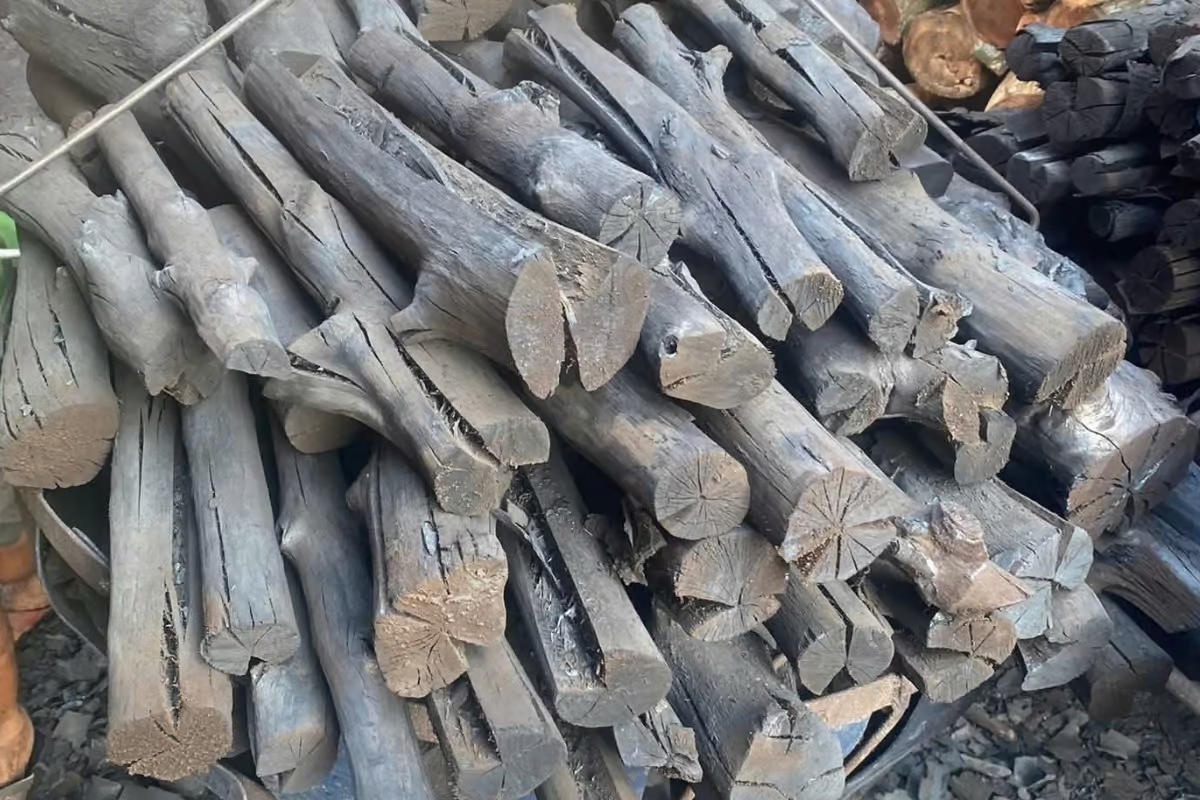
Natural Wood Charcoal Production Process (Black & Mangrove Charcoal)
Traditional black charcoal relies on a slow, controlled baking process inside large brick or clay structures. Here is the step-by-step breakdown of how it is processed:
- Step 1: Kiln Loading
Dried logs are meticulously stacked inside traditional brick or clay kilns with a capacity of 80–100 cubic meters. Precise stacking ensures optimal airflow and even heat distribution during the entire process. (Note: Premium Mangrove charcoal uses dense Rhizophora apiculata wood stacked tightly in dome-shaped kilns).
- Step 2: Ignition and Controlled Carbonization
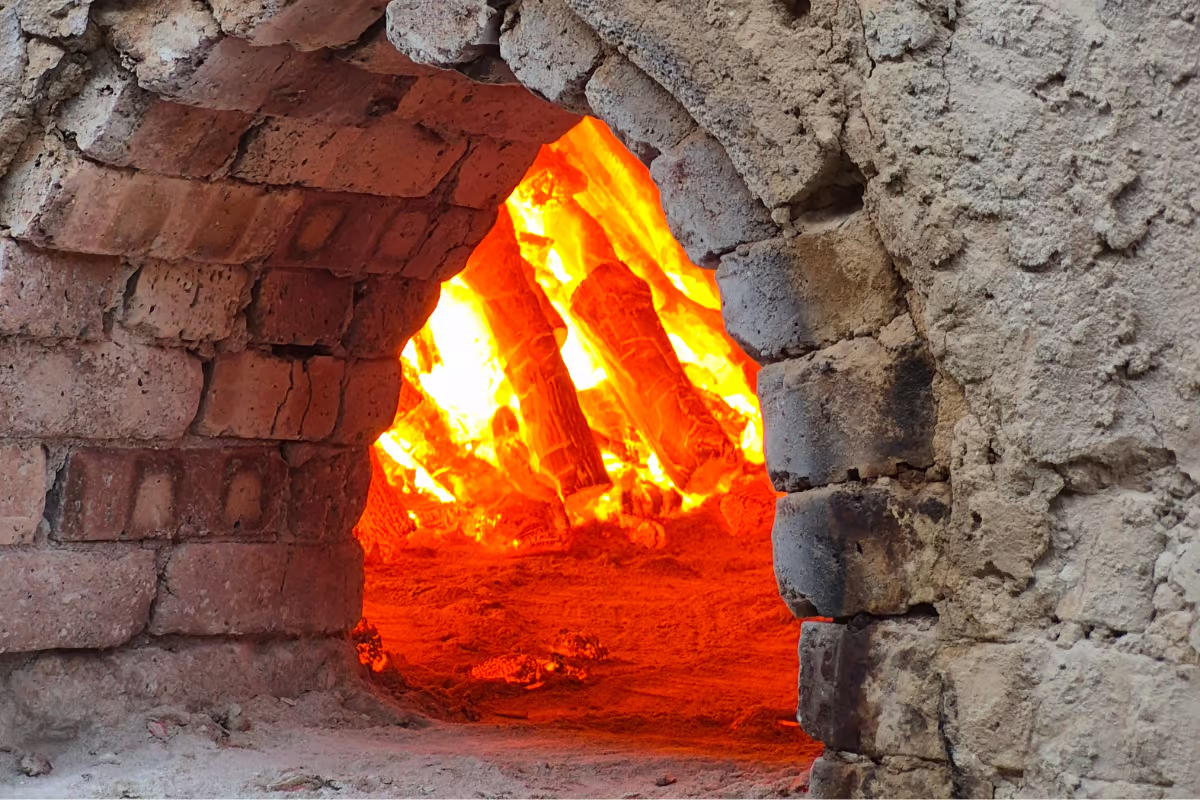
The kiln is ignited and the temperature is gradually raised to 500-700°C. This phase lasts 20–25 days. Experienced kiln masters continuously monitor smoke color, temperature, and oxygen levels. The goal is slow pyrolysis-thermal decomposition in a low-oxygen environment-which removes volatile compounds while preserving the carbon skeleton of the wood.
- Step 3: Sealing and Natural Cooling
Once carbonization is complete (indicated by clear, white smoke transitioning to a faint blue), all vents and the firebox are sealed airtight with clay. The kiln cools naturally for 35-45 days. This slow cooling is critical to prevent cracking and ensure the high hardness of the finished charcoal.
- Step 4: Unloading, Sorting, and Resting
Charcoal is carefully removed and sorted by quality. It then rests outdoors for 1–2 weeks to stabilize internal temperature. This resting period significantly reduces the risk of spontaneous combustion during storage and container loading.
How Sawdust Briquette Charcoal Is Made?
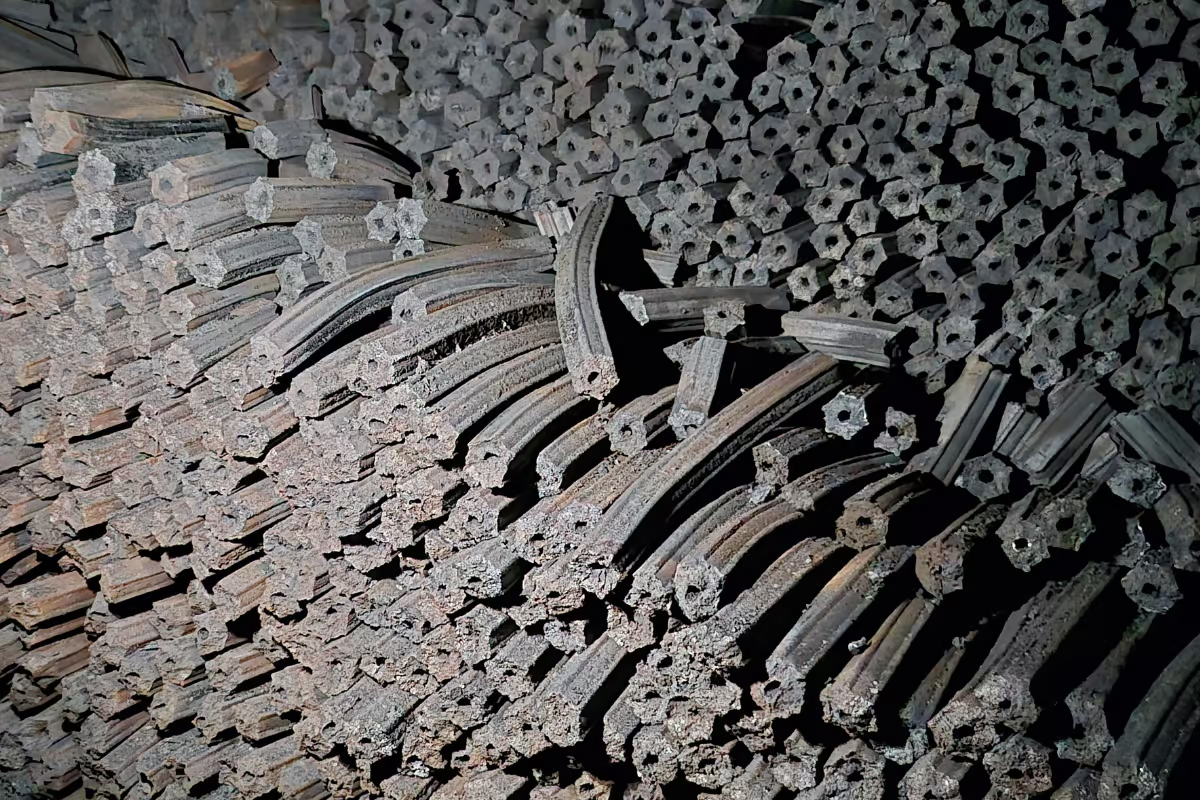
Manufacturing sawdust charcoal briquettes bridges the gap between environmental recycling and advanced mechanical engineering. Instead of carbonizing whole logs, how this charcoal is made involves converting loose wood waste into highly uniform, high-density fuel blocks:
- Step 1 – Collection & Sifting: Clean, 100% natural sawdust from hardwoods is collected and passed through industrial mesh screens to sift out bark and foreign impurities, ensuring a homogenous raw texture.
- Step 2 – Rotary Drum Drying: Raw sawdust (40-50% moisture) is passed through an automated rotary dryer to bring the moisture level down to below 10%. Too much moisture creates steam pockets that shatter the briquette during extrusion.
- Step 3 – Mechanical High-Pressure Extrusion: The dried sawdust is fed into an extruder press. Under extreme mechanical pressure and temperatures reaching approximately 300°C, the natural lignin inside the wood melts, acting as a natural, chemical-free binder. The machine extrudes solid, dense, hollow hexagonal logs without any chemical adhesives.
- Step 4 – Briquette Carbonization: These raw briquette logs are cut to uniform lengths, stacked tightly into specialized kilns, and carbonized at 500-700°C for 12–15 days under slow pyrolysis.
- Step 5 – Cooling & Stabilization: The kilns are completely sealed to allow natural cooling over 7–10 days, followed by a 2-week resting period to ensure total thermal stability before packaging.
How White Charcoal (Binchotan-Style) Is Made?
This is the most refined and advanced charcoal production process. It follows these key steps:
- Step 1 – Preliminary Carbonization: Hardwood logs are loaded into specialized kilns and carbonized at a low temperature (500-700°C) for several days, mimicking the initial phase of black charcoal production.
- Step 2 – Ultra-High Temperature Refining: Instead of sealing the kiln at the end of the cycle, the kiln master opens the air vents to flood the system with oxygen. The temperature has rapidly spiked to an extreme 1000-1200°C. This intense heat burns off all remaining volatile matter, melts the carbon structure, and purifies the charcoal.
- Step 3 – Rapid Quenching: The glowing, red-hot charcoal is quickly pulled out of the active kiln and immediately smothered in a damp mixture of ash, sand, and soil. This rapid cooling action freezes the carbon structure instantly, giving the charcoal its signature metallic ring, ultra-hard surface, and distinct whitish-gray powder coating.
- Step 4 – Final Inspection: The cooled Binchotan is cleaned, inspected for structural integrity, and packed. It delivers an ultra-clean, smoke-free, and spark-free burn with virtually zero ash residue.
Technical Comparison of Charcoal Production Processes
Different manufacturing methods directly dictate the burn time, heat density, and ash output of the final product. The matrix below offers a direct technical comparison of how charcoal is made across different methodologies, helping you select the ideal fuel grade for your commercial requirements:
| Charcoal Type & Raw Material | Production Parameters | Key Characteristics & Applications |
|
Black Charcoal • Raw Material: Various hardwoods |
• Temperature: 500–700°C • Duration: 35–45 days |
• Characteristics: Balanced performance, natural flavor • Applications: General BBQ, commercial use |
|
Mangrove Charcoal • Raw Material: Rhizophora apiculata |
• Temperature: 500–700°C • Duration: 35–45 days |
• Characteristics: High density, long burn, strong heat • Applications: Premium restaurants, yakitori |
|
Sawdust Briquettes • Raw Material: Wood sawdust |
• Temperature: 500–700°C • Duration: 12–15 days |
• Characteristics: Uniform shape, high density, efficient • Applications: Bulk grilling, industrial use |
|
White Charcoal • Raw Material: Hardwoods |
• Temperature: 1000–1200°C • Duration: 25–35 days |
• Characteristics: Ultra-clean burn, minimal ash, hard • Applications: High-end tea, specialty grilling |
Quality Control and Safety Standards
Every batch of charcoal at Lamian Global undergoes strict quality control and safety measures:
- Laboratory Testing: Each batch is tested for fixed carbon content, ash content, moisture level, calorific value, and hardness.
- Resting Protocols: Strict resting periods are enforced before packaging to eliminate any risk of self-heating during international sea transport.
- Compliance Documentation: Full documentation is provided with every shipment, including MSDS and UN 1361 Spontaneous Combustion Test reports.
Why the Charcoal Production Process Matters?
A well-controlled charcoal production process directly determines the final product’s performance. Key factors include:
- Burning Duration: Properly carbonized, high-density charcoal (like sawdust briquettes and mangrove) maintains constant heat for 4-6+ hours, lowering hourly fuel consumption rates.
- Heat Intensity: The operational calorific value dictates how efficiently professional kitchens can sear meats without experiencing temperature drops.
- Smoke and Odor Profile: Complete pyrolysis eliminates raw volatile compounds. True premium charcoal burns virtually smokeless and odorless, ensuring the natural flavor of the food is never compromised by acrid smoke.
- Ash Residue: Low ash output (less than 3-5%) keeps commercial grills operating efficiently without airflow blockages and simplifies end-of-day kitchen cleanups.
Conclusion
The charcoal production process at Lamian Global represents the perfect harmony between traditional craftsmanship and modern quality assurance. From careful raw material selection to precise carbonization and rigorous testing, every stage is designed to deliver consistent, high-performance charcoal for global markets. Whether you need premium mangrove charcoal, sawdust briquettes, or white charcoal, Lamian Global is your trusted manufacturing partner in Vietnam.
Ready to discuss your requirements?
Contact our export team today for detailed specifications, samples, and competitive wholesale quotations.
- Email: contact.charcoal@lamianglobal.com
- WhatsApp / Hotline: +84 812 036 789
- Website: https://lamiancharcoal.com/