Charcoal has been utilized in basic water filtration systems for centuries to improve taste, odor, and clarity. In this Black Charcoal Water Filtration: How It Works & Limits guide, we examine the strict technical distinctions between natural black charcoal and engineered activated carbon, essential insights for commercial buyers and distributors, as assuming these two materials perform identically in filtration systems poses significant safety and operational risks.
Black Charcoal vs. Activated Carbon: The Structural Difference
The core difference between black charcoal and activated carbon lies entirely in the microscopic development of their internal pore networks, which directly dictates their filtration capacity.
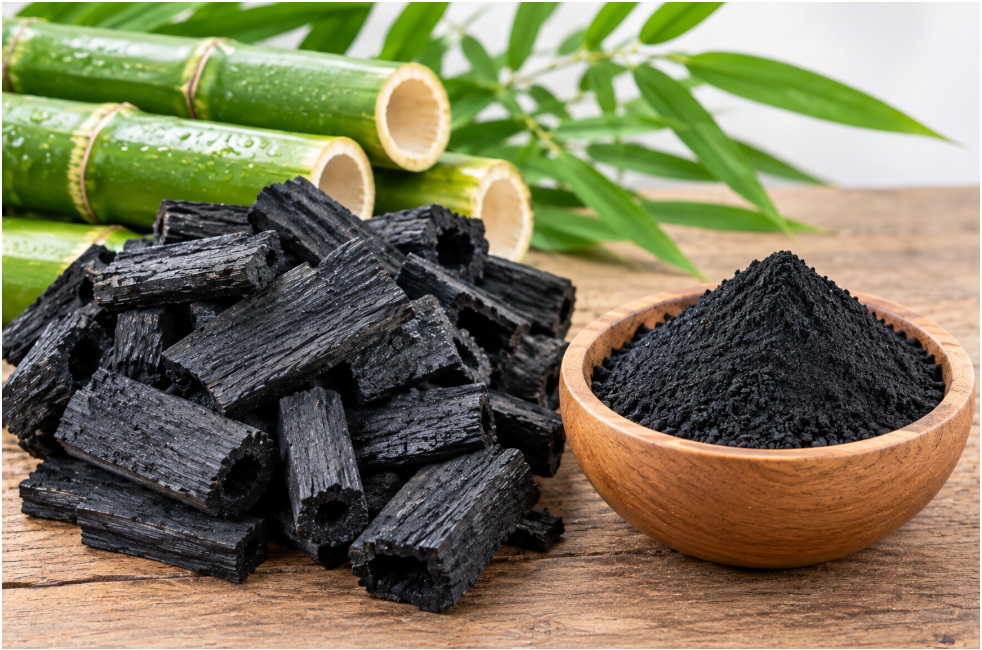
Black charcoal is produced by carbonizing raw wood in a low-oxygen kiln. This process burns off moisture and volatile compounds, leaving behind a rigid, carbon-rich skeleton with naturally developed pores. While it possesses baseline filtration properties, its internal surface area is relatively low.
Activated charcoal (carbon) undergoes an intense secondary physical or chemical activation process. This controlled treatment aggressively fractures the carbon structure, creating a massive, highly developed network of microscopic pores.
This engineered porosity provides an exponentially larger surface area, which is why activated carbon is the undisputed global standard for commercial and household water purification.
The Physics of Adsorption in Water Treatment
To understand how black charcoal water filtration operates, it is necessary to distinguish physical filtration from chemical adsorption.
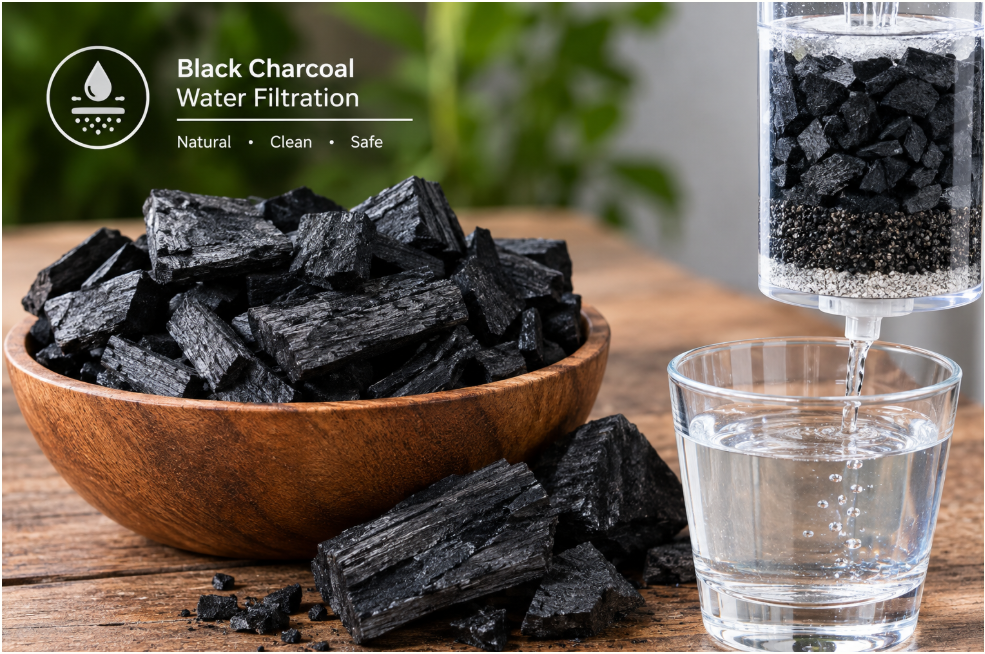
While standard physical filters (like fine mesh or sand) block large, suspended particles, carbon media works through adsorption. As water flows through the carbon bed, dissolved contaminant molecules are chemically drawn to and trapped on the surface of the carbon’s internal pores.
The effectiveness of this process depends on two critical factors:
- Available Surface Area: Activated carbon holds far more contaminants due to its engineered microscopic pore structure.
- Contact Time: Water passing through the carbon bed too quickly will not allow the target compounds enough time to bind to the carbon surface. Proper commercial filter design must precisely balance the flow rate with the density of the carbon bed, whether using crushed Mangrove Charcoal for basic pre-filtration or granular activated media.
What Black Charcoal Can (and Cannot) Realistically Remove
In practical applications, black charcoal water filtration can provide noticeable improvements to water quality in basic, non-potable setups. However, its capabilities are strictly limited compared to activated carbon.
Chlorine, Taste, and Odor Reduction
Basic carbon media is widely recognized for improving the palatability of water. Black charcoal can trap certain organic compounds that cause earthy or swampy smells, and it can help reduce the harsh chemical taste of municipal chlorine. However, its removal rate is inconsistent and highly dependent on the wood species, unlike ultra-dense, high-temperature White Charcoal traditionally used in pitcher purification, and the quality of the initial carbonization process.
The Limitation: Microorganisms and Pathogens
Ordinary black charcoal is not a reliable barrier against biological threats. It cannot filter out bacteria, viruses, or microscopic parasites (like Giardia). For safe drinking water, carbon filters must always be paired with dedicated microbial purification methods, such as chemical disinfection, boiling, or UV light treatment.
The Limitation: Dissolved Inorganic Contaminants
Carbon adsorption is highly selective. Neither black charcoal nor activated carbon is effective at removing dissolved salts, fluoride, nitrates, or dangerous heavy metals (like lead and arsenic). Removing these specific inorganic hazards requires entirely different technologies, such as Reverse Osmosis (RO) membranes or specialized ion-exchange resins.
The Limitation: Carbon Saturation
Charcoal acts as a chemical sponge. Once all the available microscopic binding sites are occupied by contaminants, the carbon is completely saturated and filtration ceases. If not replaced, the saturated carbon bed can release trapped contaminants back into the water or become a breeding ground for bacteria.
Sourcing Guide: Selecting the Right Carbon for the Application
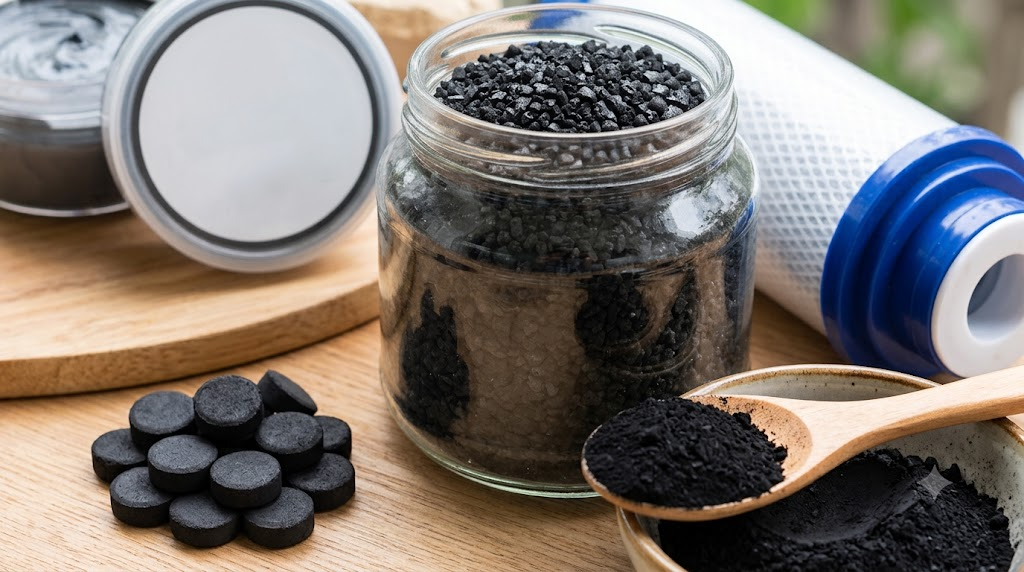
For B2B buyers, water filter manufacturers, and wholesale distributors, sourcing the correct material for black charcoal water filtration or advanced purification setups prevents costly product failures and liability issues.
| Filtration Requirement | Material Recommendation | B2B Application Examples |
| Basic Taste & Odor Improvement | Natural Black Charcoal | Traditional greywater filtering, agricultural run-off, simple multi-stage gravity filters. |
| Reliable Potable Water Treatment | Activated Carbon | Household drinking filters, municipal water treatment, commercial beverage production. |
| Chemical & Heavy Metal Removal | Neither (Requires RO / Ion Exchange) | Industrial wastewater, specialized chemical processing. |
When sourcing any carbon product for filtration, commercial buyers must look beyond the price per kilogram. Consistent raw material selection, accurate moisture levels, controlled particle sizing, and strict mechanical strength are crucial to ensure the carbon bed performs predictably without crumbling and clogging the system.
Whether your business requires premium black charcoal for traditional and agricultural applications, dense Lychee White Charcoal for specialty water-pitcher lines, or specialized activated carbon for commercial water purification, Lamian Global supplies high-quality, strictly graded carbon products to meet your exact specifications. Contact our team with your required charcoal type, intended application, and estimated monthly volume to discuss tailored bulk supply options.
- Company: Lamian Global
- Headquarters: 47 Street 36, Van Phuc Residential Area, Hiep Binh Ward, Ho Chi Minh City, Vietnam, 700000
- Hotline / WhatsApp: +84 812 036 789
- Email: contact.charcoal@lamianglobal.com
- Website: https://lamiancharcoal.com/