In the competitive global charcoal market, not all sawdust charcoal briquettes deliver the same performance. Poor carbonization, high moisture or excessive ash can cause excessive smoke, unstable heat and short burn time. For restaurants, importers and distributors, knowing how to test sawdust charcoal properly is essential before placing bulk orders. This practical guide covers both field tests and key laboratory indicators used by professional exporters such as Lamian Global to ensure consistent, high-quality hexagonal sawdust charcoal.
Why Proper Charcoal Testing Matters for B2B Buyers
Buying sawdust charcoal in bulk without proper testing exposes businesses to real operational risks. Low-grade briquettes often produce excessive smoke, chemical odors, unstable heat and short burn time – directly affecting food quality, kitchen efficiency and customer experience in restaurants. For importers and distributors, a single poor container can lead to significant financial losses, returns and damaged reputation.
Professional buyers therefore treat charcoal testing as a mandatory quality-control step. Combining simple field tests with clear technical specifications helps distinguish premium hexagonal sawdust charcoal from average or substandard products before committing to large volumes.
Key Quality Indicators of Premium Sawdust Charcoal
High-performance sawdust charcoal is defined by measurable technical parameters. The most important indicators used by professional exporters and laboratories include:
- Fixed carbon content ≥ 80%
- Calorific value ≥ 7,500 kcal/kg
- Ash content ≤ 3%
- Moisture content ≤ 5%
- Low volatile matter
- Completely smokeless and odorless combustion
- Consistent hexagonal shape with a clear, straight center hole
These specifications are achieved only when the entire production chain is tightly controlled – from raw material selection through carbonization and final resting.
Laboratory Proximate Analysis vs Practical Field Tests
Laboratory proximate analysis (moisture, ash, volatile matter, fixed carbon and calorific value) provides precise numerical data. Practical field tests allow buyers to quickly screen samples on-site or upon container arrival. Both approaches complement each other and should be used together for reliable evaluation.
Practical Method 1 – Visual & Surface Inspection
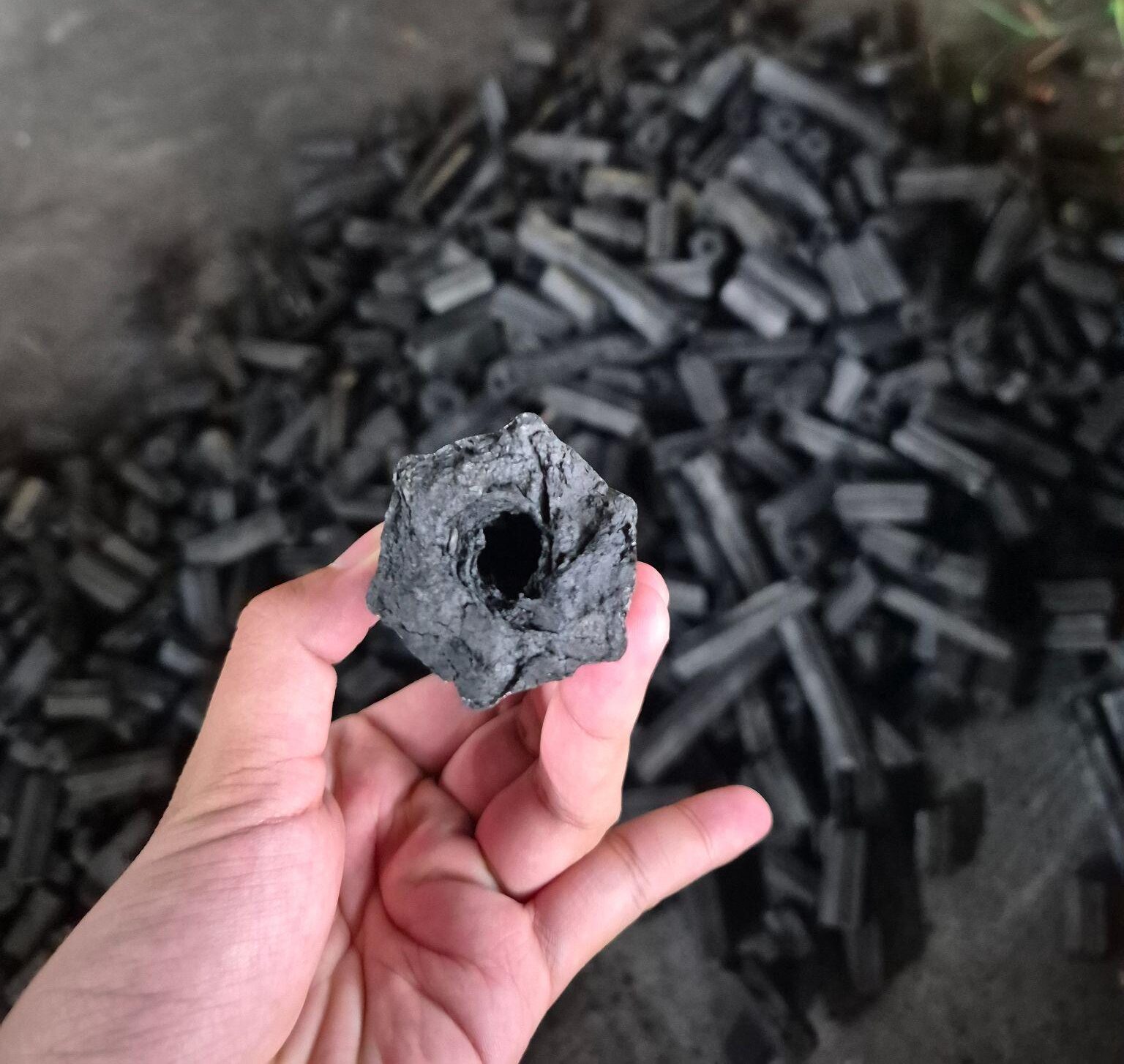
Start with a careful visual examination. Premium sawdust charcoal shows:
- Uniform deep black color throughout the briquette
- Smooth, dense surface without cracks or rough patches
- Straight, well-defined center hole (especially important for hexagonal briquettes)
- Dry appearance with no moisture marks or white powder residue
Inconsistent color, surface cracks or deformed holes often indicate uneven carbonization or poor compression.
Practical Method 2 – Hardness & Rubbing Test
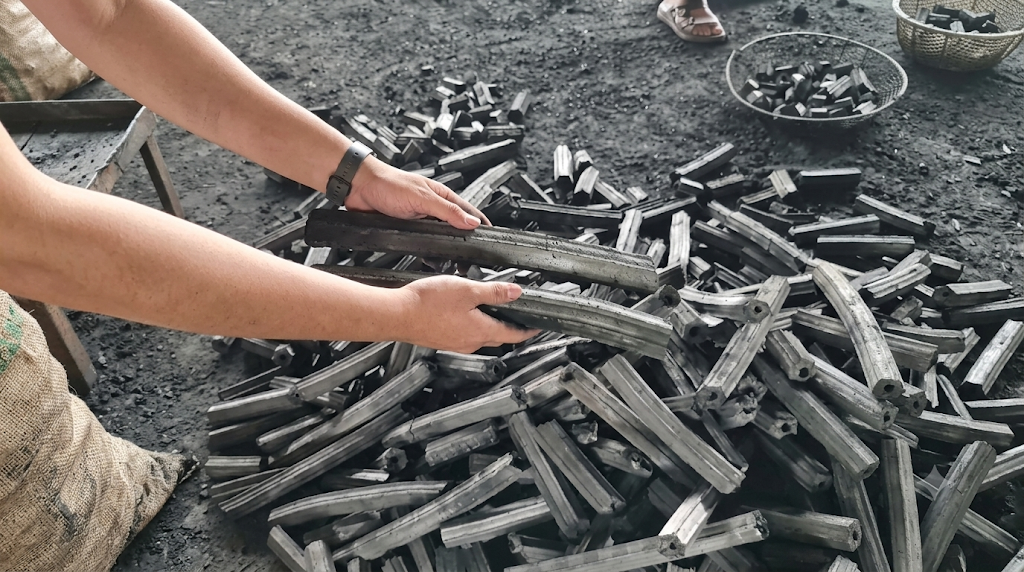
High-quality briquettes feel firm and compact. When rubbed gently between fingers or against another piece, they produce only minimal fine dust. They should not crumble or break under light pressure.
Tapping two pieces together often produces a clear, almost metallic ringing sound – a practical indicator of good carbonization and high fixed carbon content. Soft, powdery or easily broken pieces usually result from insufficient compression or incomplete carbonization.
Practical Method 3 – Electrical Conductivity (Voltage Pen) Test
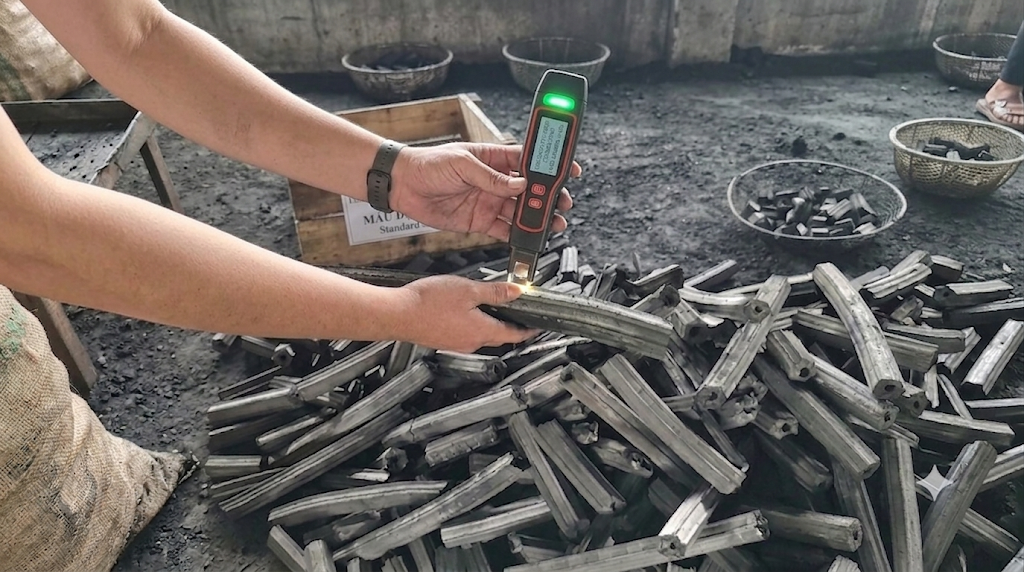
Well-carbonized charcoal has higher electrical conductivity because of its elevated fixed carbon content. Professionals often use a simple voltage tester (electrical pen) on the surface of the briquette.
A clear, immediate reaction generally indicates higher carbon purity. Weak or no reaction suggests incomplete carbonization and lower fixed carbon. This quick screening method is widely used at factories and by experienced importers to evaluate samples efficiently.
Practical Method 4 – Burning Performance Test Sawdust Charcoal
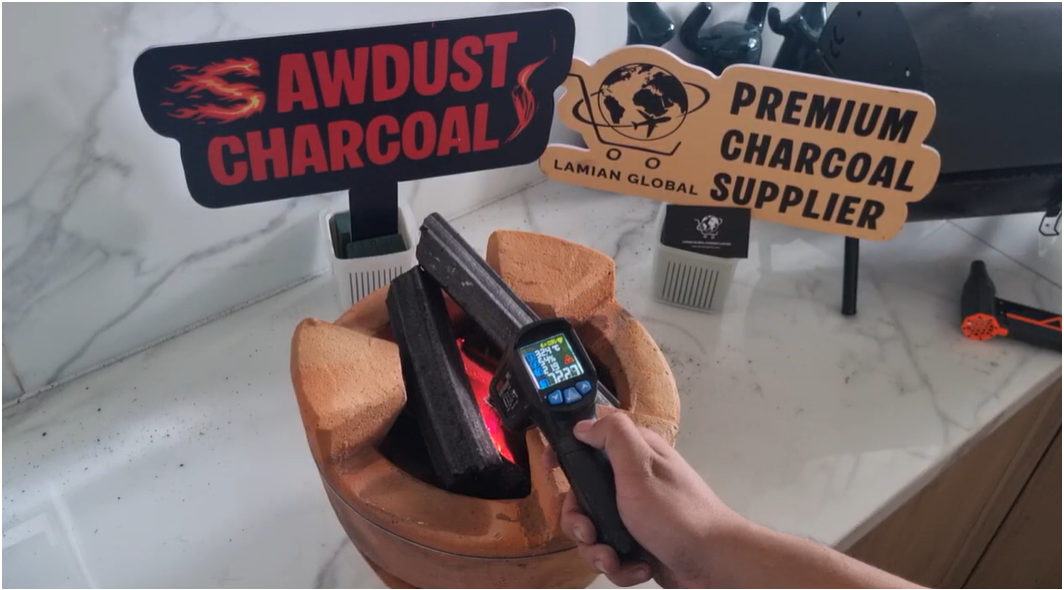
The burning test is the most decisive practical evaluation. Light a few pieces under controlled conditions and observe:
- Even and relatively easy ignition
- Mild, controlled initial flame that quickly settles into a steady red glow
- Minimal smoke and complete absence of chemical or unpleasant odor
- Stable heat output maintained for several hours (typically 3–5 hours or longer for premium grades)
- Very low residual ash after complete combustion
Excessive smoke, strong odor, rapid burnout or large amounts of ash are clear signs of lower-grade material.
Common Mistakes When Testing Sawdust Charcoal
Many buyers make avoidable errors when testing sawdust charcoal:
- Judging quality only by price or attractive packaging
- Testing only one or two pieces instead of multiple random samples from different parts of the batch
- Ignoring real cooking conditions (airflow, grill type, load size)
- Relying solely on appearance without hardness, conductivity or burning checks
A thorough evaluation always includes several pieces taken randomly from different cartons or bags.
How Professional Exporters Ensure Consistent Quality
Understanding the production process helps buyers appreciate why testing is necessary and what consistent quality looks like.
Sawdust charcoal is produced from two main raw material sources:
- Sawdust collected from wood-processing factories
- Crushed material obtained from whole trees
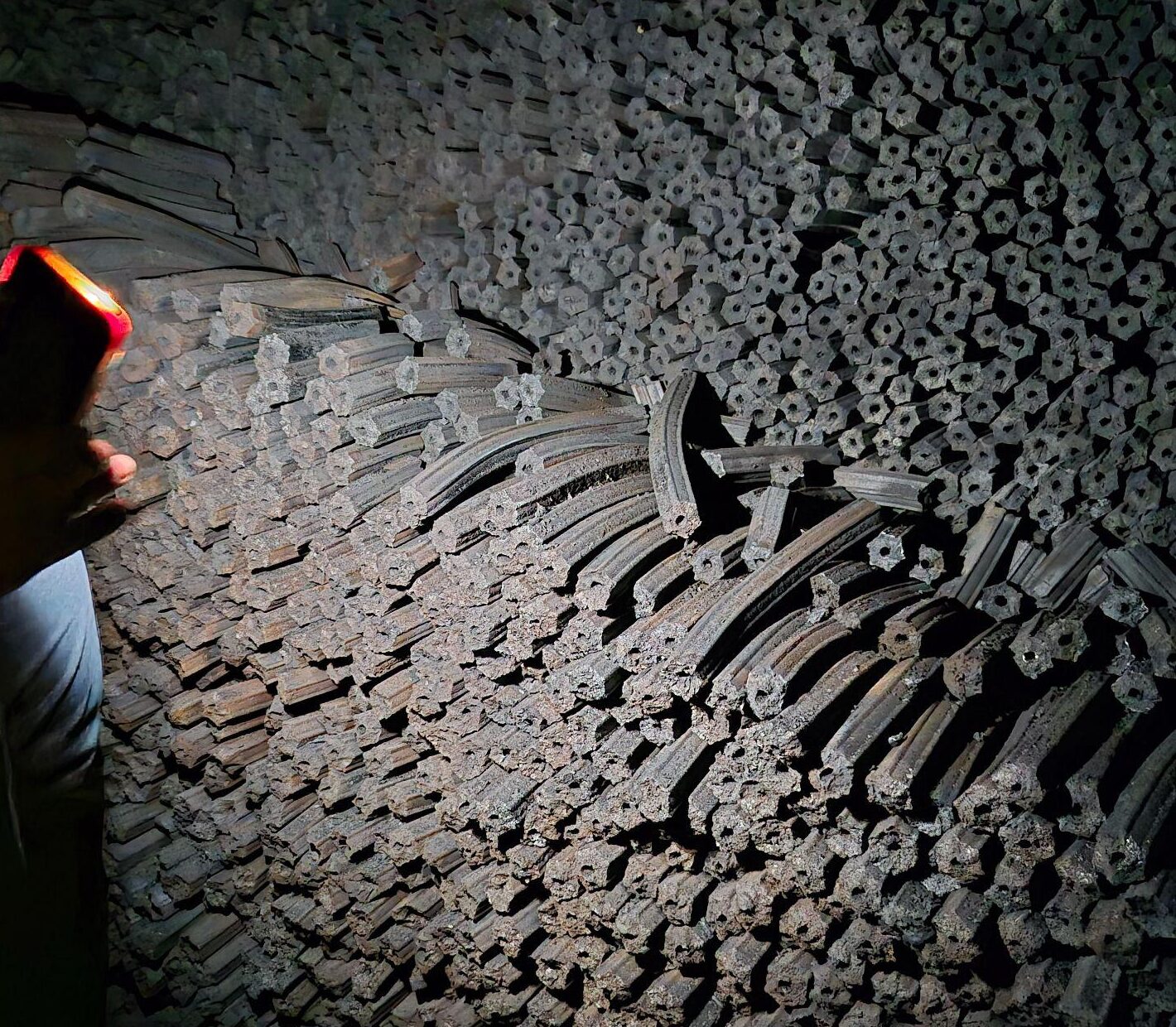
At the blank factory, sawdust is tightly compressed into dense blocks. These blanks are then carefully stacked inside kilns and carbonized for 12–15 days (including cooling). After leaving the kiln, the charcoal must rest outdoors for 1–2 weeks to stabilize and prevent spontaneous combustion during container loading.
Professional exporters control every stage – raw material, compression, carbonization, resting, packaging and loading – and support buyers with transparent laboratory reports and sample testing. This source-controlled approach delivers the high fixed carbon, low ash, low moisture and reliable burn performance that serious buyers require.
Conclusion
Knowing how to test sawdust charcoal properly protects your business from poor performance and hidden costs. Combine simple field tests (visual inspection, hardness and rubbing, electrical conductivity, and burning performance) with key technical specifications (fixed carbon ≥80%, ash ≤3%, moisture ≤5%, calorific value ≥7,500 kcal/kg) to make confident purchasing decisions.
For reliable, consistently tested premium hexagonal sawdust charcoal produced under strict source control, partner with a professional Vietnamese exporter.
Ready to upgrade your grilling performance?
Contact Lamian Charcoal for premium sawdust charcoal briquettes and other high-quality charcoal from Vietnam. We offer competitive wholesale pricing, flexible OEM packaging, free sample testing support, and consistent quality trusted by importers worldwide.
- Email: contact.charcoal@lamianglobal.com
- WhatsApp / Hotline: +84 812 036 789
- Website: https://lamiancharcoal.com/