Knowing how to store black charcoal properly is essential to preserve its intense heat output, clean ignition, and long-burning efficiency. Whether managing inventory for a busy restaurant, distributor warehouse, or outdoor grilling enterprise, unmanaged humidity can quickly ruin stock quality.
Discover how moisture degrades charcoal integrity, and master how to store black charcoal to prevent mold growth, protect inventory value, and ensure high-grade heating performance every time.
Why Moisture Is the Biggest Threat to Black Charcoal
Black charcoal features a micro-porous structure formed during carbonization, which makes it exceptionally absorbent to surrounding environmental moisture. When stored in humid environments or on damp surfaces, charcoal rapidly absorbs airborne water vapor and ground condensation.
Absorbed moisture severely impairs ignition speed, reduces overall burn temperatures, and produces excess thick smoke that interferes with culinary flavor profiles. In addition to performance degradation, trapped water weight artificially skews bulk measurements and creates financial losses for commercial buyers.
Furthermore, persistent moisture combined with fine organic charcoal dust and paper packaging creates ideal breeding conditions for fungal spores. Charcoal mold not only compromises the physical structural integrity of the briquettes or lumps, but it can also release unpleasant odors and health hazards when ignited. Maintaining strict moisture control safeguards restaurant cooking consistency, preserves long-term warehouse stock quality, and prevents costly inventory spoilage.
Ideal Environmental Storage Conditions
To maintain peak charcoal burn quality over extended periods, inventory must be housed in a fully enclosed, dry indoor facility protected from weather exposure. Storage areas should ideally maintain stable temperatures between 15°C and 30°C alongside a relative humidity level kept consistently below 60%.
Good cross-ventilation is vital to prevent stagnant air pockets and reduce moisture accumulation inside sealed storage units. Direct sunlight must also be avoided, as intense solar heating can degrade paper or plastic outer packaging over time.
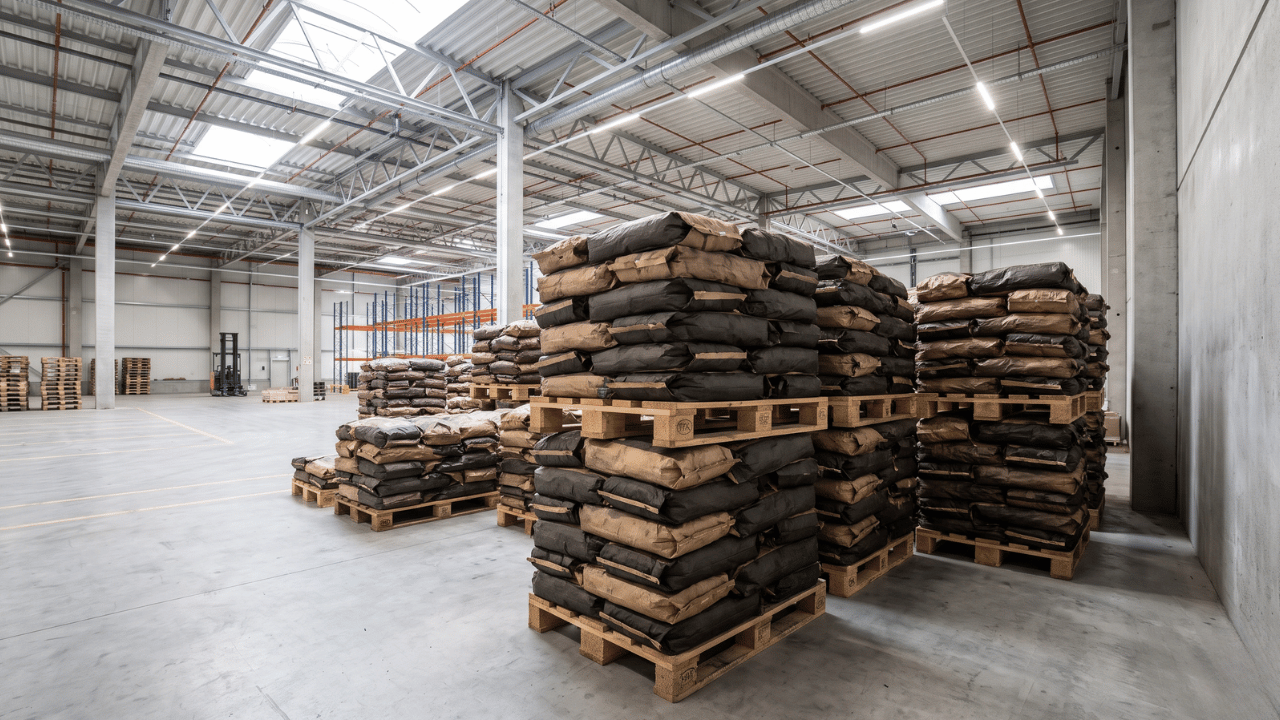
Pallet management plays a critical role in preventing floor-level dampness from seeping into lower bag layers. Charcoal bags should always be stacked on plastic or treated wooden pallets raised at least 10–15 centimeters above bare concrete floors.
Additionally, stacks must be positioned at least 30 centimeters away from exterior walls to prevent cold-wall condensation transfer. Implementing these spatial buffers ensures continuous air circulation around all sides of your charcoal stock. These precautions are equally important when storing products such as Mangrove Charcoal in commercial warehouses.

Best Containers and Packaging Methods
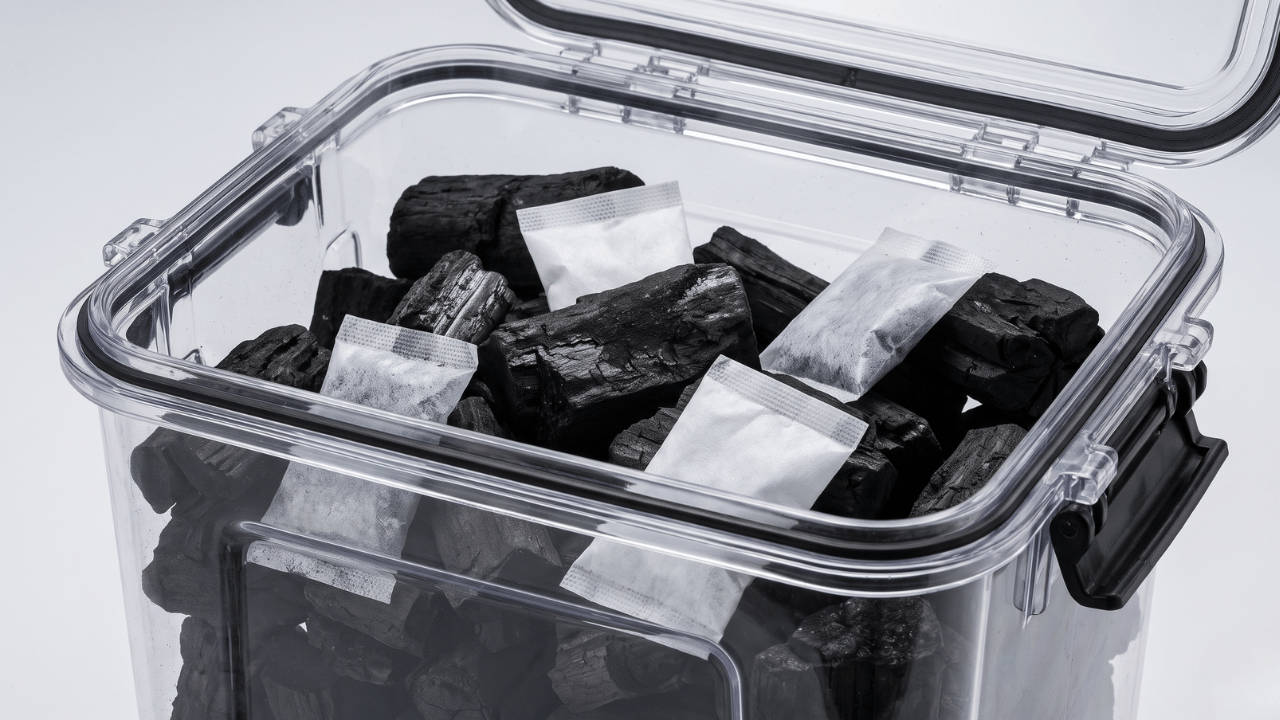
Selecting the correct container system is the single most effective barrier against humidity infiltration. Heavy-duty plastic storage bins with gasket-sealed airtight lids offer superior protection for high-value black charcoal stock.
For larger warehouse volumes, multi-ply kraft paper bags lined with moisture-resistant polyethylene inner films provide exceptional dampness barriers. When original packaging is opened for partial use, the remaining charcoal should be transferred immediately into sealed storage bins or tightly clamped at the bag opening.
Commercial operations can further enhance moisture control by placing large food-safe silica desiccant packs inside storage containers. These packaging methods help protect products such as Eucalyptus Black Charcoal from moisture exposure during storage and handling.
Crucially, charcoal must never be packed into airtight containers while still warm from production or sunlight exposure, as cooling air creates condensation inside the sealed space. Ensuring product is completely cool before sealing preserves dry performance for long-term storage.
Step-by-Step Storage Best Practices
Understanding how to store black charcoal with a standardized inventory process keeps your supply in optimal condition and minimizes financial loss due to product degradation. Follow these operational guidelines to maintain inventory quality across warehouses and restaurant stockrooms:
- Inspect Incoming Stock Thoroughly: Check all bags for moisture stains, tears, or crushed packaging upon arrival, immediately quarantining any compromised bags away from primary storage areas.
- Elevate and Organize Pallet Stacks: Arrange charcoal pallets in neatly spaced rows with clear aisles to allow uninhibited air circulation and facilitate easy forklift access during stock movement.
- Enforce FIFO (First-In, First-Out) Rotation: Clear labeling with delivery dates ensures older stock is dispatched or consumed first, preventing charcoal from sitting idle in storage past its prime duration.
Conduct Weekly Environmental Audits: Regularly check hygrometers, inspect storage walls for dampness, and audit container seals to catch humidity issues before fungal growth can occur.
What to do if Charcoal gets Damp or Shows Mold
- Sun-Drying Mild Moisture: Spread slightly damp charcoal in thin layers across clean, dry canvas under direct sunlight in a well-ventilated outdoor setting to evaporate superficial moisture.
- Avoid Heat Guns or Ovens: Never use open flames, industrial ovens, or heat blowers to dry charcoal indoor, as airborne charcoal dust creates extreme flash-fire risks.
- Safely Discard Moldy Charcoal: Dispose of charcoal pieces exhibiting visible white/green mold or foul musty odors immediately, as fungal contamination poses severe health and flavor risks in food applications.
Commercial Bulk Supply Options and Quality Assurance
Partnering with a reliable supplier ensures black charcoal is properly carbonized, packaged, and shipped under strict moisture-control standards. Products such as Sawdust Charcoal are also worth exploring for businesses seeking alternative fuel options. Moisture-resistant packaging helps protect bulk shipments during long-distance transportation.
Combined with proper warehouse storage, these measures preserve charcoal quality, ensure consistent burning performance, and minimize inventory losses for commercial buyers.
Looking for premium black charcoal for BBQ, restaurant chains, or international distribution? Contact Lamian Global with your specific charcoal type, sizing requirements, custom packaging needs, and estimated volume to receive tailored bulk supply solutions.
- Brand: Lamian Global
- Address: 47 Street 36, Van Phuc Residential Area, Hiep Binh Ward, Ho Chi Minh City, Vietnam, 700000
- Hotline / WhatsApp: +84 812 036 789
- Email: contact.charcoal@lamianglobal.com
- Website: lamiancharcoal.com