Black charcoal toothpaste has become a massive trend in the global oral care market, heavily marketed for its natural teeth-whitening properties. However, dental professionals frequently issue warnings regarding its long-term safety. In this Black Charcoal Toothpaste: Safety Risks & Formulation Guide, we break down the fine line between effective stain removal and irreversible enamel damage, essential insights for both consumers seeking a brighter smile and oral-care manufacturers developing new products.
How Charcoal Toothpaste Actually Whitens Teeth
To understand the risks, one must first understand the mechanism. Charcoal does not chemically bleach the teeth. Instead, it relies on two physical processes:
- Mechanical Abrasion: The microscopic carbon particles act as a mild abrasive, physically scrubbing away pigmented film on the tooth surface.
- Surface Adsorption: Due to its highly porous structure, particularly in high-adsorption grades like Coconut Shell Charcoal, charcoal binds to certain tannin-based compounds (found in coffee, tea, and red wine) and lifts them away when the mouth is rinsed.
Charcoal is only effective at removing extrinsic stains (surface-level discoloration). It cannot change the natural, underlying color of the tooth (intrinsic stains), which requires professional chemical bleaching agents like hydrogen peroxide.
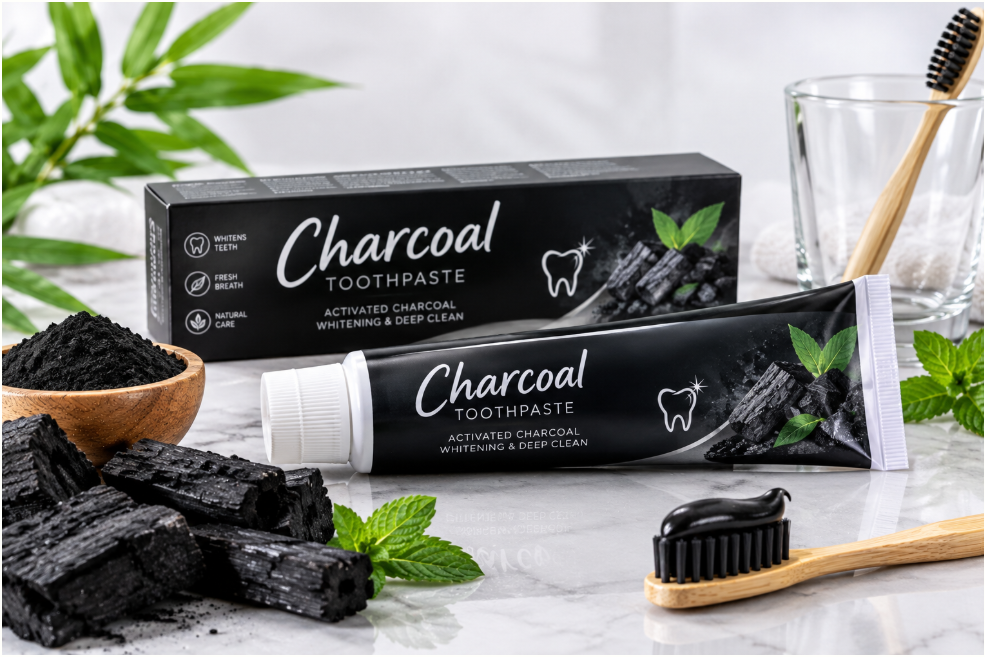
3 Key Warnings from Dental Professionals
The controversy surrounding Black Charcoal toothpaste stems from poorly formulated products and aggressive daily use. Dentists highlight three primary concerns.
Enamel Abrasion and Irreversible Wear (RDA)
The most significant danger of charcoal toothpaste is its potential to physically scratch and wear down tooth enamel. The dental industry measures this using the Relative Dentin Abrasivity (RDA) scale.
If a toothpaste is highly abrasive and used daily with firm brushing pressure, it will gradually strip away the translucent enamel. Because enamel cannot naturally regenerate, this wear is irreversible. Ironically, aggressive brushing with charcoal can eventually make teeth look more yellow, as the thinning enamel exposes the naturally yellow dentin layer beneath it.
The Fluoride Deficit and Cavity Risk
Many charcoal toothpastes are marketed as “all-natural” or “minimalist” alternatives, often intentionally excluding fluoride. Fluoride is the foundation of modern preventative dentistry, scientifically proven to remineralize enamel and prevent tooth decay. When a consumer entirely replaces their daily fluoride toothpaste with a fluoride-free charcoal paste, their risk of developing cavities increases significantly.
Gum Irritation and Dental Restorations
Coarse charcoal particles can become embedded in the gumline, causing inflammation, redness, and irritation (gingivitis). Furthermore, abrasive charcoal pastes should not be used by individuals with extensive dental restorations. The abrasive particles can scratch the polished surfaces of porcelain veneers, composite fillings, and crowns, causing them to accumulate more stains over time.
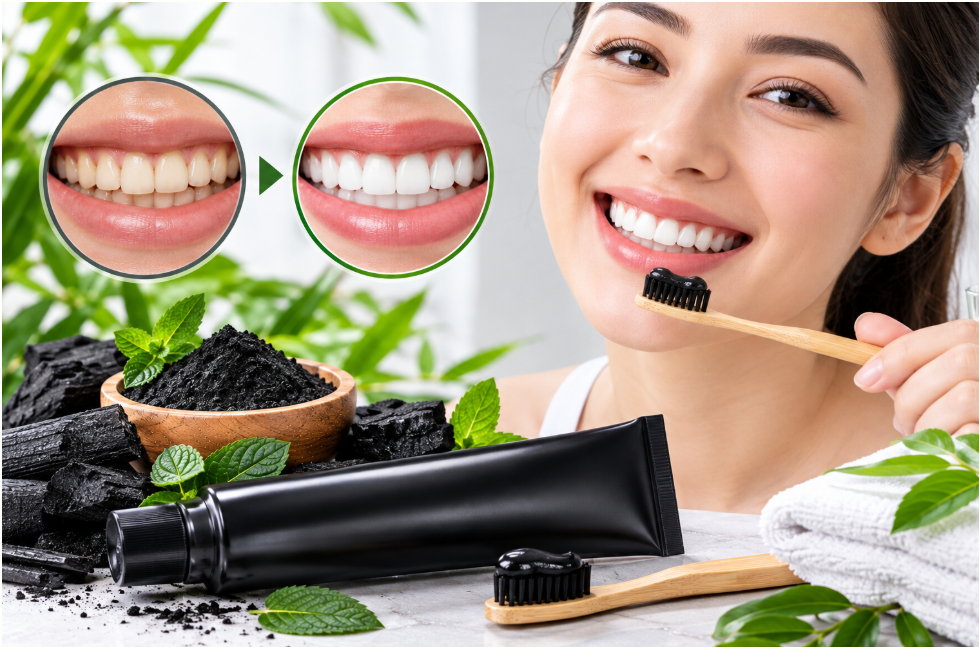
Consumer Best Practices for Safe Use
For individuals who still wish to incorporate charcoal toothpaste into their routine, dental professionals recommend a highly cautious approach to minimize enamel damage.
- Treat it as an Occasional Cosmetic: Use charcoal toothpaste only 1 to 2 times a week, rather than as a daily cleanser.
- Use a Soft-Bristled Brush: Apply minimal pressure. The goal is to gently spread the paste to allow for adsorption, not to aggressively scrub the teeth.
- Never Skip Fluoride: Continue using a standard, ADA-approved fluoride toothpaste for your daily morning and nighttime brushing to maintain cavity protection.
- Monitor Sensitivity: If you experience increased temperature sensitivity or gum bleeding, discontinue use immediately.
B2B Guide: Formulating a Safe Charcoal Toothpaste
For cosmetic and oral-care manufacturers, the demand for charcoal toothpaste represents a lucrative market. However, avoiding the risks mentioned above requires strict attention to raw material sourcing and formulation chemistry.
To create a safe, compliant, and effective product, R&D teams must focus on the following criteria:
| Formulation Factor | R&D Best Practice |
| Particle Size (Mesh Size) | Source ultra-fine, micronized cosmetic-grade charcoal. Coarse industrial charcoal will cause severe enamel scratching and fail RDA testing. |
| Controlled Abrasivity (RDA) | Formulate the paste to stay well below the FDA’s recommended maximum RDA limit of 250 (ideally under 100 for daily-use claims). |
| Purity & Heavy Metals | The raw charcoal must pass strict cosmetic and food-grade safety tests, ensuring it is completely free of toxic ash and heavy metals. |
| Remineralizing Agents | If excluding fluoride for a “natural” market, incorporate alternative remineralizing agents like Nano-Hydroxyapatite (nHAp) to protect enamel. |
The success of an oral-care product relies entirely on the quality and consistency of its raw ingredients. Selecting cosmetic-grade, finely milled Bamboo Charcoal ensures a uniform particle profile that polishes gently without damaging dentin, whereas standard BBQ charcoal or low-grade carbon is strictly unsafe for dental applications.
Looking to source ultra-pure, micronized black charcoal or activated carbon for your toothpaste, cosmetic, or oral-care formulations? Lamian Global supplies premium, finely milled carbon ingredients tailored for the health and beauty industry, alongside a diverse range of Other Products engineered for specialized commercial and industrial applications. Contact our team with your required specifications, mesh size, application, and estimated monthly volume to discuss reliable bulk supply options.
- Company: Lamian Global
- Headquarters: 47 Street 36, Van Phuc Residential Area, Hiep Binh Ward, Ho Chi Minh City, Vietnam, 700000
- Hotline / WhatsApp: +84 812 036 789
- Email: contact.charcoal@lamianglobal.com
- Website: https://lamiancharcoal.com/