Selecting the right charcoal directly impacts food flavor, kitchen safety, and your monthly operating costs. While Sawdust Charcoal vs Mangrove Charcoal are both premier export-grade fuels from Vietnam, they serve distinctly different commercial needs. This guide compares their burn duration, financial ROI, and logistics to help you choose the ideal fuel solution.
Understanding the Raw Materials & Production
Every technical characteristic of commercial charcoal from burn duration to ash yield stems directly from its raw material and carbonization method. Understanding how each fuel type is manufactured allows procurement teams to better predict its real world performance in a demanding kitchen environment.
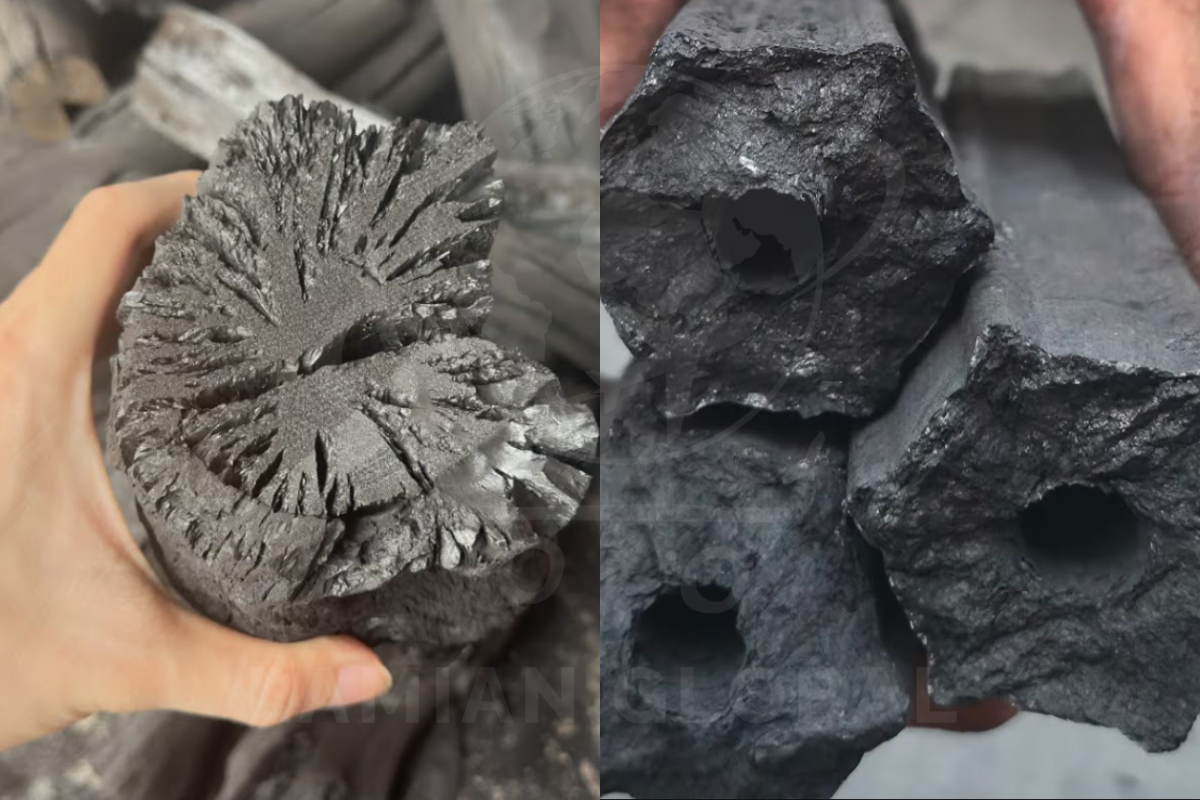
1. Sawdust Briquette Charcoal (Hexagonal Ogatan)
- Raw Material: 100% natural hardwood sawdust (chemical-free).
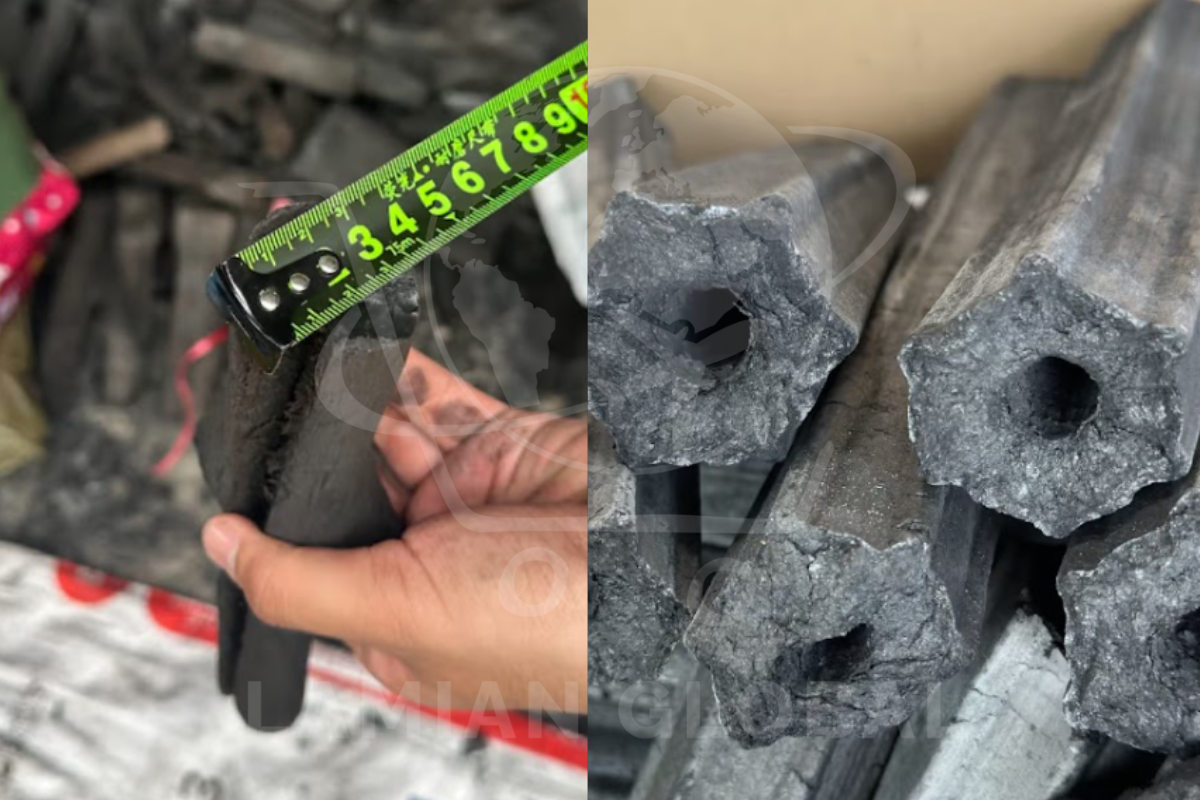
- Process: Natural sawdust is densely compressed under high hydraulic pressure and thermal friction into uniform hexagonal sticks with a hollow central core, then carbonized in continuous kilns.
- Key Trait: High density, perfectly uniform shape, extended burn duration, and zero sparks.
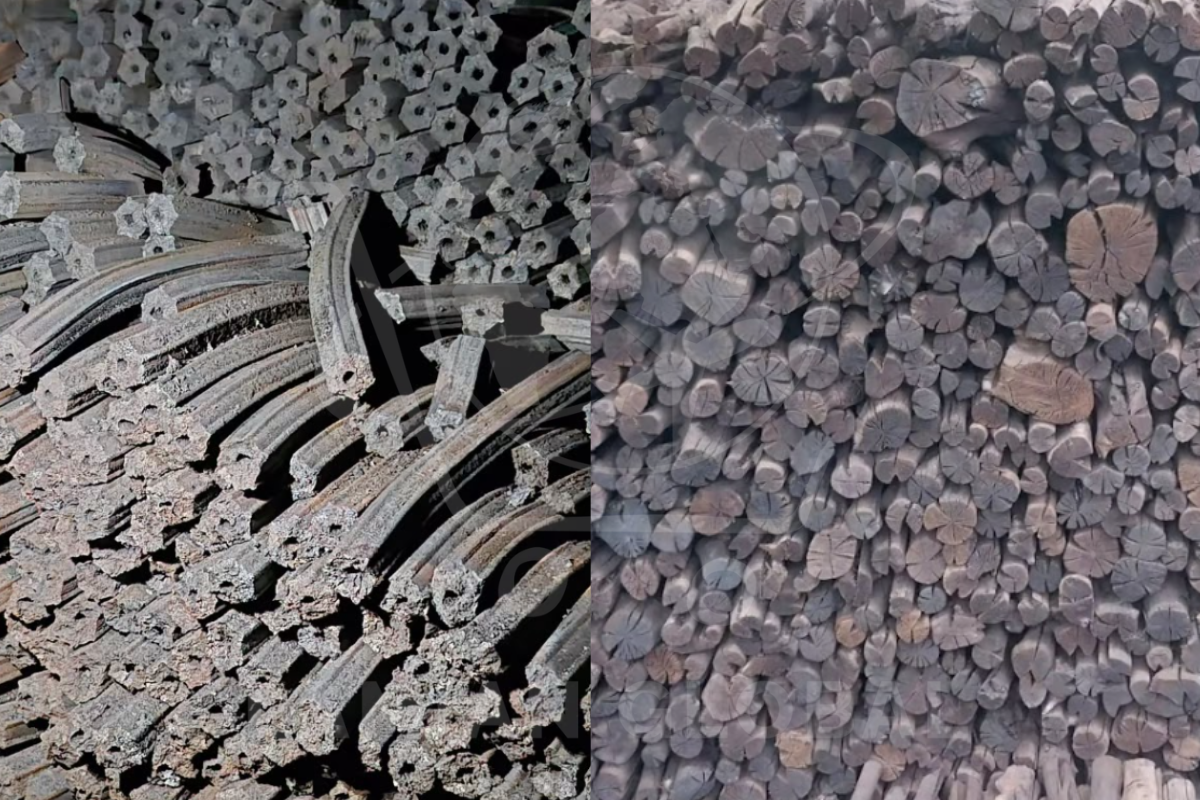
2. Premium Mangrove Hardwood Charcoal (Natural Lump)
- Raw Material: Sustainable, high-density natural Mangrove wood logs.
- Process: Traditional brick kiln carbonization over several weeks, preserving the natural branch structure of the wood.
- Key Trait: Extreme calorific heat, deep ember penetration, subtle wood aroma, and white ash residue.
Key Performance Comparisons
Commercial kitchens require consistent, reliable heat to maintain service speed and culinary excellence during peak hours. Here is how Sawdust Charcoal vs Mangrove Charcoal compare across four crucial operational criteria: heat stability, smoke emissions, safety, and logistics.
1. Burn Duration & Heat Output
In a high-volume restaurant, fuel longevity determines how often kitchen staff must replenish live embers during peak service hours.
- Sawdust Charcoal: Delivers an extended burn time of 4 to 6 hours. Its ultra-dense structure generates a steady, stable heat output (7,500 – 8,000 Kcal/kg), preventing sudden grid temperature drops.
- Mangrove Charcoal: Burns for 2.5 to 4 hours—significantly longer than standard soft lump charcoal. It reaches higher initial peak temperatures (6,500 – 7,500 Kcal/kg), making it exceptional for quick searing.
2. Smoke Emissions, Odor & Dining Experience
Indoor air quality and customer comfort rely on low volatile organic compounds (VOCs) and low moisture levels.
- Sawdust Charcoal: Boasts a fixed carbon content exceeding 80–85% and low moisture (<5–7%). It burns virtually smokeless and odorless, preserving the unadulterated flavor of premium meats—ideal for enclosed tableside grilling.
- Mangrove Charcoal: Imparts a delicate, natural wood-smoke aroma highly prized by traditional steak and open-flame BBQ chefs. Because high-grade mangrove wood is thoroughly carbonized, smoke emissions remain minimal compared to ordinary hardwood lump.
3. Safety & Tableside Stability
Kitchen safety and guest comfort are top priorities for commercial operators.
- Sawdust Charcoal: Thermal hydraulic compression eliminates internal air pockets, making these briquettes 100% spark-free. Embers will not pop or burst during active dining.
- Mangrove Charcoal: Dense mangrove wood fiber minimizes popping compared to low-grade lump charcoal, offering a clean, stable burn suitable for open kitchen layouts.
4. Logistics, Storage & Container Loading
Freight costs play a massive role in calculating total landed import costs (CIF/FOB).
- Sawdust Charcoal: Packed in uniform 3kg, 6kg, 10kg, or 15kg master cartons. Boxed geometry allows tight pallet stacking, reducing warehouse storage footprints by up to 30% and maximizing 40ft HC container weight capacity.
- Mangrove Charcoal: Available in export carton boxes or heavy-duty PP woven bags. While natural lump shapes leave slight void spaces, proper sorting ensures high packing density for international shipping.
Side-by-Side Technical Comparison Matrix
For procurement managers and supply chain directors, raw technical data is essential for making fast, confident purchasing decisions. The comparative matrix below provides a clear, side-by-side breakdown of the physical and chemical specifications for both fuel options.
| Technical Criterion | Sawdust Briquette Charcoal (Ogatan) | Premium Mangrove Charcoal (Lump) |
| Raw Material | Recycled Hardwood Sawdust | Mature Natural Mangrove Wood |
| Shape & Structure | Hexagonal sticks with hollow core | Irregular natural wood lumps |
| Burn Duration | 4 – 6 Hours (Extended) | 2.5 – 4 Hours (High Peak Heat) |
| Calorific Value | 7,500 – 8,000 Kcal/kg | 6,500 – 7,500 Kcal/kg |
| Fixed Carbon | > 80% – 85% | 70% – 80% |
| Ash Content | Ultra-Low (< 3% – 5%) | Low (3% – 5%, Clean White Ash) |
| Moisture Content | < 5% – 7% | < 8% – 10% |
| Sparking Risk | 100% Spark-Free | Extremely Low |
| Best For | Indoor Yakiniku, Table-side Grill | Open-Flame BBQ, Steakhouses, Searing |
Financial Cost-Efficiency Analysis: Maximizing Your ROI
Focusing solely on the upfront purchase price per kilogram often masks the true operational expense of restaurant solid fuel. By evaluating the actual cost-per-burning-hour, commercial operators can uncover significant long-term savings in fuel consumption and labor efficiency.
The ROI Equation
- Fewer Table Refills: Because Sawdust Charcoal burns 4–6 hours and Mangrove Charcoal maintains high sustained heat, kitchens require up to 50% fewer charcoal top-ups during evening dining shifts.
- Labor Efficiency: Reduced refills, lower table service interventions, keeping staff focused on customer service rather than fuel management.
- Freight Savings: Denser fuel options mean you import more burning hours per shipping container, significantly dropping landed freight costs per hour of operation.
- Commercial Result: Restaurant chains switching from low-grade traditional charcoal to export-grade Sawdust Briquettes or premium Mangrove Charcoal routinely experience a 25% to 40% reduction in total monthly fuel costs.
Which Charcoal Should Your Business Choose?
Choosing the right charcoal isn’t about finding a single “superior” product, but selecting the specific fuel that matches your cooking methodology and business model. Use the recommendations below to identify the ideal charcoal solution for your target venue or wholesale distribution network.
Choose Sawdust Briquette Charcoal If You Operate
- Indoor BBQ Concepts: Japanese Yakiniku, Korean BBQ, or high-end dining where smokeless, odorless, spark-free performance is mandatory.
- Commercial Restaurant Chains: High-volume operations requiring absolute heat uniformity and precise portion control.
- B2B Retail Importers: Distributors looking for clean, stackable OEM box packaging (3kg, 6kg, 10kg, 15kg) for retail or wholesale distribution.
Choose Premium Mangrove Charcoal If You Operate
- Traditional & Open-Air BBQ: Establishments where authentic wood-fired aroma elevates meat flavor profiles.
- Steakhouses & Rapid-Service Kitchens: Concepts requiring high immediate surface searing heat and long-lasting ember coals.
- Wholesale Importers: Buyers catering to markets that favor traditional natural lump charcoal over briquettes.
Whether you need high-density Sawdust Briquettes or natural export-grade Mangrove Charcoal, Lamian Global delivers certified, reliable fuel tailored to your commercial needs. Contact our international sales team today to request certified lab samples, OEM packaging consultation, or a custom CIF quotation.
- Company: Lamian Global
- Address: 47 Street 36, Van Phuc Residential Area, Hiep Binh Ward, Ho Chi Minh City, Vietnam
- Hotline/WhatsApp: +84 812 036 789
- Email: contact.charcoal@lamianglobal.com
- Website: https://lamiancharcoal.com/